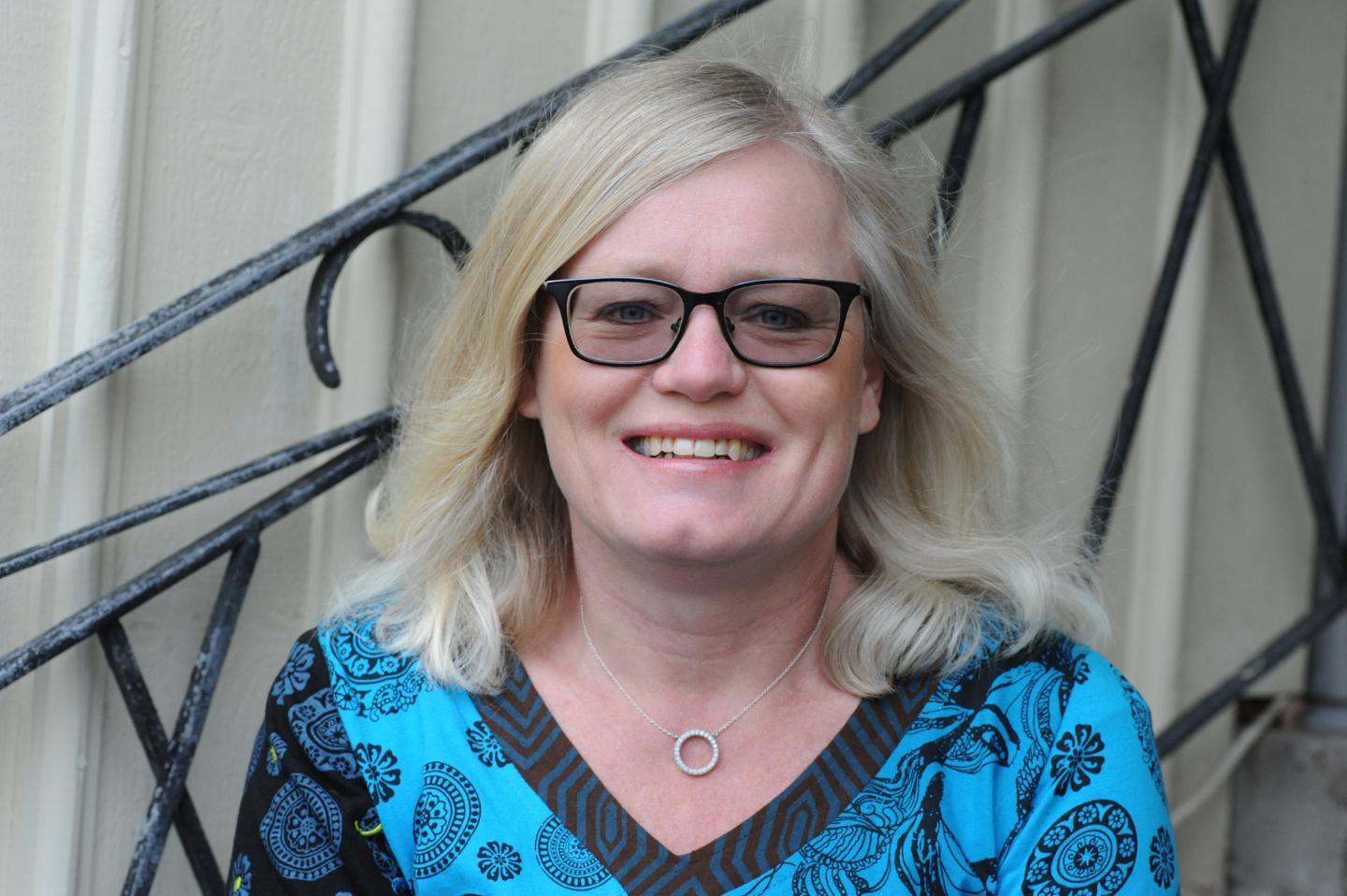
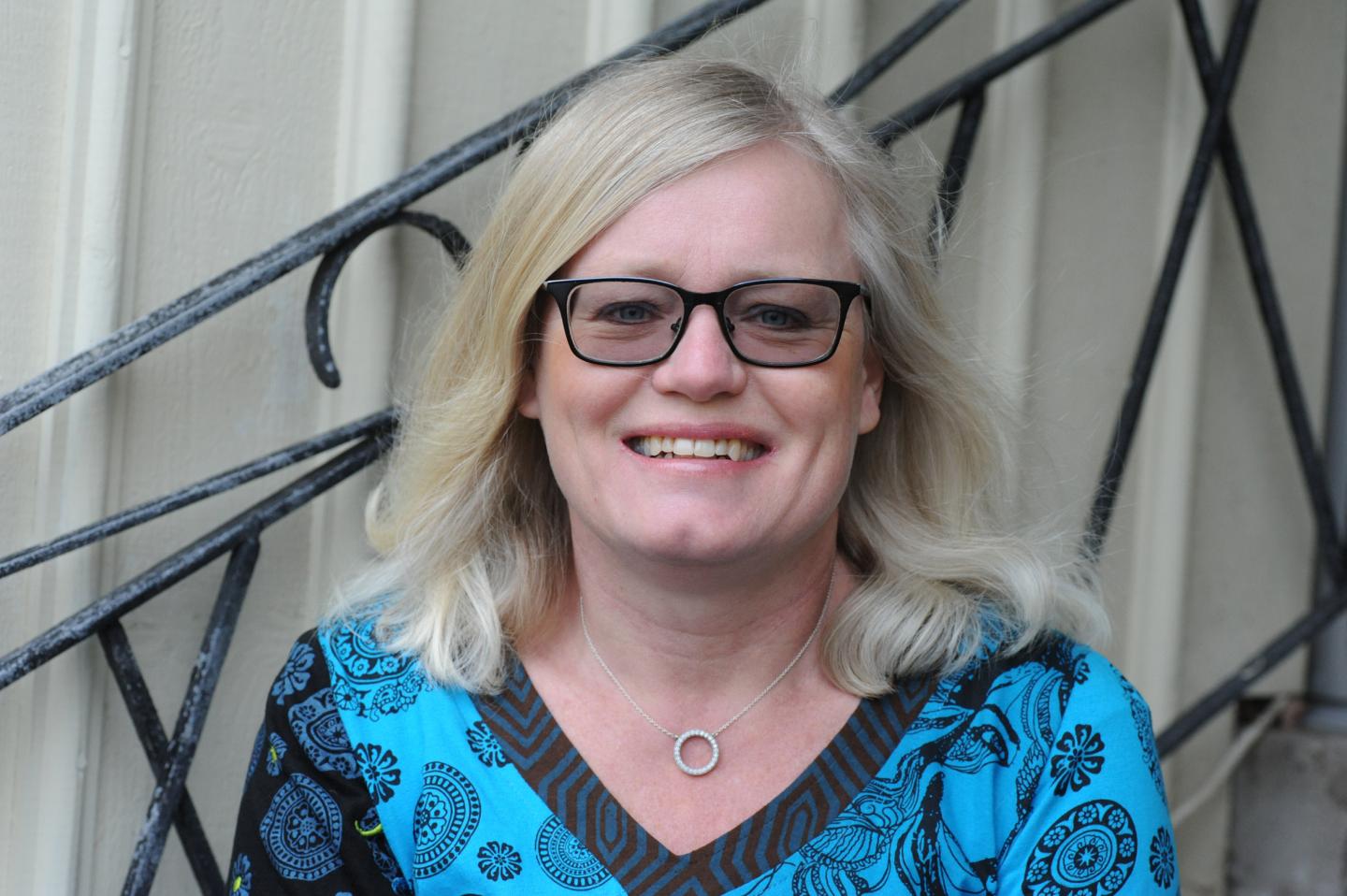
Credit: Björn Engwall
New research shows that the light environment in intensive care affects how patients feel – even a year after completed hospitalization. With light adapted to the time of day, health even improves for patients who are barely conscious when they are admitted for care.
"It is really important with a normal circadian rhythm and light is the environmental factor that has the greatest affect," says Marie Engwall, doctoral student in Health and Care Sciences at the Sahlgrenska Academy and assistant lecturer at University of Borås, with a background as an ambulance nurse anesthetist.
Here research is about severely ill or injured patients who are admitted for intensive care, initially often an anesthetized state and in a hospital environment where investigations and treatments must be able to operate around the clock.
Many patients are confused and lost with regards to what day it is, and this is where light comes in. In order to counterbalance the traditional ICU department with low levels of daylight and nights when lighting is frequently turned on, and experimental environment with so-called cyclical lighting that changed during the day into fourteen different light scenarios.
Calming function
Mornings began with a weak, reddish dawn light, which, at around 8 am turned to a strong, blue light similar to daylight. In the middle of the day, the strength of the light was reduced slightly so that patients would also be able to experience existing daylight to subsequently be increased again in the afternoon.
Towards the evening, the light became weaker and warmer again. At that time, the light sources were also placed at a lower height; in the evening only a weak and warm light was emitted from the skirting boards. All this to resemble natural light throughout the day.
"The patients were very satisfied with the lighting environment. It had a calming function and helped in supporting the circadian rhythm, Earlier research shows that it is very important with a stable circadian rhythm for hormonal levels and other physiological function in the body," says Marie Engwall.
The survey that was conducted 6 months after discharge did not provide any clear picture of the recovery of the patients. Marie Engvall describes this time as a fragile period for many of them. However, after another 6 months there was a different tune when the same on hundred patients were once again asked about the physical and mental health, appetite and sleep.
Significantly better
"Patients cared for in our experimental room demonstrated significantly better self-rated recovery after twelve months compared to patients in the control group. I do no claim that everything is a result of the light, but there is an indication and a clear finding here that we can continue working with," says Marie Engwall.
Her research focuses on the patient but even the impressions of healthy visitors evaluated in a questionnaire gave positive results. Staff were not consulted in the studies in question, but nevertheless, Marie Engwall has received some response during the course of the process.
"They really like the light that provides good working light during the day. At night time, the levels are lower than what they are used to in order for patients to be able to sleep better," she says.
###
Link to the thesis: https://gupea.ub.gu.se/handle/2077/50859
Head researcher: Marie Engwall +46 (0)733 787 377; [email protected]
Press contact: Margareta Gustafsson Kubista +46 (0)705 301 980; [email protected]
Media Contact
Marie Engwall
[email protected]
46-073-378-7377
@uniofgothenburg
http://www.gu.se/english