A groundbreaking study published in Nature Communications has unveiled new insights into the dynamics of avian malaria, fundamentally altering our understanding of how this disease spreads across bird populations worldwide. Researchers have discovered that variations in pathogen load, combined with a complex relationship between pathogen load and infectiousness, are key drivers broadening the distribution of avian malaria. This revelation holds vast implications for predicting and controlling the spread of vector-borne diseases and highlights the intricate biological mechanisms underpinning pathogen transmission.
Avian malaria, caused by Plasmodium parasites transmitted by mosquito vectors, has long been a model system for studying host–pathogen interactions in the wild. Traditionally, the focus has been on how the presence or absence of the pathogen influences the likelihood of transmission. However, this new research suggests that merely having the parasite is insufficient to explain patterns of spread. Instead, the quantity of pathogens—termed pathogen load—within individual hosts varies significantly and crucially affects their ability to infect mosquitoes and, consequently, other birds.
At the heart of the study is the nuanced relationship between pathogen load and infectiousness. Previous assumptions held that infectiousness scaled linearly or predictably with pathogen concentration. But the authors reveal a more complex, nonlinear interaction that broadens the range of infectiousness seen in different hosts. This finding means that some individuals with high pathogen loads may disproportionately contribute to transmission events, while others with moderate loads might still sustain the disease cycle. This variability ultimately expands the spatial and ecological range of avian malaria’s impact.
To unravel these dynamics, the multidisciplinary team integrated field data from diverse avian populations with advanced mathematical models simulating disease transmission. They collected extensive pathogen load measurements from infected birds and closely tracked mosquito infection rates. The empirical data allowed them to parameterize models that capture the probabilistic link between pathogen quantity within hosts and the likelihood mosquitoes acquire infection while feeding. These models demonstrated how variation in pathogen load can create a distributed infectiousness profile that fuels malaria’s persistence in regions previously considered marginal or at risk.
One striking implication of this work is the reframing of disease control strategies. Rather than targeting uniformly the presence of parasites in host populations, efforts to mitigate avian malaria must consider the distribution of pathogen load among individuals. This heterogeneity means interventions could be tailored to focus on ‘superspreaders’—those hosts with exceptionally high pathogen loads who disproportionately drive transmission. Such precision could improve the efficacy of conservation programs, especially for vulnerable bird species threatened by malaria in changing habitats.
From an ecological perspective, understanding the drivers of pathogen load variability sheds light on how environmental factors and host condition influence disease outcomes. Stressors like habitat loss, climatic fluctuations, and co-infections can modulate immune responses in birds, thereby affecting their pathogen loads and subsequent infectiousness. This feedback loop underscores the interconnectedness of ecological health and disease dynamics, emphasizing the importance of holistic approaches to wildlife disease ecology.
Moreover, the study’s findings have broader relevance beyond avian malaria. The observed pathogen load—infectiousness paradigm could apply to various vector-borne diseases, including human malaria, dengue, and Zika virus infections, where pathogen dosage may influence transmission potential. By expanding the framework for assessing infectiousness to include quantitative pathogen metrics, public health models can be refined to better predict outbreak patterns and improve intervention targeting.
One of the most innovative aspects of the research is its incorporation of cutting-edge technologies for pathogen quantification. Using quantitative PCR techniques, the scientists achieved unprecedented accuracy in measuring pathogen load within wild birds, enabling more nuanced correlations with transmission success. This level of detail surpasses traditional presence-absence diagnostics and paves the way for future studies to dissect complex host–pathogen interactions at a molecular scale.
Furthermore, the study highlights the role of vector biology in modulating the pathogen load–infectiousness relationship. Mosquito feeding behaviors, viral replication within the vector, and vector immune responses all interact with pathogen dose to determine transmission probabilities. The inclusion of these vector parameters into the transmission models provides a more realistic and comprehensive picture of the disease cycle, emphasizing that understanding both host and vector dynamics is critical for predicting spread.
The geographic implications are particularly noteworthy. By analyzing avian malaria incidence across different continents, the researchers demonstrated that regions with similar environmental conditions could experience varying disease prevalence based on underlying pathogen load distributions. This heterogeneity helps explain anomalies where malaria persists in unexpected locations or fails to establish despite the presence of competent vectors and hosts. Such insights are invaluable for biodiversity conservation and for forecasting the impacts of climate change on disease ecology.
The research team also underscores the importance of longitudinal studies for capturing temporal changes in pathogen load and infectiousness. Since pathogen burden fluctuates throughout infection and with seasonal changes, snapshot measurements may underestimate the true transmission potential of bird populations. Ongoing monitoring will be essential for validating and refining the models proposed, ensuring they remain robust across ecological contexts and timeframes.
From a methodological standpoint, this study exemplifies the power of combining empirical research with theoretical modeling. The iterative process of data collection, hypothesis refinement, and simulation allowed the scientists to tease apart complex interactions that would be invisible to purely observational or purely computational approaches. This framework sets a precedent for future investigations into diseases that involve multi-host, multi-vector systems and variable pathogen loads.
Beyond its immediate scientific contributions, the study captures a timely narrative amid global concerns about emerging infectious diseases and biodiversity loss. Avian malaria serves as a sentinel system for appreciating how subtle biological factors can expand pathogen niches and challenge control efforts. By illuminating the role of pathogen load variability in driving disease dynamics, the research offers hope for designing smarter, data-driven interventions that protect both wildlife and human health in an interconnected world.
In conclusion, this landmark study revolutionizes our understanding of avian malaria by demonstrating that variation in pathogen load and its nonlinear relationship to infectiousness substantially broaden the disease’s distribution. These insights deepen our comprehension of host-pathogen-vector interactions and open new avenues for managing vector-borne diseases. As environmental changes continue to alter disease landscapes globally, embracing such nuanced biological realism in research and policy will be crucial to safeguarding ecosystems and public health alike.
Subject of Research: Dynamics of pathogen load and infectiousness in avian malaria transmission.
Article Title: Variation in pathogen load and the pathogen load–infectiousness relationship broaden avian malaria’s distribution.
Article References:
Seidl, C.M., Parise, K.L., Ipsaro, I.J. et al. Variation in pathogen load and the pathogen load–infectiousness relationship broaden avian malaria’s distribution. Nat Commun 17, 1213 (2026). https://doi.org/10.1038/s41467-026-68927-x
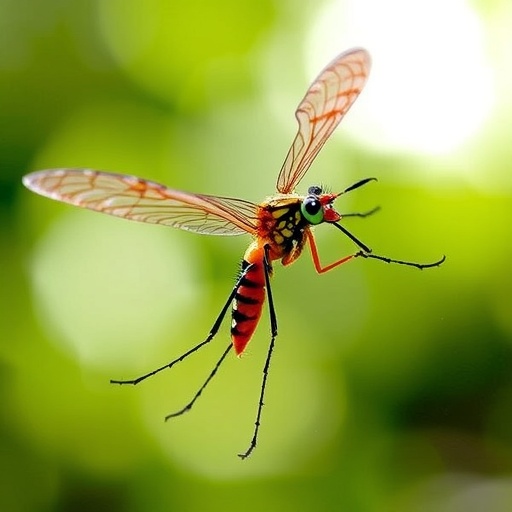
Image Credits: AI Generated
DOI: https://doi.org/10.1038/s41467-026-68927-x
Tags: avian disease control strategiesavian malaria dynamicsecological implications of avian malariahost-pathogen interactionsimplications for wildlife healthinfectiousness and pathogen concentrationmosquito vector transmissionnonlinear relationships in disease spreadpathogen load variationpredicting avian malaria outbreakstransmission of Plasmodium parasitesvector-borne disease spread