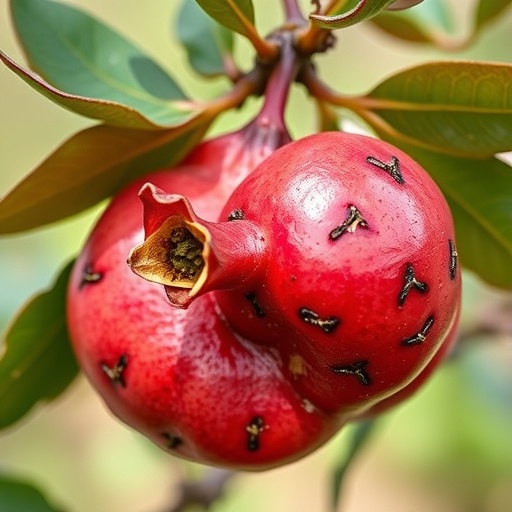
In the realm of agricultural science, the emergence of new pathogens significantly disrupts crop production and threatens global food security. One such pathogen capturing the attention of researchers is Paramicrosphaeropsis eriobotryae, a newly identified canker pathogen affecting pomegranate trees. Research conducted by Sekandarpour, Negahban, Salami, and their colleagues delves deep into the pathogenic characteristics and the susceptibility of various pomegranate cultivars. This emerging threat to one of the most cultivated fruit trees serves as a wake-up call for the agricultural community, highlighting the necessity for ongoing monitoring of plant health and pathogen emergence.
Pomegranates, recognized for their nutritional value and distinct flavor, have been cultivated for thousands of years. However, their cultivation is increasingly challenged by the rise of Paramicrosphaeropsis eriobotryae. This fungal pathogen not only induces cankers on pomegranate trees but also compromises the overall yield and fruit quality. Initial observations indicate that trees infected with this pathogen exhibit significant symptoms, including leaf wilting, branch dieback, and deep lesions on the bark, which can lead to tree death if left untreated.
Understanding the biology of Paramicrosphaeropsis eriobotryae is critical for developing effective management strategies. The pathogen appears to thrive under specific environmental conditions, particularly high humidity and moderate temperatures, which mimic its native habitat. Additionally, it has shown a remarkable ability to adapt to various stressors, making it a formidable opponent in the fight against agricultural pests and diseases. The study emphasizes the importance of identifying the environmental factors conducive to the pathogen’s life cycle, which will inform preventative and reactive measures.
Moreover, an important facet of this research is the assessment of cultivar susceptibility. Not all pomegranate varieties respond uniformly to Paramicrosphaeropsis eriobotryae. The researchers conducted extensive field trials, evaluating different cultivars for their resistance levels to the pathogen. The findings reveal significant disparities between cultivars, indicating that some varieties possess inherent resistances that could be harnessed in breeding programs. Understanding the genetic basis of this resistance will be crucial for future developments in pomegranate cultivation and disease management.
An intriguing aspect of the research lies in the investigation of the pathogen’s transmission dynamics. The study posits that Paramicrosphaeropsis eriobotryae may spread through water droplets during rainfall or via human activity, such as the movement of infected plant material. This underscores the importance of implementing stringent biosecurity measures to prevent the introduction and spread of the pathogen in pomegranate orchards. Educating farmers on the prevention of pathogen transmission could play a significant role in protecting valuable crops worldwide.
Additionally, the researchers explored the molecular mechanisms underlying the interaction between pomegranate trees and Paramicrosphaeropsis eriobotryae. The findings shed light on how the pathogen evades the plant’s immune system and establishes infection. This knowledge will pave the way for the development of targeted strategies that enhance plant defenses, potentially through genetic engineering or the application of biologically-based fungicides. The utilization of biocontrol agents could offer an eco-friendly alternative to traditional chemical treatments and reduce reliance on synthetic pesticides.
As the agricultural sector navigates the challenges presented by emerging pathogens, the role of integrated pest management (IPM) becomes increasingly vital. The study advocates for a multifaceted approach that includes regular monitoring, early detection, and the implementation of cultural control methods. By combining these strategies with the knowledge gained from research like that of Sekandarpour and colleagues, farmers can create a holistic management plan to safeguard their crops against Paramicrosphaeropsis eriobotryae.
Risk management and forecasting models based on environmental data can also play a crucial role in anticipating outbreaks of this pathogen. Utilizing satellite imagery and weather data, researchers can develop predictive models that alert growers to potential infection periods. This proactive approach enables farmers to prepare and respond more effectively, ultimately safeguarding their yields and income.
In concert with research findings, collaboration between scientists, farmers, and policymakers is essential for addressing the challenges posed by Paramicrosphaeropsis eriobotryae. Engaging local agricultural organizations and extension services can facilitate the dissemination of knowledge and resources, empowering farmers to adopt best practices for managing crop health and combating disease.
The implications of this research extend beyond pomegranate cultivation; the lessons learned regarding Paramicrosphaeropsis eriobotryae could be applied to other agricultural systems facing similar threats from emerging pathogens. By establishing a network of information-sharing and collaboration among researchers and growers, the agricultural community can enhance its resilience against the evolving challenges of plant diseases.
The study’s findings serve as a critical reminder of the rapidly changing landscape of plant pathology. As climate change continues to influence pathogen dynamics and crop production, ongoing research will be crucial to adapting agricultural practices and ensuring food security worldwide. In this context, the role of funding and support for agricultural research becomes essential. Increased investment in research endeavors will enable scientists to explore innovative solutions and technologies to counteract the challenges presented by emerging pathogens.
Moreover, the continuous education of farmers about new pathogens, their impacts, and sustainable management strategies will foster a more informed agricultural community. Workshops, field days, and extension services play a vital role in disseminating research findings to the wider public, ensuring that the latest information is accessible to those who need it most.
In conclusion, the emergence of Paramicrosphaeropsis eriobotryae is a clarion call for the agricultural sector to enhance its vigilance and preparedness against new threats. By understanding the characteristics and dynamics of this pathogen, researchers and farmers can collaborate to develop effective management strategies that protect pomegranate orchards and support sustainable agricultural practices. The future of pomegranate cultivation hinges on ongoing research, community collaboration, and a commitment to integrating scientific advancements into farm management strategies.
As seen in the research conducted by Sekandarpour and colleagues, the fight against emerging pathogens requires a combination of scientific inquiry, farmer engagement, and policy support. Through these concerted efforts, the agricultural community can forge a path toward a resilient and secure future for pomegranate cultivation and beyond.
Subject of Research: Emerging canker pathogen Paramicrosphaeropsis eriobotryae affecting pomegranate trees.
Article Title: Paramicrosphaeropsis eriobotryae as an emerging canker pathogen in pomegranate trees and the susceptibility of various cultivars.
Article References:
Sekandarpour, P., Negahban, H., Salami, M. et al. Paramicrosphaeropsis eriobotryae as an emerging canker pathogen in pomegranate trees and the susceptibility of various cultivars.
Sci Rep (2025). https://doi.org/10.1038/s41598-025-32295-1
Image Credits: AI Generated
DOI: 10.1038/s41598-025-32295-1
Keywords: Paramicrosphaeropsis eriobotryae, pomegranate, canker pathogen, cultivar susceptibility, plant pathology, agricultural research, integrated pest management.
Tags: agricultural research on pathogensagricultural threats to pomegranatescrop production challengesenvironmental conditions for pathogensfood security risksfungal pathogens in agricultureParamicrosphaeropsis eriobotryaeplant health monitoringpomegranate canker pathogenpomegranate cultivar susceptibilitypomegranate disease management strategiestree disease symptoms