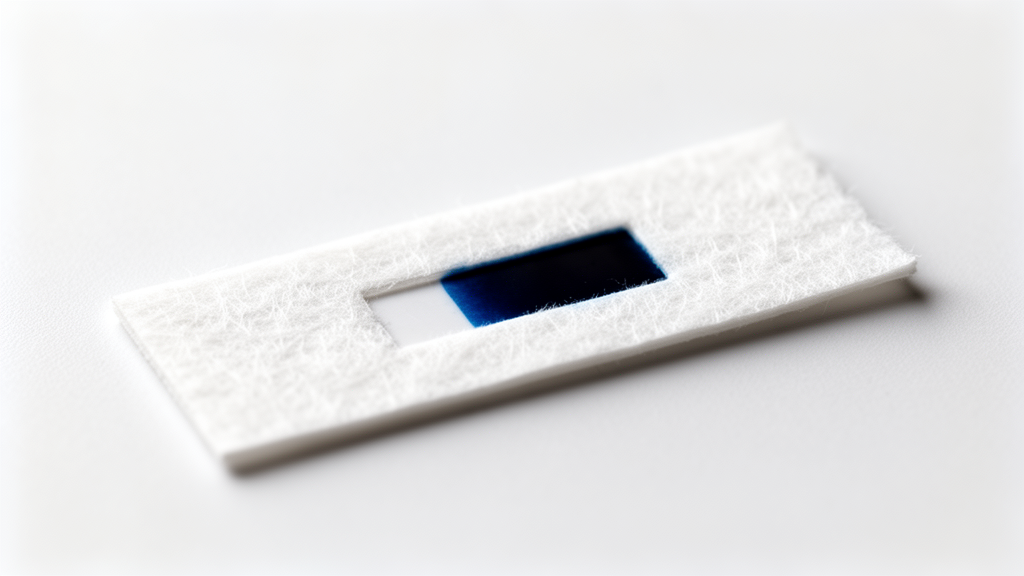
Paper-based electrochemical DNA biosensors are emerging as accessible tools for molecular diagnostics in resource-limited settings, according to a review published in the journal Ionics. The work, led by Fathima Muhammed, Manna Rachel Mathew and Sanu K. Anand with colleagues including Krishnapillai Girish Kumar, surveys the significant progress in devices that use DNA or RNA sequence recognition, or a DNA-based recognition element, as their probe. Rather than judging these sensors solely by their detection limit, the authors weigh analytical performance against the practical demands of point-of-care testing.
The review focuses specifically on paper-based electrochemical systems in which target detection or signal production is directly attributed to DNA detection. The review states that it critically analyses paper-based electrochemical systems in which target detection or signal production is directly attributed to DNA detection. The authors critically analyse three electrochemical readout formats: voltammetric, amperometric and impedimetric analysis, examining how each performs when translated onto porous paper substrates.
Sensitivity figures reported in the review are striking. Voltammetric, amperometric and impedimetric formats achieve femtomolar to attomolar sensitivity when they are paired with nanomaterial-modified paper electrodes. The review reports that these formats achieve femtomolar to attomolar sensitivity when paired with nanomaterial-modified paper electrodes, while keeping the cost of fabrication low. The combination of low-cost fabrication and high analytical performance underpins the appeal of these platforms for decentralised testing.
Material choice is central to that performance. The review highlights gold-graphene composites and conducting polymers as modifiers that enhance signal performance while keeping the cost of fabrication low. The review highlights gold-graphene composites and conducting polymers as materials that enhance signal performance while keeping the cost of fabrication low.
Each readout format brings different trade-offs for point-of-care deployment. The review highlights voltammetric analysis as one of the formats examined for analytical performance and point-of-care needs. The review also highlights amperometric analysis among the formats it examines. The review also highlights impedimetric analysis among the formats it examines. The review states that it highlights these analysis formats with attention to point-of-care needs rather than just the detection limit.
Clinical adoption, however, remains constrained. The authors identify ambient degradation, batch variability and matrix effects as continuing limitations. The review identifies ambient degradation, batch variability and matrix effects as limitations that continue to constrain clinical adoption. These factors complicate the transition from promising prototypes to devices that perform reliably outside controlled laboratory conditions.
Several developments are attempting to address those constraints. The review notes progress in isothermal amplification as one of the developments addressing these constraints. The review also notes standardised manufacturing and biodegradable electrode materials as developments attempting to address these constraints.
The review was published on 03 November 2026 in the journal Ionics. According to the review, voltammetric, amperometric and impedimetric formats achieve femtomolar to attomolar sensitivity when paired with nanomaterial-modified paper electrodes, and gold-graphene composites and conducting polymers enhance signal performance while keeping fabrication costs low. The review states that ambient degradation, batch variability and matrix effects continue to limit clinical adoption, although progress in isothermal amplification, standardised manufacturing and biodegradable electrode materials is attempting to address these constraints.
Subject of Research: Paper-based electrochemical DNA biosensors for point-of-care molecular diagnostics
Article Title: Recent advances in paper-based electrochemical DNA biosensors for point-of-care diagnostics
Article References: Muhammed, F., Mathew, M. R., Anand, S. K., Mukundan, S., Beltramini, J., Rajith, L., & Kumar, K. G. (2026). Recent advances in paper-based electrochemical DNA biosensors for point-of-care diagnostics. Ionics. https://doi.org/10.1007/s11581-026-07619-4
Image Credits: AI Generated
DOI: 10.1007/s11581-026-07619-4
Keywords: DNA biosensors, paper-based diagnostics, electrochemical detection, point-of-care testing, nanomaterials, voltammetry, impedimetric sensing, isothermal amplification, biodegradable electrodes, resource-limited settings, Recent, advances
News Source: Denise Maddox. (November 8, 2026). Paper-Based DNA Biosensors Push Molecular Diagnostics Toward Resource-Limited Settings. Scienmag.