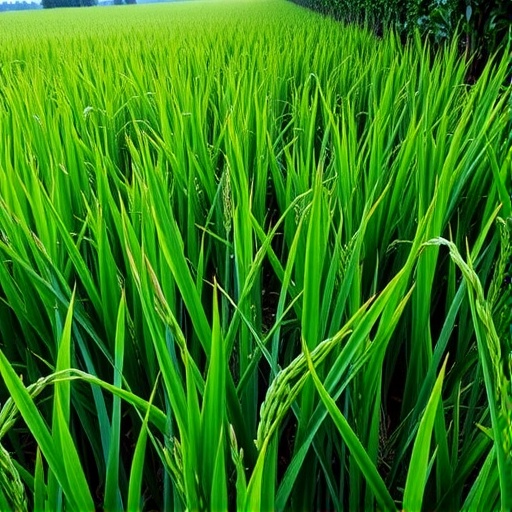
In the realm of agricultural science, the quest for crop resilience in the face of climate challenges is more critical than ever. Among the numerous cereals cultivated worldwide, rice holds immense significance as a staple food for more than half of the global population. Recent advancements have spotlighted the intricacies of rice genetics, particularly concerning its lodging resistance—an essential trait that enables rice plants to withstand adverse weather conditions and maintain agricultural productivity. A recent study led by Hu, W., Yuan, G., and Chen, J. sheds light on the genetic underpinnings that contribute to lodging resistance in rice, focusing on a specific protein known as OsDof1.
Lodging refers to the bending or falling over of crops, which can occur due to strong winds, heavy rain, or an imbalance of nutrients within the plants. It not only affects the yield and quality of the crop but also hampers harvesting efficiency. Farmers are often confronted with significant losses due to this phenomenon, necessitating improved cultivars that can endure environmental stresses. The study and its findings mark a significant step in understanding and enhancing lodging resistance in rice through genetic modification.
The researchers discovered that OsDof1, a Dof transcription factor, is instrumental in enhancing the lodging resistance of Oryza sativa L. Dof transcription factors are a class of regulatory proteins that play a crucial role in plant development and response to environmental stimuli. The ability of OsDof1 to stabilize rice plants hinges on its function in modulating the biosynthesis of auxins—a type of plant hormone vital for growth and development. Interestingly, auxins are synthesized through various pathways in plants, with tryptophan being a crucial precursor. The research indicates that OsDof1 works by suppressing the pathway that leads to tryptophan-dependent auxin biosynthesis.
Suppressing the auxin biosynthesis pathway may seem counterintuitive, especially since auxins are known for promoting growth. However, in the context of lodging resistance, it appears that fine-tuning the levels of this hormone can lead to sturdier plants. By reducing excessive auxin production, OsDof1 promotes a more robust stem structure that is less prone to bending or breaking under duress. This nuanced approach represents a shift from traditional crop breeding techniques, paving the way for precision agriculture through genetic insights.
The experimentation involved quantifying the physical and morphological changes in rice varieties expressing OsDof1 at different developmental stages. The findings demonstrated that plants with heightened levels of OsDof1 displayed substantial improvements not only in stem thickness and strength but also in overall plant architecture. Such enhancements ensure that the plants can better support their own weight and resist environmental impacts, which bodes well for both yield and quality.
Moreover, this research delves into the regulatory networks associated with OsDof1. Researchers performed RNA sequencing to analyze gene expression profiles in rice varieties with differing levels of OsDof1. The results unveiled a set of downstream genes directly influenced by OsDof1, revealing an intricate web of interactions that deeply impacts not just lodging resistance but also broader developmental processes. Understanding these regulatory cascades offers fertile ground for future explorations and applications in crop improvement.
This work highlights the intersection of biotechnology and traditional agricultural practices, calling into question the reliance on chemical fertilizers and pesticides that often accompany modern farming methods. As climate change continues to impose challenges, methods that lean toward enhancing the natural resilience of crops can create more sustainable food systems. The implications of the OsDof1 pathway could indeed inform breeding programs aimed at enhancing other traits necessary for tackling global food security issues.
Crucially, the study tackles the vital topic of climate adaptability—a pressing concern in agricultural management. By exploring genetic avenues to increase lodging resistance, it affirms a commitment to developing crops that can thrive despite unpredictable weather patterns, thereby securing food sources for future generations. Such findings beckon further inquiries that could lead to multi-trait improvements in rice, aimed at integrating elements of pest resistance, drought tolerance, and nutrient use efficiency.
The implications of these discoveries extend beyond just rice, with potential applications in other crops that face similar lodging challenges. This research opens up an exciting dialogue among plant geneticists and agronomists regarding the possibility of cross-species applications of OsDof1 or related pathways. If successful, such endeavors could amplify resilience traits in various staple foods, effectively broadening the impact of this research across global agricultural dimensions.
Continued investigations into the role of OsDof1 will likely involve field trials, where the practical applications of this research can be assessed on a larger scale. Researchers are poised to engage in partnerships with local farmers to monitor rice growth under natural conditions while evaluating performance against traditional varieties. Such collaborations may significantly enhance the practical relevance of the findings and guide future agronomic practices and policies.
In conclusion, the work presented by Hu, W., Yuan, G., and Chen, J. represents an important milestone in our understanding of rice genetics and its implications for enhancing lodging resistance. The intricate relationship between OsDof1, auxin biosynthesis, and plant morphology not only elevates our scientific comprehension but also enhances our toolkit for future agricultural innovations. As scientists forge ahead in this promising line of inquiry, we can anticipate strategies that hold the potential to radically transform agricultural practices, ensuring crops can sustainably meet the demands of a growing global population.
As the research community continues to build on these findings, the prospects of transforming rice cultivation into a more resilient and productive endeavor seem increasingly within reach. The journey from laboratory discoveries to tangible benefits on the farm underscores the imperative for continued investment in agricultural biotechnology as we navigate the uncertain agricultural future shaped by climate variability. This study serves as both a promising roadmap and a call to action for scientists, policymakers, and farmers alike.
Subject of Research: Lodging resistance in rice through genetic modification.
Article Title: OsDof1 enhances rice (Oryza sativa L.) lodging resistance through suppression of tryptophan-dependent auxin biosynthesis.
Article References:
Hu, W., Yuan, G., Chen, J. et al. OsDof1 enhances rice (Oryza sativa L.) lodging resistance through suppression of tryptophan-dependent auxin biosynthesis. BMC Genomics (2026). https://doi.org/10.1186/s12864-026-12539-8
Image Credits: AI Generated
DOI: 10.1186/s12864-026-12539-8
Keywords: Rice, lodging resistance, OsDof1, auxin biosynthesis, genetic modification, agricultural biotechnology.
Tags: agricultural science advancementsauxin suppression in plantscereal crop productivityDof transcription factor role in agricultureenhancing crop yield and qualityenvironmental stress tolerance in ricegenetic modification in agricultureimpact of climate change on ricelodging resistance geneticsOsDof1 protein functionrice crop resiliencerice lodging resistance