In a physiological investigation conducted at McMaster University, researchers found that differences in heart rate variability across active and placebo phases of second-generation oral contraceptive pill cycles could be partially mediated by shifts in resting hemodynamics and elevated resting heart rate. The study evaluated nineteen healthy premenopausal females taking monophasic second-generation oral contraceptive pills containing levonorgestrel and ethinyl estradiol. By combining supervised laboratory electrocardiography with continuous nocturnal monitoring through photoplethysmography wearables, the investigation tracked autonomic and cardiovascular profiles across both active and placebo phases. Although initial measurements indicated significant reductions in standard heart rate variability metrics during the active pill phase, statistical modeling that accounted for continuous resting heart rate revealed that most differences were attenuated. These findings suggest that observed variations could be explained by homeostatic baroreflex adjustments to blood pressure changes rather than representing impaired cardiovagal tone.
Heart rate variability serves as an established physiological estimation of cardiovagal tone, indexing parasympathetic nervous system activity through beat-to-beat timing variations between consecutive cardiac cycles. Autonomic function is quantified through time-domain metrics, including the root mean square of successive differences, standard deviation of normal intervals, and percentage of successive differences exceeding fifty milliseconds. In the frequency domain, spectral analysis isolates low-frequency and high-frequency components, using the ratio between them to evaluate cardiac vagal modulation. While cyclical fluctuations across natural menstrual cycles have been documented, exhibiting heightened parasympathetic activity during the early follicular phase, the physiological impact of oral contraceptive pills has remained poorly understood. Earlier investigations examining contraceptive phases reported conflicting outcomes without standardizing the pharmacological generation of oral contraceptives. Because second-generation formulations contain levonorgestrel, a synthetic progestin characterized by pronounced androgenicity, researchers hypothesized that active hormone administration would suppress parasympathetic dominance compared to the hormone-free placebo interval.
To establish experimental control, the investigation recruited nineteen healthy premenopausal females aged eighteen to thirty-five from McMaster University and Hamilton who had maintained second-generation oral contraceptive regimens for at least three months. The cohort exhibited a mean age of twenty-four years, height of 161.5 centimeters, weight of 69.8 kilograms, and body mass index of 26.7 kilograms per square meter. Screening excluded individuals who smoked, had cardiovascular, metabolic, or musculoskeletal diseases, or had undergone reproductive surgery. Eighteen volunteers used a formulation containing one hundred micrograms of levonorgestrel and twenty micrograms of ethinyl estradiol, while one used one hundred and fifty micrograms of levonorgestrel and thirty micrograms of ethinyl estradiol. Power calculations in R Studio established that sixteen participants were required for eighty percent power with an alpha of 0.05 and an effect size of 0.75. The study was approved by the Hamilton Integrated Research Ethics Board under Project ID 16823.
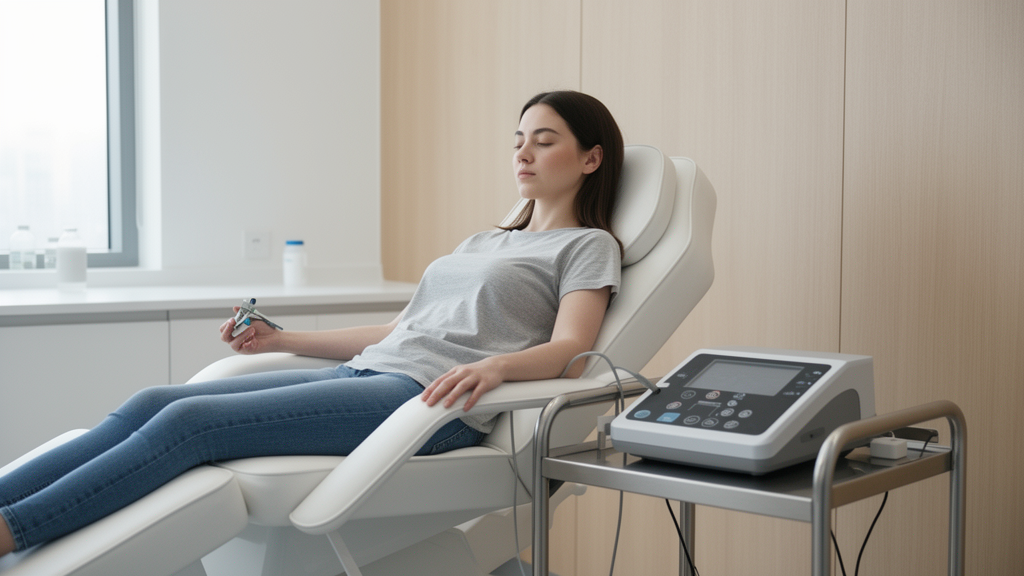
Experimental sessions took place inside the Vascular Dynamics Laboratory at McMaster University under standardized environmental and behavioral parameters. Each volunteer completed two identical testing visits conducted in a counterbalanced sequence to prevent order bias: one during the placebo week, spanning days one through seven, and another during the third week of the active phase, encompassing days twenty-one through twenty-eight. Participants complied with instructions mandating a six-hour fast, eight-hour abstinence from alcohol and caffeine, and twenty-four-hour avoidance of vigorous physical activity. All laboratory appointments occurred during morning hours between 07:00 and 12:00, with individual testing sessions scheduled within two hours of the same time of day. Following arrival, participants rested supine for ten minutes while instrumented with single-lead electrocardiography and a finger blood pressure cuff calibrated to heart level. Participants then rested in silence for five minutes to record baseline electrocardiographic data for subsequent autonomic signal analysis.
Resting hemodynamic parameters were measured in triplicate using an oscillometric device, with the last two readings averaged for systolic, diastolic, and mean arterial pressure alongside discrete heart rate. Venous blood samples totaling eight milliliters were drawn from an antecubital vein of each participant, clotted for at least forty-five minutes, centrifuged at 1000 g at four degrees Celsius, and stored at minus seventy degrees Celsius. In addition to laboratory testing, participants wore an OURA smart ring to evaluate autonomic regulation in free-living conditions. The wearable was worn on the non-dominant index or ring finger during active and placebo weeks, recording nocturnal heart rate and root mean square of successive differences during sleep via infrared photoplethysmography at 250 Hertz with 900 nanometer light. Automated filters removed abnormal beats deviating by more than sixteen beats per minute from local medians, deriving average nocturnal metrics across the final six days of each experimental phase.
Biochemical assays verified clear physiological suppression of endogenous sex hormones alongside anticipated synthetic progestin elevations during active pill administration. Serum estradiol and progesterone concentrations were quantified using commercial immunodiagnostic reagent packs, while circulating levonorgestrel was measured in duplicate via competitive enzyme-linked immunosorbent assay. Paired serum estradiol concentrations differed significantly, declining from 130 picomoles per liter during the placebo phase to 96 picomoles per liter during the active phase. In contrast, serum progesterone remained uniformly suppressed across both conditions, averaging 4.0 nanomoles per liter in each phase. Serum levonorgestrel surged from 202.12 picograms per milliliter in the placebo phase to 1604.45 picograms per milliliter during active pill ingestion, with two participants displaying placebo levels below the assay detection threshold of 6.25 picograms per milliliter. Exploratory analyses revealed no relationships between estradiol, progesterone, or levonorgestrel concentrations and any heart rate variability metric, demonstrating that exogenous hormone concentrations alone do not directly predict autonomic tone.
Hemodynamic evaluations revealed significant alterations in resting cardiovascular status between cycle phases despite stable systolic pressure. Resting systolic blood pressure remained comparable at 110 millimeters of mercury during the placebo phase and 109 millimeters of mercury during the active phase. In contrast, diastolic blood pressure decreased significantly from 67 millimeters of mercury in the placebo phase to 63 millimeters of mercury during active pill use. Mean arterial pressure similarly exhibited a downward shift from 83 millimeters of mercury in the placebo week to 80 millimeters of mercury in the active week. Concurrently, resting pulse pressure was 44 millimeters of mercury during the placebo phase compared to 47 millimeters of mercury during active hormone ingestion. These peripheral hemodynamic reductions were accompanied by statistically significant elevations in resting heart rate: discrete resting heart rate increased from 63 to 67 beats per minute, while continuous resting heart rate rose from 66 to 71 beats per minute.
Morning electrocardiographic recordings demonstrated widespread decreases across autonomic metrics during active pill administration prior to accounting for resting chronotropic shifts. The primary time-domain measure, root mean square of successive differences, fell from 87.14 milliseconds during the placebo phase to 51.55 milliseconds in the active phase. Secondary metrics exhibited parallel unadjusted declines: standard deviation of normal intervals dropped from 81.59 to 58.46 milliseconds, percentage of successive differences exceeding fifty milliseconds decreased from 42.25 to 27.75 percent, and high-frequency power diminished from 3170.6 to 1414.8 squared milliseconds. Concurrently, the low-to-high frequency ratio increased from 0.70 to 1.08. However, continuous resting heart rate was strongly negatively associated with autonomic metrics. When included as a covariate within a linear mixed-effects model, phase differences for standard deviation of intervals, percentage exceeding fifty milliseconds, high-frequency power, and frequency ratio were no longer significant, leaving only the root mean square and standard deviation of successive differences significant.
Continuous nocturnal assessments gathered from the sixteen participants with complete wearable data mirrored laboratory patterns while underscoring the mediating role of resting heart rate. Nocturnal root mean square of successive differences averaged across the week was initially lower during active pill consumption, registering 65 milliseconds compared to 73 milliseconds during the placebo interval. Concurrently, sleep variables measured by the ring showed no differences between phases, confirming that nocturnal variations were not artifacts of disrupted sleep. Crucially, when continuous resting heart rate was integrated into the linear mixed-effects model, the nocturnal difference between active and placebo phases was completely abolished, yielding an adjusted p-value of 0.452. Researchers concluded that modest vasodilation during active hormone ingestion likely lowers diastolic and mean arterial pressure, prompting compensatory baroreflex activation that elevates resting heart rate to maintain cardiovascular homeostasis. Consequently, the authors noted that these changes in heart rate variability may not represent meaningful changes in cardiovagal tone, nor imply an adverse response.
Despite rigorous laboratory standardization and ecologically valid wearable monitoring, the authors highlighted several methodological limitations that delineate the scope of their findings. Respiratory rate was not directly measured or controlled during data collection, leaving open the possibility that subtle ventilatory differences influenced cardiovagal parameters. Furthermore, while the smart ring offers continuous nocturnal monitoring, it derives pulse rate variability from peripheral photoplethysmography rather than measuring genuine myocardial electrical intervals via electrocardiography, leaving signals susceptible to changes in peripheral vascular properties and total peripheral resistance. Data from the wearable platform were restricted to five-minute segment summaries rather than beat-by-beat recordings, and participant compliance with home ring wear could not be verified throughout the week. Finally, the experimental design did not evaluate a comparator group of naturally cycling females, nor did it examine third- or fourth-generation oral contraceptives. The investigators emphasized that future autonomic research must incorporate resting heart rate as a covariate when evaluating hormonal influences on cardiovascular regulation.
Subject of Research: Influence of second-generation oral contraceptive phases on heart rate variability and central hemodynamics
Article Title: Changes in central hemodynamics and heart rate variability across active and placebo phases in second‐generation oral contraceptive pill users
Article References: Stone, J. C., Chackal, J., Badour, M. I., & MacDonald, M. J. (2026). Changes in central hemodynamics and heart rate variability across active and placebo phases in second‐generation oral contraceptive pill users. Physiological Reports, 14(21), Article e71175. https://doi.org/10.14814/phy2.71175
Image Credits: AI Generated
DOI: 10.14814/phy2.71175
Keywords: heart rate variability, oral contraceptives, levonorgestrel, ethinyl estradiol, cardiovagal tone, central hemodynamics, resting heart rate, electrocardiography, photoplethysmography, OURA ring, rMSSD, baroreflex control, diastolic blood pressure, mean arterial pressure, premenopausal females, pulse rate variability, linear mixed-effects models
News Source: Drew Townsend. (November 12, 2026). Oral Contraceptive Phase Differences in Heart Rate Variability May Reflect Resting Hemodynamics. Scienmag.