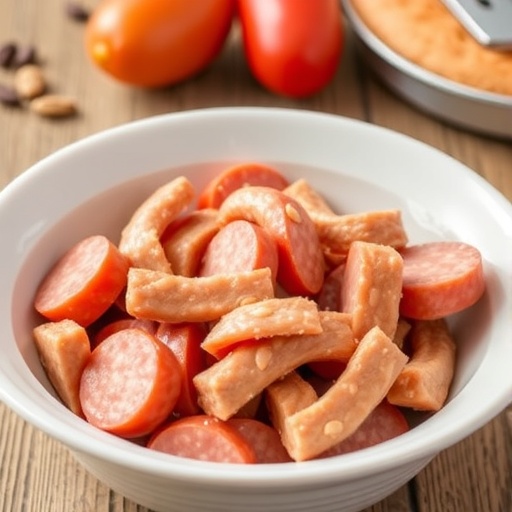
In the rapidly evolving landscape of sustainable food innovation, the quest for optimizing plant-based meat alternatives continues to gain unprecedented momentum. A recent study published in Food Science and Biotechnology sheds illuminating insights on refining texturized vegetable protein (TVP)-based sausages through an advanced mixture experimental design. The research presents a meticulous optimization of ingredient ratios to elevate both the sensory and functional qualities of plant-based sausages, marking a significant stride in alternative protein technology.
As global consumers increasingly pivot towards meat alternatives, driven by environmental concerns, health awareness, and ethical considerations, demand for products that genuinely mimic the texture, flavor, and mouthfeel of traditional meat is surging. TVP, a well-established plant protein ingredient derived predominantly from soy, has emerged as a cornerstone in crafting meat analogues due to its fibrous structure and protein content. However, the inherent complexity of replicating meat’s multifaceted organoleptic profile requires sophisticated formulation strategies, a challenge this new research boldly addresses.
The study employed a mixture experimental design—a statistical approach uniquely suited for optimizing the proportions of complex ingredient blends. This method allows researchers to systematically vary component ratios and evaluate their combined effects on product attributes without resorting to exhaustive trial-and-error. By harnessing this design, the team meticulously explored varying ratios of TVP with complementary binders, flavor enhancers, and texture modifiers, seeking an optimal balancing point that harmonizes all key quality parameters.
Central to the endeavor was the performance of the resultant sausage in terms of texture, juiciness, firmness, and flavor release—attributes that collectively shape consumer satisfaction. The researchers evaluated a series of formulations, analyzing how subtle shifts in the mixture composition influenced these properties through instrumental texture analysis and sensory evaluation panels. This dual approach ensured that both objective measurements and subjective consumer perceptions informed the optimization.
Findings revealed that specific ratios of TVP combined with a strategic blend of hydrocolloids and plant-based fats dramatically improved the bite and cohesiveness of the sausages, closing the gap with conventional meat products. The incorporation of tailored binders not only enhanced water retention and juiciness but also stabilized the structure, preventing common issues of crumbliness often observed in plant-based substitutes. Flavor delivery was markedly improved through the introduction of natural umami-rich ingredients, which complemented the inherent nutty notes of soy protein.
Beyond texture and flavor, nutritional profiles were also significantly impacted by the optimized mixture. The ideal blends featured enhanced protein density while maintaining low fat and carbohydrate contents, aligning well with contemporary consumer demands for healthier yet indulgent food options. This demonstrates that functional formulation can simultaneously address sensory appeal and nutritional integrity—a dual imperative in food science.
Perhaps equally noteworthy is the study’s contribution to process scalability and industrial applicability. By elucidating precise mixing ratios, the research offers manufacturers a scientifically validated blueprint to streamline production, minimize ingredient waste, and ensure consistent product quality. This translates into potential cost savings, greater market competitiveness, and expanded consumer accessibility for plant-based sausage options.
The research team underscores that such optimization frameworks extend beyond sausages to other protein-rich alternative foods, highlighting a versatile methodology capable of accelerating innovation across the plant-based sector. The utilization of mixture experimental designs constitutes a sophisticated toolset that can unravel the complex interplay of multi-component food systems, shedding light on innovative ingredient synergies previously unexplored.
Industry experts predict that studies like this will catalyze a new wave of next-generation meat analogues that not only cater to vegetarian and vegan consumers but also entice flexitarians seeking flavorful, nutritious, and environmentally responsible choices. The refinement of texture and taste profiles to near-parity with animal-derived products represents a critical milestone in mainstreaming alternative proteins.
Moreover, this research taps into the growing trend of hybrid product formulations—where plant proteins combine with minimal animal derivatives or novel functional ingredients to deliver cost-effective, sustainable, yet highly palatable solutions. Optimization of mixing ratios becomes indispensable in fine-tuning such complex matrices, enabling bespoke customization according to regional preferences, market trends, or nutritional guidelines.
While the study primarily focuses on soy-based TVP, the underlying principles hold promise for integration with emerging protein sources such as pea, lentil, or mycoprotein. This adaptability can drive diversification of plant-based portfolios, reduce allergen concerns, and foster innovation that resonates with wider demographics.
This work also opens avenues for incorporating functional additives that may extend shelf life, improve textural stability under varying storage conditions, or enhance micronutrient profiles. By understanding how each component interacts within optimized formulations, formulators can engineer multifunctional, high-performance products meeting the demands of a dynamic food ecosystem.
In summary, this pioneering research delivers not only a rigorously validated optimized mix for TVP-based sausages but also advances the methodological paradigm in product development. Through precise manipulation of mixture components guided by experimental design, the study elevates plant-based meat alternatives closer than ever to their animal-based counterparts, promising a tastier, healthier, and more sustainable future for protein consumption worldwide.
As consumer appetite for alternative meats intensifies, scientific breakthroughs such as these will underpin the industry’s ability to innovate responsibly and competitively. The convergence of food technology, sensory science, and nutritional optimization showcased here exemplifies the frontier of food innovation—where data-driven craftsmanship creates the next culinary revolution.
Continued interdisciplinary collaborations and investment in such research hold the key to unlocking the full potential of plant proteins, ultimately contributing to more sustainable food systems and global food security. The transformative impact of optimized TVP mixtures is thus not merely incremental but foundational, heralding a new era in meat analogue excellence.
Subject of Research: Optimization of mixing ratios for TVP-based plant protein sausages using mixture experimental design to enhance sensory qualities and nutritional value.
Article Title: Optimization of mixing ratio for a TVP-based alternative sausage using mixture experimental design
Article References:
Song, H.Y., Jeong, D.H., Jung, Y.J. et al. Optimization of mixing ratio for a TVP-based alternative sausage using mixture experimental design. Food Sci Biotechnol (2025). https://doi.org/10.1007/s10068-025-02077-6
Image Credits: AI Generated
DOI: 10.1007/s10068-025-02077-6 (Published 11 December 2025)
Tags: alternative protein technologyconsumer demand for plant-based productshealth and environmental impact of meat alternativesingredient ratio optimizationmeat analogue formulation strategiesmixture experimental design in food scienceplant-based meat alternativesreplicating meat texture and flavorsensory qualities of sausagessustainable food innovationtexturized vegetable protein researchTVP-based sausage optimization