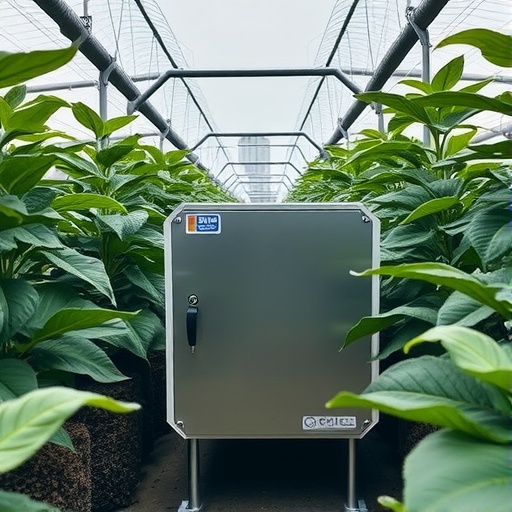
In an age where energy sustainability is paramount, innovative energy solutions are increasingly gathering attention. One such breakthrough, presented by researchers Wu, C., Chen, Y., and Jiang, Y., revolves around a newly developed four-stage air-supply biomass fragment fuel burner designed specifically for tobacco curing processes. The growing demand for efficient and eco-friendly curing methods has catalyzed research in this domain, fostering advancements that could potentially reshape agricultural practices while minimizing environmental impact.
The tobacco industry, long associated with various inefficiencies and wastefulness in energy consumption, is witnessing a shift towards biomass energy solutions. The four-stage air-supply burner introduces a systematic approach to enhance combustion efficiency and minimize emissions. By leveraging biomass fragment fuel, this innovative burner not only caters to the inherent needs of tobacco curing but also aligns with the global pursuit of reducing carbon footprints across agricultural industries.
At the heart of this innovation lies the fundamental principle of optimizing air supply during the burning process. The researchers have meticulously crafted a burner that employs a four-stage air supply mechanism. Each stage plays a crucial role in ensuring that combustion is efficient and complete, thereby maximizing energy output while minimizing harmful byproducts. This careful modulation of combustion dynamics is what sets this burner apart from conventional systems that often rely on simpler, less effective mechanisms.
From a technical perspective, the design incorporates features that facilitate enhanced airflow patterns and turbulent mixing. This effectively ensures that biomass combusts at the optimal temperature, leading to improved thermal efficiency. The studies conducted elucidate that with this configuration, the burner achieves higher heating performance compared to traditional methods, translating into significant energy savings during tobacco curing operations.
Moreover, the burning of biomass as opposed to fossil fuels serves a dual purpose: it not only provides a renewable energy source but also addresses the pressing issue of agricultural waste management. In many regions, leftover biomass from crop production often goes unutilized, leading to environmental concerns. The adoption of this burner has the potential to convert what would be waste into a valuable energy resource, thus promoting circular economy principles within agricultural practices.
The research emphasizes the importance of testing and validation to establish the operational efficacy of the burner under real-world conditions. Experiments conducted within controlled parameters revealed promising results, confirming that the four-stage air-supply mechanism significantly enhances the heating performance required for effective tobacco curing. The implications of these findings extend beyond mere efficiency, as they also suggest potential improvements in product quality stemming from uniform heating and consistent curing processes.
Furthermore, the results observed during the burner trials suggest that there is a notable reduction in emissions of pollutants commonly associated with biomass combustion. This is a critical finding for an industry that has frequently faced scrutiny over its environmental impact. The innovations introduced by this research are paving the way for more responsible production methods while adhering to stringent environmental regulations.
In terms of practicality, the transition to this novel burner technology will necessitate training for agricultural workers and stakeholders involved in the tobacco curing process. Understanding the operational dynamics of the four-stage burner is paramount to fully leverage its advantages. Educational programs and initiatives must be put in place to ensure that users can operate the technology effectively, thereby maximizing its benefits.
The economic aspect of transitioning to biomass energy cannot be overlooked. By utilizing locally sourced biomass, tobacco producers stand to reduce their dependence on imported fossil fuels, leading to decreased operational costs over time. Additionally, as global policies increasingly favor sustainable practices, early adopters of such technologies may find themselves benefiting from incentives and recognition within their respective markets.
Looking toward the future, the marriage of agricultural practices with advanced energy technologies exemplifies a crucial shift towards sustainability. The success of the four-stage air-supply biomass fragment fuel burner could serve as a model for similar endeavors across various agricultural sectors, where the efficient use of resources and energy directly influences productivity and profitability.
In conclusion, the innovative four-stage air-supply biomass fragment fuel burner represents a significant advancement in the field of agricultural energy solutions. Designed specifically for tobacco curing, it demonstrates the potential of biomass technology to address both efficiency and environmental concerns prevalent in traditional methods. As this research unfolds into practice, it promises to reshape how the tobacco industry approaches energy use, with broader implications for sustainable agricultural practices worldwide.
This research is pivotal, signifying a step towards integrating eco-friendly energy solutions in agriculture, thereby addressing the pressing issues of energy efficiency and environmental impact. As industries continue to seek advancements that align with sustainability goals, innovative solutions like this burner are expected to lead the way in transformative agricultural practices.
Subject of Research: Tobacco curing heating performance of a biomass burner.
Article Title: The Tobacco Curing Heating Performance of a Four-Stage Air-Supply Biomass Fragment Fuel Burner.
Article References:
Wu, C., Chen, Y., Jiang, Y. et al. The Tobacco Curing Heating Performance of a Four-Stage Air-Supply Biomass Fragment Fuel Burner.
Waste Biomass Valor (2025). https://doi.org/10.1007/s12649-025-03429-3
Image Credits: AI Generated
DOI: https://doi.org/10.1007/s12649-025-03429-3
Keywords: Tobacco curing, biomass energy, air-supply burner, energy efficiency, environmental impact.
Tags: biomass burner technologybiomass fuel applicationscombustion efficiency in agricultureeco-friendly tobacco productionenergy optimization in curingenvironmental impact of tobacco farmingfour-stage air supply mechanisminnovative agricultural practicesminimizing emissions in tobacco industryreducing carbon footprints in farmingsustainable energy solutionstobacco curing processes