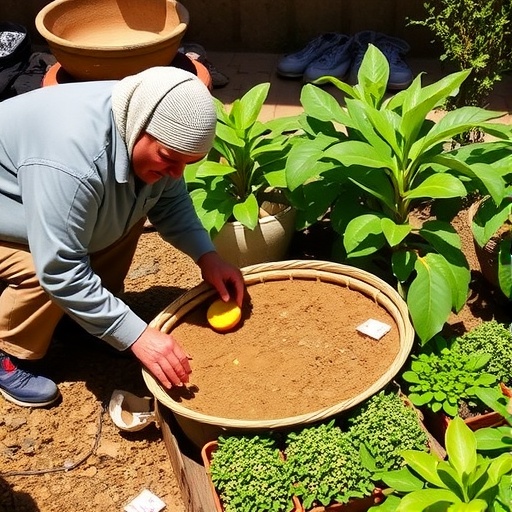
In the realm of sustainable waste management, recent research showcases an innovative approach to the anaerobic digestion of Moroccan green tea waste, conducted under mesophilic conditions. The study, authored by Habchi, S., Boukabou, I., Sallek, B., and colleagues, delves deep into the implications of this biomass conversion method on methane yield, biodegradability, and kinetic modeling. This research not only sheds light on an environmentally friendly way to manage agricultural waste but also highlights the potential of converting waste into valuable energy resources.
Anaerobic digestion has emerged as a pivotal technology in waste treatment, primarily due to its ability to produce biogas, a renewable energy source comprising primarily methane. The utilization of green tea waste, abundant in Morocco, offers a unique opportunity to explore the viability of this organic material as a substrate for biogas production. By focusing on mesophilic conditions—ideal for microbial activity—the study aims to optimize the digestion process, ensuring efficient breakdown and energy recovery.
The importance of methane as a renewable energy source cannot be overstated, especially in the context of global energy demands and climate change concerns. Methane produced from anaerobic digestion significantly contributes to reducing greenhouse gas emissions by substituting fossil fuels in energy production. This research contributes significantly to the existing body of knowledge, elaborating on how organic waste like green tea can be effectively transformed into clean energy through advanced biological processes.
The study meticulously evaluates the methane yield from the anaerobic digestion of green tea waste, highlighting how various factors, such as temperature and retention time, directly influence biogas production. The researchers conducted a series of controlled experiments to monitor the degradation rates and corresponding methane outputs, providing empirical data to substantiate their findings. Notably, the results indicate a promising methane yield, affirming the potential of Moroccan green tea waste as a sustainable energy source.
Furthermore, biodegradability assessments reveal that green tea waste possesses favorable characteristics that facilitate its rapid decomposition under anaerobic conditions. The research emphasizes the significance of substrate composition in optimization efforts, suggesting that the high lignin and cellulose content in green tea enhances microbial activity and accelerates the digestion process. Such insights are invaluable for enhancing the efficiency of anaerobic digesters in real-world applications.
Kinetic modeling plays a crucial role in understanding the dynamics of the anaerobic digestion process. The study employs various kinetic models to elucidate the substrate degradation rates, providing a framework for predicting methane production. By accurately modeling the anaerobic digestion process, the research establishes a scientific basis for scaling up the technology for commercial applications, ultimately aiding in energy transition efforts.
The implications of this research extend beyond mere energy production; they advocate for a circular economy where food waste can be redirected from landfills to biogas facilities. Such practices not only minimize environmental impacts but also contribute to rural development by creating jobs around waste management and renewable energy sectors. As the world grapples with rising waste levels, transitioning to sustainable solutions such as this presents a pathway toward mitigating environmental crises.
In the broader context, the research aligns with global efforts to optimize waste utilization and energy production simultaneously. As renewable energy transitions gain momentum, studies like this one are crucial in informing policymakers and industry players about the viability of using agricultural residues for energy production. The success of such projects may encourage more nations to invest in renewable technologies, leading to a greener future.
Moreover, the authors shed light on the potential economic benefits of anaerobic digestion for local farmers and communities. By using waste materials, not only can farmers generate additional income through biogas production, but they can also contribute positively to environmental preservation. This dual benefit motivates research and development in optimizing waste conversion technologies, urging stakeholders to recognize the intrinsic value of organic waste.
The study also raises awareness regarding the environmental advantages associated with reducing food waste. By converting green tea waste into biogas, the research presents a compelling case for sustainable practices that address pressing global issues such as climate change and resource depletion. This perspective fosters a mindset among communities and industries towards adopting eco-friendly waste management practices.
As the research concludes, it highlights the necessity of further studies to enhance the efficiency of anaerobic digestion processes. Future research could focus on testing different substrates, optimizing operational conditions, and exploring advanced pre-treatment methods to augment methane production. By continuously refining these processes, the field of waste-to-energy technology can progress toward achieving more sustainable outcomes.
Beyond technical advancements, the study serves as a significant inspiratory force for other researchers, encouraging exploration in the sphere of waste management and renewable energy. With the right investments and innovations, similar studies can be replicated in different regions, addressing local waste issues while simultaneously contributing to global renewable energy targets.
In conclusion, the anaerobic digestion of Moroccan green tea waste highlights a promising synergy between waste management practices and renewable energy production. This crucial research underlines the feasibility of harnessing agricultural waste for energy, framing it as a vital component of future environmental strategies. As the world navigates its way toward sustainability, studies like this pave the road for innovative solutions that benefit both the planet and its inhabitants.
Subject of Research: Anaerobic Digestion of Moroccan Green Tea Waste
Article Title: Anaerobic Digestion of Moroccan Green Tea Waste Under Mesophilic Conditions: Methane Yield, Biodegradability, and Kinetic Modeling
Article References:
Habchi, S., Boukabou, I., Sallek, B. et al. Anaerobic Digestion of Moroccan Green Tea Waste Under Mesophilic Conditions: Methane Yield, Biodegradability, and Kinetic Modeling.
Waste Biomass Valor (2025). https://doi.org/10.1007/s12649-025-03439-1
Image Credits: AI Generated
DOI: https://doi.org/10.1007/s12649-025-03439-1
Keywords: Anaerobic digestion, methane yield, biodegradability, kinetic modeling, Moroccan green tea waste, renewable energy, sustainable waste management.
Tags: agricultural waste management solutionsanaerobic digestion of tea wastebiogas production technologybiomass conversion methodsenvironmental impact of methanekinetic modeling in waste treatmentmesophilic digestion conditionsmethane production optimizationMoroccan green tea wastereducing greenhouse gas emissionsrenewable energy from agriculturesustainable waste management