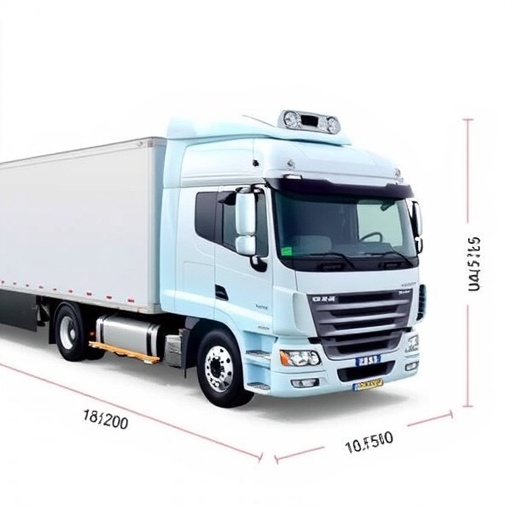
The rapidly evolving landscape of sustainable transportation has drawn significant attention to the development of heavy-duty fuel cell trucks. A notable advancement in this field has been highlighted in a recent publication by Pietruck, Koch, and Eckstein, which introduces an innovative method for the multi-criteria and mission-specific component dimensioning of these vehicles. This groundbreaking study promises to revolutionize the way heavy-duty fuel cell trucks are engineered and optimized, meeting both performance and environmental standards.
The urgency of addressing climate change has propelled researchers and engineers to develop more efficient and cleaner alternatives to traditional fossil fuel-powered trucks. The operational efficiency and environmental friendliness of fuel cell technology, particularly hydrogen fuel cells, position them as prime candidates for heavy-duty applications. The authors’ method offers an analytical framework that considers various criteria essential for optimizing the truck’s design, thereby enhancing fuel efficiency and reducing emissions.
One of the critical components of heavy-duty fuel cell trucks is the fuel cell stack itself, which converts hydrogen into electricity. The design of fuel cell stacks has traditionally been a complex challenge, as it involves balancing power output, weight, and space constraints while ensuring durability and efficiency. The authors detail their heuristic approach to component dimensioning, which allows for a tailored design that meets specific mission profiles, whether for long-haul transport or regional distribution.
In their study, Pietruck et al. emphasize the importance of a multi-criteria decision-making framework. This framework not only encompasses technical specifications but also integrates economic factors, environmental concerns, and operational criteria. For instance, the analysis includes considerations of cost-effectiveness, lifecycle assessments, and the truck’s impact on reducing greenhouse gas emissions. By employing a holistic approach, the authors aim to create a sustainable and economically viable model for fuel cell trucks.
The shift towards hydrogen fuel cell technology necessitates a comprehensive understanding of the various components involved in heavy-duty trucks. From the fuel storage system to the electric drive train, every aspect must be meticulously designed to achieve optimal performance. The method proposed by the authors systematically addresses these components, ensuring that each part complements the overall functionality of the vehicle.
A key insight from the research is the significance of mission-specific criteria. Different trucking operations may have vastly different requirements; a truck designed for urban environments may prioritize agility and energy efficiency, while a long-haul truck may focus on range and payload capacity. By recognizing these distinctions, the authors’ method allows for customized solutions that can adapt to a variety of operational demands, thereby enhancing the versatility of fuel cell trucks in the marketplace.
Furthermore, the authors discuss the potential challenges associated with the adoption of fuel cell technology in the heavy-duty segment. Infrastructure for hydrogen refueling is still developing, and there are logistical considerations regarding availability and distribution. The method they propose provides a framework that can be adapted as infrastructure evolves, ensuring that fuel cell trucks remain a viable and competitive option in the ever-changing transportation landscape.
The environmental implications of adopting heavy-duty fuel cell trucks are substantial. Conventional diesel trucks are major contributors to air pollution and greenhouse gas emissions. By transitioning to hydrogen fuel cell technology, the transportation sector can significantly reduce its carbon footprint. The authors highlight that their method not only improves operational efficiency but also aligns with global environmental goals, making it a timely and necessary contribution to the field.
In addition to environmental benefits, there are economic advantages to be gained. As governments continue to push for low-emission vehicles through incentives and regulations, the demand for fuel cell trucks is likely to increase. The authors provide evidence that the upfront investment in fuel cell technology can lead to lower operational costs over the vehicle’s lifecycle, making it an attractive option for fleet operators looking to reduce costs while meeting regulatory requirements.
The collaborative nature of this research is also noteworthy, as it involves interdisciplinary expertise ranging from engineering to environmental science. By bringing together diverse perspectives, the authors can ensure that the developed method is robust and applicable across various contexts within the heavy-duty transportation sector. This collaboration exemplifies the power of interdisciplinary research in addressing complex technological challenges.
The potential for advancements in fuel cell technology is vast, and the method proposed by Pietruck and colleagues paves the way for future research and development. As more companies seek to innovate within this space, the insights garnered from this study will be invaluable in guiding design and engineering choices that prioritize sustainability without compromising performance.
In summary, the publication by Pietruck, Koch, and Eckstein signals a major step forward in the design and optimization of heavy-duty fuel cell trucks. Their innovative method for component dimensioning addresses critical factors in performance, environmental impact, and economic feasibility. This research not only contributes to the body of knowledge in sustainable transportation but also provides a practical roadmap for those looking to implement fuel cell technology in real-world applications.
As the transportation industry continues to grapple with the pressing need for cleaner solutions, the insights from this study will undoubtedly inspire further exploration into hydrogen fuel cells. The prospects are bright for this clean energy technology, setting a promising precedent for future advancements that tackle the challenges of sustainability in heavy-duty vehicles.
Subject of Research: Heavy-duty fuel cell trucks and their optimization through multi-criteria component dimensioning.
Article Title: Method for multi-criteria and mission-specific component dimensioning for heavy-duty fuel cell trucks.
Article References:
Pietruck, M., Koch, T. & Eckstein, L. Method for multi-criteria and mission-specific component dimensioning for heavy-duty fuel cell trucks.
Automot. Engine Technol. 10, 11 (2025). https://doi.org/10.1007/s41104-025-00153-x
Image Credits: AI Generated
DOI: https://doi.org/10.1007/s41104-025-00153-x
Keywords: Fuel cell technology, heavy-duty trucks, component dimensioning, multi-criteria decision making, sustainable transportation.
Tags: advancements in fuel cell technologyclimate change mitigation strategiescomponent dimensioning methodsenvironmental impact of trucksfuel cell stack engineeringheavy-duty fuel cell truckshydrogen fuel cell technologyinnovative vehicle design frameworksmulti-criteria design optimizationperformance efficiency in transportationreducing emissions in heavy-duty vehiclessustainable transportation solutions