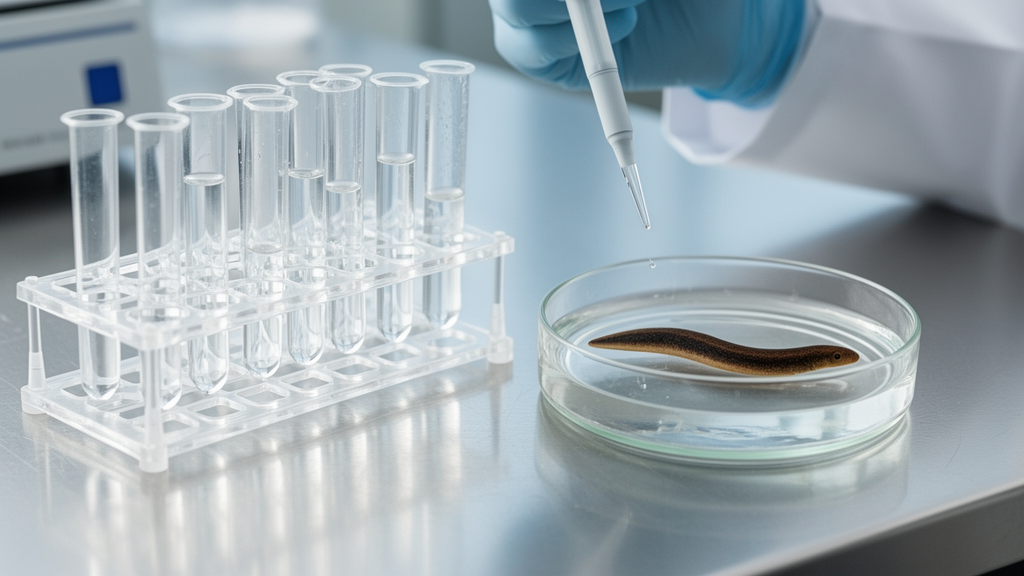
Biologists investigating freshwater flatworms have developed targeted chemical extraction protocols that yield high-purity planarian DNA suitable for polymerase chain reaction amplification without relying on bovine serum albumin supplements. Freshwater planarians belonging to the group Continenticola have long presented persistent obstacles during genetic workflows because endogenous mucus and tissue pigments frequently co-purify alongside nucleic acids. These co-purifying biochemical contaminants act as potent inhibitors during standard polymerase chain reaction and quantitative polymerase chain reaction assays, while standardized isolation procedures have remained unavailable for most species across the group.
To overcome these persistent enzymatic inhibition challenges, researchers Eliška Korbová, Karolína Plšková, and Jakub Vašek systematically evaluated approximately 30 distinct lysis buffer formulations across six European freshwater flatworm species. The experimental taxa encompassed Polycelis felina, an undetermined Polycelis species, Dendrocoelum lacteum, Dugesia gonocephala, a Girardia species, and a Schmidtea species.
The experimental lysis buffers incorporated combinations of guanidine thiocyanate, cetyltrimethylammonium bromide, sodium dodecyl sulfate, and polyvinylpyrrolidone. The investigators tested both polyvinylpyrrolidone K10 and K30 polymers across systematic concentration gradients to assess their efficacy in binding interfering compounds. During parallel assessments of previously published extraction techniques, older protocols repeatedly generated visibly discolored nucleic acid pellets or produced insufficient quantities of extracted DNA across the majority of the evaluated flatworm species.
To evaluate the success of each formulation, the research team implemented a multi-tiered screening regimen. The investigators monitored the physical color of the resulting DNA pellets, measured chemical purity ratios using ultraviolet spectrophotometry at absorbance wavelengths of 260/280 and 260/230 nanometers, and verified overall structural integrity through agarose gel electrophoresis.
The screening demonstrated that an optimized cetyltrimethylammonium bromide and polyvinylpyrrolidone K30 buffer delivered high-purity DNA across five of the six tested flatworm taxa. By adjusting the concentration of polyvinylpyrrolidone K30 between 2 percent and 8 percent depending on the specific organism, the authors successfully isolated amplification-ready genetic material from Polycelis felina, Dendrocoelum lacteum, Schmidtea species, Polycelis species, and Girardia species.
However, the standard cetyltrimethylammonium bromide and polyvinylpyrrolidone formulation proved insufficient for the heavily pigmented flatworm Dugesia gonocephala. The dense pigmentation characteristic of this species necessitated a separate, specialized chemical protocol integrating cetyltrimethylammonium bromide, sodium dodecyl sulfate, and polyvinylpyrrolidone K30.
Together, the dual-protocol strategy provides a systematic framework for processing freshwater planarians without specialized enzymatic scavenging additives. The broadly applicable cetyltrimethylammonium bromide and polyvinylpyrrolidone K30 method, adjustable across a 2 to 8 percent polymer range, pairs with the dedicated detergent-supplemented protocol to permit reliable downstream amplification.
Subject of Research: DNA extraction methods for freshwater planarians
Article Title: DNA extraction from planarians for PCR and qPCR
Article References: Korbová, E., Plšková, K., & Vašek, J. (2026). DNA extraction from planarians for PCR and qPCR. Molecular Biology Reports, 53(1), Article 1932. https://doi.org/10.1007/s11033-026-13110-0
Image Credits: AI Generated
DOI: 10.1007/s11033-026-13110-0
Keywords: DNA extraction, planarians, Continenticola, PCR, qPCR, polymerase chain reaction, CTAB, polyvinylpyrrolidone, PVP K30, sodium dodecyl sulfate, guanidine thiocyanate, Polycelis felina, Dendrocoelum lacteum, Dugesia gonocephala, Schmidtea, Girardia, spectrophotometry, PCR inhibition
News Source: Drew Townsend. (November 13, 2026). Optimized Buffer Protocols Enable Direct Planarian DNA Amplification Without BSA. Scienmag.