A new research initiative in Australia has established a quantitative environmental-mechanical assessment framework that identifies the optimal composition for structural concrete incorporating recycled materials. By systematically analyzing the performance of recycled crushed glass, recycled concrete aggregate (RCA) of two different size gradations, and coal bottom ash, researchers have determined that a 20 percent replacement of natural aggregates with 10-millimeter recycled concrete aggregate yields the most effective balance between maintaining structural integrity and achieving environmental sustainability. This study addresses a significant gap in the construction industry, where the integration of various waste streams has historically lacked a unified comparative framework to guide decision-making, often leading to trade-offs that either compromise mechanical reliability or minimize the potential environmental benefits of recycling.
The production of concrete is one of the most resource-intensive activities globally, with an annual production of nearly 30 billion tons. In the Australian context, where the industry has made significant strides toward decarbonization, there is a clear strategic imperative to achieve net-zero carbon emissions by 2050. Incorporating supplementary cementitious materials and recycled aggregates offers a viable pathway to reduce these environmental impacts without sacrificing the mechanical performance required for structural safety. The researchers evaluated the feasibility of four distinct waste-derived materials: recycled crushed glass, 10-millimeter and 20-millimeter recycled concrete aggregate, and coal bottom ash, at replacement levels of 10, 20, and 30 percent, respectively.
To provide a rigorous scientific basis for their conclusions, the research team conducted a comprehensive material characterization program, including X-ray diffraction, X-ray fluorescence, Fourier transform infrared spectroscopy, and microstructural analysis via scanning electron microscopy. These investigations revealed that while the chemical profiles of coal bottom ash and fly ash were relatively similar, their mineralogical differences—specifically the presence of mullite and quartz—resulted in distinct hydration behaviors. Mechanical performance was evaluated using compressive strength testing at 7 and 28 days, while environmental impact was quantified using a cradle-to-gate life-cycle assessment (LCA) approach in accordance with ISO 14040 and 14044 standards, utilizing data from the Australian Life Cycle Assessment Society (AusLCI) and Ecoinvent databases.
The study implemented a two-stage mixing procedure to optimize the efficiency of the admixtures and ensure consistent moisture states for the recycled aggregates. The researchers found that workability generally decreased with the inclusion of recycled materials, a phenomenon largely attributed to the physical characteristics of the waste. For instance, the angular and sharp-edged morphology of recycled crushed glass contributed to increased water demand, while the porous nature of recycled concrete aggregate, which often retains residual mortar from the parent concrete, led to significant water absorption. Conversely, the inclusion of coal bottom ash initially facilitated flowability at low replacement levels due to its particle shape, but resulted in significant workability reductions at higher levels, likely due to the hollow cenosphere structures found within the bottom ash particles.
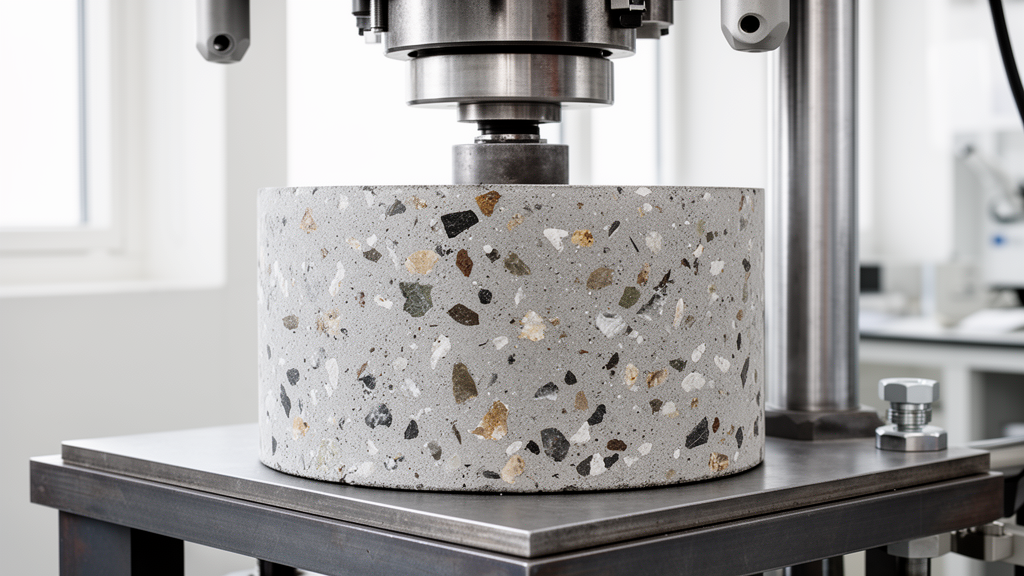
Regarding compressive strength, the control mix achieved a 28-day strength of 61 megapascals, significantly exceeding the target strength of 40 megapascals. While all mixes, excluding those with bottom ash at replacement levels of 20 percent or greater, met the structural acceptability threshold, the results underscored the variability inherent in recycled materials. Recycled concrete aggregate performance was found to be strongly dependent on the quality of the parent concrete source. Mixes using 20-millimeter recycled concrete aggregate demonstrated particularly stable results, maintaining performance comparable to the control up to a 30 percent replacement level. In contrast, the replacement of cement with bottom ash led to a more pronounced decline in compressive strength, reflecting its lower calcium oxide content and slower pozzolanic reactivity compared to traditional Portland cement.
The life-cycle assessment results illustrated the clear environmental trade-offs between different waste materials. Bottom ash provided the most substantial environmental benefits, with a 30 percent replacement of cement achieving up to a 25 percent reduction in global warming potential. However, the environmental impact of other materials was less straightforward. Recycled concrete aggregate 20-millimeter mixes yielded modest reductions in global warming potential, acidification, and water scarcity. Recycled crushed glass, while mechanically feasible at moderate replacement levels, increased environmental burdens across most categories, primarily due to the energy-intensive mechanical grinding processes required to produce suitable aggregate sizes.
To navigate these complex inter-relationships, the researchers developed a balance-index framework. This approach utilized a dimensionless normalization scale to compare structural strength and environmental impact, allowing for different weighting factors to reflect project-specific priorities—ranging from sustainability-focused to strength-focused scenarios. The analysis confirmed that the 20 percent replacement of 10-millimeter recycled concrete aggregate consistently emerged as the optimal balance under both carbon-focused and multi-impact evaluation models. The robustness of this finding was further validated through a sensitivity analysis that examined the impact of varying transportation distances, indicating that the selection of the optimal mix remained consistent even when logistics were adjusted.
The findings offer valuable insights into the mechanical-environmental trade-offs of concrete production. The research team noted that failure in recycled concrete is often dominated by the interfacial transition zone, where the bond between the original and new cement paste acts as a site of potential weakness and stress concentration. This explains why, despite the successful achievement of target strength, recycled concrete aggregate mixes can exhibit different failure patterns under uniaxial compression. By focusing on moderate replacement levels of 10 to 20 percent, the researchers argue that the industry can mitigate the risks associated with material heterogeneity while capturing the tangible benefits of reduced virgin material extraction and landfill diversion.
While the study provides a significant contribution toward a decision-support approach for sustainable concrete, the authors acknowledge several limitations that necessitate further research. Durability-related properties, such as resistance to chloride penetration or shrinkage, were not assessed in this work. Understanding these factors is critical for the long-term structural integrity of infrastructure projects. Additionally, the study did not incorporate economic impacts into the optimization procedure, which would be a necessary next step for a holistic life-cycle costing analysis.
In conclusion, the development of this balance-index framework represents a proactive step toward more rigorous, evidence-based decision-making in the construction sector. As regional regulations and climate targets evolve, the ability to tailor concrete mix designs based on localized waste availability and specific structural requirements will become increasingly vital. The study demonstrates that while bottom ash excels in reducing the carbon footprint of cementitious binders, its structural limitations necessitate its use in applications where early-age high strength is not the primary requirement. Meanwhile, the consistent performance of 10-millimeter recycled concrete aggregate at a 20 percent replacement level provides a ready, sustainable alternative for current construction practices, moving the industry closer to the objective of circular infrastructure management.
The study’s characterization program employed X-ray fluorescence to clarify the chemical oxide composition of the waste materials. Cement was dominated by calcium oxide at nearly 70 percent, facilitating the formation of calcium–silicate–hydrate gel essential for structural strength. In contrast, coal bottom ash and fly ash exhibited lower calcium oxide content, instead being rich in silicon dioxide and aluminum oxide. This chemical profile suggests limited hydraulic reactivity but satisfies pozzolanic material requirements. Notably, the recycled crushed glass showed a lower silicon dioxide content coupled with a higher sodium oxide concentration, which could elevate pore solution alkalinity and increase alkali–silica reaction risks when combined with reactive aggregates. X-ray diffraction further revealed that both bottom ash and fly ash consisted primarily of quartz and mullite, with amorphous fractions exceeding 70 percent, a property favorable for pozzolanic reactivity. However, the slightly higher mullite content in bottom ash contributes to lower reactivity compared with fly ash, as mullite remains relatively inert in the hydration process.
Morphological analysis provided clarity on how particle geometry impacts concrete workability. Scanning electron microscopy confirmed that bottom ash possesses a heterogeneous structure, including hollow cenospheres that retain water. This capacity for water retention likely accounts for the significant slump reduction observed at replacement levels of 20 percent and higher. Conversely, recycled crushed glass particles displayed angular geometries with sharp edges, reflecting their fractured origin. These irregular shapes and higher concentrations of fines contribute to the reduced flowability noted during fresh state testing.
The balance-index framework utilized a normalization procedure to compare compressive strength against five environmental impact categories: global warming potential, abiotic depletion, acidification, eutrophication, and water scarcity. Sensitivity analysis, conducted through three distinct weighting scenarios—equal, sustainability-focused, and strength-focused—demonstrated that the identification of 20 percent replacement of 10-millimeter recycled concrete aggregate as the optimal solution is robust. When the research team adjusted the model to assume a uniform transportation distance of 100 kilometers, the primary ranking of the concrete mixes remained consistent. These adjustments produced only minor shifts in index values, confirming that the identification of an optimal balance-index solution is resilient to variations in logistics and environmental priority settings.
Subject of Research: Development of a quantitative framework to optimize the environmental and mechanical trade-offs of using recycled materials in structural concrete.
Article Title: Quantifying the Relationship Between Environmental–Mechanical Parameters of Structural Concrete Incorporating Recycled Materials: A Decision Framework for Optimized Selection
Article References: Jesica, A., Law, D., & Gravina, R. J. (2026). Quantifying the Relationship Between Environmental–Mechanical Parameters of Structural Concrete Incorporating Recycled Materials: A Decision Framework for Optimized Selection. International Journal of Concrete Structures and Materials, 20(1), Article 101. https://doi.org/10.1186/s40069-026-00981-7
Image Credits: AI Generated
DOI: 10.1186/s40069-026-00981-7
Keywords: Recycled Concrete Aggregate, Concrete Sustainability, Life Cycle Assessment, Structural Engineering, Environmental Impact, Global Warming Potential, Carbon Emission Reduction, Coal Bottom Ash, Recycled Crushed Glass, Concrete Performance, Construction Materials, Circular Economy, Material Characterization, Mechanical Testing, Structural Concrete Optimization, Sustainable Infrastructure, Waste Management, Concrete Decarbonization, Environmental-Mechanical Balance, Australia
News Source: Sloane Callahan. (November 18, 2026). Optimal Recycled Concrete Mix Identified for Structural and Environmental Performance Balance. Scienmag.