• HOME
  • NEWS
  • EXPLORE
    • CAREER
      • Companies
      • Jobs
    • EVENTS
    • iGEM
      • News
      • Team
    • PHOTOS
    • VIDEO
    • WIKI
  • BLOG
  • COMMUNITY
    • FACEBOOK
    • INSTAGRAM
    • TWITTER
Sunday, November 22, 2026
BIOENGINEER.ORG
No Result
View All Result
  • Login
  • HOME
  • NEWS
  • EXPLORE
    • CAREER
      • Companies
      • Jobs
        • Lecturer
        • PhD Studentship
        • Postdoc
        • Research Assistant
    • EVENTS
    • iGEM
      • News
      • Team
    • PHOTOS
    • VIDEO
    • WIKI
  • BLOG
  • COMMUNITY
    • FACEBOOK
    • INSTAGRAM
    • TWITTER
No Result
View All Result
Bioengineer.org
No Result
View All Result
Home NEWS Science News Technology

Optimal Processing Window Minimizes Defects in 3D-Printed FeMnAlNi Shape Memory Alloys

by
November 21, 2026
in Technology
Reading Time: 2 mins read
0
Optimal Processing Window Minimizes Defects in 3D-Printed FeMnAlNi Shape Memory Alloys

Optimal Processing Window Minimizes Defects in 3D-Printed FeMnAlNi Shape Memory Alloys

Share on FacebookShare on TwitterShare on LinkedinShare on RedditShare on Telegram

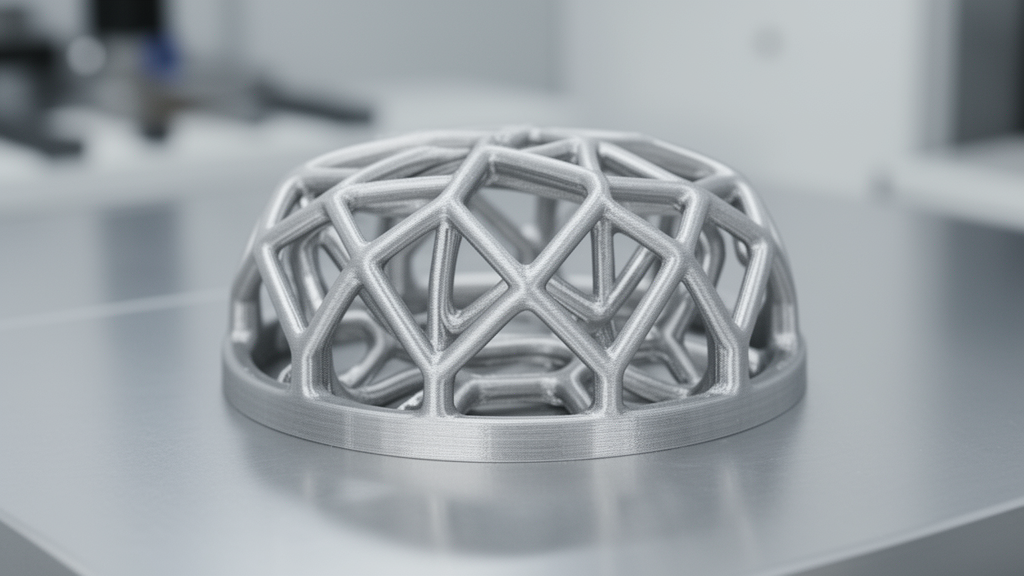
Researchers have identified an optimal laser powder bed fusion processing window for FeMnAlNi shape memory alloys that achieves relative densities of up to 99.33 percent while minimizing internal defects. Reporting in the Journal of Materials Science: Materials in Engineering, the authors established systematic relationships connecting volumetric energy density, defect formation, densification, mechanical performance, and phase transformation characteristics in the additively manufactured ferrous alloy.

Laser powder bed fusion offers a promising manufacturing route for fabricating functional components from FeMnAlNi shape memory alloys, but the relationships linking processing parameters to defect generation and material properties have remained insufficiently understood. To resolve these interactions, the study evaluated the effects of laser powers between 150 and 250 W alongside scanning speeds ranging from 500 to 1000 mm/s, establishing a test matrix of volumetric energy densities spanning from 50 to 166.67 J/mm³.

The findings showed that volumetric energy density directly governs melt pool stability and determines the primary defect formation mechanisms during fabrication.

By characterizing these defect regimes across the parameter space, the researchers identified an optimal processing window between approximately 72 and 106 J/mm³. Operating within this volumetric energy density range minimized both lack-of-fusion voids and keyhole pores, enabling the alloy to achieve relative densities of up to 99.33 percent and demonstrating that thermal input must be precisely balanced to secure high densification.

The mechanical performance of the fabricated alloy correlated strongly with densification across the tested processing conditions. Components produced in the investigation exhibited yield strength reaching up to approximately 560 MPa and ultimate tensile strength climbing to around 1480 MPa.

Beyond baseline mechanical strength, the processing conditions also influenced the functional shape memory behavior and phase transformation characteristics of the FeMnAlNi alloy. Cyclic compression tests demonstrated recoverable strain within a defined stress range. Furthermore, magnetization measurements indicated that processing conditions alter phase transformation response, with an improved transformation response observed specifically within the optimal processing window of 72 to 106 J/mm³.

Together, these findings establish a comprehensive processing-defect-property framework for laser powder bed fusion of FeMnAlNi shape memory alloys. By defining the boundaries where lack-of-fusion and keyhole porosity emerge, the study provides practical processing guidance for manufacturing high-density components that combine robust mechanical properties with enhanced functional performance.

Subject of Research: Laser powder bed fusion processing of FeMnAlNi shape memory alloys

Article Title: Energy density–defect–property relationships in LPBF of ferrous shape memory alloy

Article References: Algamal, A., Gandhi, U., & Qattawi, A. (2026). Energy density–defect–property relationships in LPBF of ferrous shape memory alloy. Journal of Materials Science: Materials in Engineering, 21(1), Article 202. https://doi.org/10.1186/s40712-026-00584-w

Image Credits: AI Generated

DOI: 10.1186/s40712-026-00584-w

Keywords: laser powder bed fusion, LPBF, FeMnAlNi alloy, ferrous shape memory alloy, volumetric energy density, defect formation, lack-of-fusion defects, keyhole porosity, melt pool stability, densification, relative density, yield strength, ultimate tensile strength, hardness, cyclic compression, recoverable strain, phase transformation, magnetization

News Source: Denise Maddox. (November 21, 2026). Optimal Processing Window Minimizes Defects in 3D-Printed FeMnAlNi Shape Memory Alloys. Scienmag.


Tags: cyclic compressiondefect formationdensificationFeMnAlNi alloyferrous shape memory alloyhardnesskeyhole porositylack-of-fusion defectslaser powder bed fusionLPBFmagnetizationmelt pool stabilityphase transformationrecoverable strainrelative densityultimate tensile strengthvolumetric energy densityyield strength
Share12Tweet7Share2ShareShareShare1

Related Posts

Computational Design Models Metal-Free Bloch Surface Wave Optical Fiber Sensor

Computational Design Models Metal-Free Bloch Surface Wave Optical Fiber Sensor

November 22, 2026
Open-Source Framework ESFEX Matches Benchmark Consensus Across Ten Power Grid Systems

Open-Source Framework ESFEX Matches Benchmark Consensus Across Ten Power Grid Systems

November 22, 2026

Open Source QGIS Plugin Automates Multi Method Spatial Interpolation for Agriculture

November 22, 2026

Harmony Framework Unifies Modeling and Stability Analysis for Hybrid Power Grids

November 22, 2026

POPULAR NEWS

  • Open-Source Framework ESFEX Matches Benchmark Consensus Across Ten Power Grid Systems

    Open-Source Framework ESFEX Matches Benchmark Consensus Across Ten Power Grid Systems

    29 shares
    Share 12 Tweet 7
  • Endothelial FBXW7 Degrades NOTCH1 to Silence SEMA3G and Curb Liver Fibrosis

    29 shares
    Share 12 Tweet 7
  • Open Source QGIS Plugin Automates Multi Method Spatial Interpolation for Agriculture

    29 shares
    Share 12 Tweet 7
  • Herbal Nanovesicles Suppress Colorectal Tumors and Boost Immunotherapy in Mouse Models

    29 shares
    Share 12 Tweet 7

About

We bring you the latest biotechnology news from best research centers and universities around the world. Check our website.

Follow us

Recent News

Computational Design Models Metal-Free Bloch Surface Wave Optical Fiber Sensor

Cultivation Environment Reshapes Aroma and Nutrient Chemistry in Sarcomyxa edulis Mushrooms

Open-Source Framework ESFEX Matches Benchmark Consensus Across Ten Power Grid Systems

Subscribe to Blog via Email

Enter your email address to subscribe to this blog and receive notifications of new posts by email.

Join 89 other subscribers
  • Contact Us

Bioengineer.org © Copyright 2023 All Rights Reserved.

Welcome Back!

Login to your account below

Forgotten Password?

Retrieve your password

Please enter your username or email address to reset your password.

Log In
No Result
View All Result
  • Homepages
    • Home Page 1
    • Home Page 2
  • News
  • National
  • Business
  • Health
  • Lifestyle
  • Science

Bioengineer.org © Copyright 2023 All Rights Reserved.