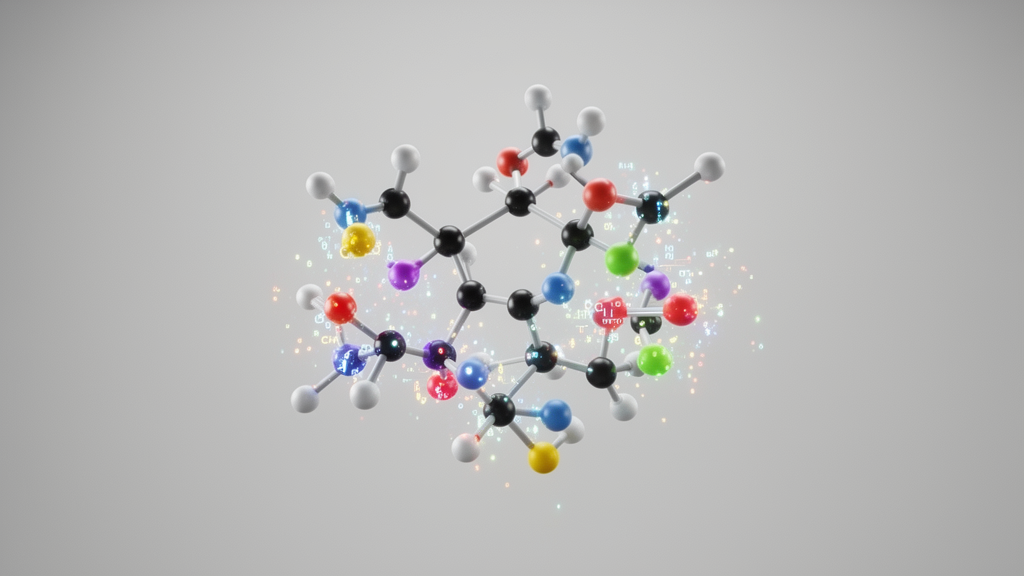
Computational chemists have long relied on molecular fingerprints to compress intricate three-dimensional chemical structures into compact binary strings, facilitating high-throughput virtual screening, similarity searching, and machine learning predictions. However, interpreting how individual bits within these digital fingerprints correspond to specific atomic arrangements or biological activities has remained a persistent obstacle in drug discovery. To bridge this interpretability gap, researchers have developed the Universal Molecular Fingerprint Highlighter, an open-source computational platform designed to convert abstract fingerprint bit indices and machine learning feature importance scores directly into chemically intuitive, substructure-aware visual representations in real time.
In modern cheminformatics workflows, circular fingerprints such as Extended Connectivity Fingerprints and Morgan fingerprints capture localized atomic environments to predict structure–activity relationships. Despite their widespread utility, machine learning models trained on these binary vectors frequently function as opaque black boxes. Chemists evaluating quantitative structure–activity relationship models cannot readily discern which specific chemical fragments activated a particular feature or drove a model’s prediction. Existing visualization utilities provide incomplete solutions; tools like DataWarrior offer broad functionality but lack substructure-aware bit highlighting, commercial suites such as ChemAxon Marvin require proprietary licenses and lack seamless model integration, and workflow engines like KNIME demand steep learning curves and intricate configuration.
While the underlying algorithms for fingerprint generation are accessible via programming libraries such as RDKit, visualizing fingerprint mappings through standalone scripts requires custom software development. This manual scripting barrier often introduces cross-platform incompatibilities and limits the routine exploration of model features by non-programming medicinal chemists and experimental biologists. The Universal Molecular Fingerprint Highlighter addresses these bottlenecks by unifying more than fifteen distinct fingerprint algorithms into an integrated graphical application, coupling algorithmic breadth with an automated weight-based highlighting engine designed to support explainable artificial intelligence across pharmaceutical research pipelines.
To achieve high computational throughput without sacrificing user interface responsiveness, the software employs a decoupled three-layer architecture. A graphical interface built using PyQt5 provides researchers with an interactive multi-tab workspace for parameter selection, batch processing, and comparative analysis. Below the interface layer, an asynchronous processing engine managed via QThread delegates computationally demanding operations to background worker threads, preventing interface freezing during intensive calculations. At the foundational computational level, an RDKit-driven cheminformatics engine executes molecular standardization, fingerprint bit calculation, topological reconstruction, and vector graphic rendering.
The platform’s algorithmic pipeline translates numerical bit positions into structural graphics using dedicated environment reconstruction functions. For circular fingerprint families, including Extended Connectivity Fingerprints and Functional-Class Fingerprints with configurable radii from one to four bonds and bit vector lengths between 128 and 16,384 bits, the system extracts topological metadata from internal bit dictionaries. When specific bits are selected by an operator or prioritized by machine learning feature importance metrics, the platform executes atom environment queries to reconstruct the exact atomic coordinates and bond paths responsible for the bit’s activation. The resulting fragments are assigned color, opacity, and intensity values to yield a unified visual representation.
For quantitative structure–activity relationship interpretation, the platform implements a normalized cumulative weighting algorithm that projects machine learning feature weights directly onto molecular diagrams. The system ingests importance values derived from diverse modeling frameworks, including Random Forest feature importances, boosted trees, neural network attention weights, and Shapley Additive Explanations scores. To prevent arbitrary scaling discrepancies across different machine learning paradigms, the framework calculates the visualization intensity for each atom or bond by summing the weights of all overlapping bits and normalizing the value between zero and one, ensuring that structural regions corresponding to multiple predictive bits appear with greater color saturation.
Rendering performance and memory management were optimized to support the high-throughput demands of chemical library screening. The platform leverages CairoSVG and the Cairo vector graphics backend to generate high-resolution PNG and SVG figures, reducing rendering overhead compared to traditional Matplotlib outputs while maintaining publication-grade graphical fidelity. Active memory management relies on lazy loading and the rapid deallocation of transient intermediate data structures, keeping average memory overhead below 750 kilobytes per molecule. Empirical evaluations confirmed that the system operates with linear O(n) computational complexity, enabling research workstations to process collections exceeding 10,000 compounds without relying on disk caching or external pagination schemes.
In rigorous performance benchmarking conducted on an Intel Xeon Gold workstation running Ubuntu Linux, the platform demonstrated processing speeds between 50 and 200 compounds per second across drug-like molecules selected from the ChEMBL database. Detailed execution profiling revealed that calculating Extended Connectivity Fingerprints required approximately 4.2 milliseconds per molecule, topological bit mapping and environmental reconstruction consumed 2.1 milliseconds, and vector rendering required 5.1 milliseconds, yielding an average processing duration of 11 to 14 milliseconds per compound. Benchmarking indicated that this automated pipeline achieves a 90 percent reduction in operational time compared to manual RDKit scripting workflows.
To evaluate the platform’s utility in real-world pharmacology, the researchers applied the framework to a curated dataset of Pseudomonas aeruginosa quorum sensing inhibitors targeting the transcriptional regulator LasR. In Pseudomonas aeruginosa, LasR governs the expression of virulence factors such as elastase, alkaline protease, and biofilm formation mechanisms in response to the native autoinducer N-(3-oxododecanoyl)-L-homoserine lactone. Disrupting LasR signaling using competitive autoinducer analogs represents an established anti-virulence strategy that circumvents direct bactericidal pressure, thereby attenuating pathogenicity while mitigating the evolutionary emergence of antimicrobial resistance.
A Random Forest regression model was trained on experimental inhibition concentrations sourced from BindingDB, utilizing Topological Torsion fingerprints to capture branched atomic sequences across varied acyl-homoserine lactone analogs. When feature importance scores were projected onto the compound structures, the visualization revealed that extended aliphatic chains comprising eight to ten consecutive carbon atoms exhibited the highest positive feature weights, aligning with established hydrophobic interactions in the LasR binding pocket. Simultaneously, polar lactone rings bearing hydroxyl substituents received moderate positive weighting, reflecting stabilizing hydrogen-bonding contacts with active-site residues.
Structural recognition validation confirmed that the platform’s bit-to-substructure reconstruction achieved 99.2 percent concordance with reference RDKit implementations. When evaluated against experimental literature and automated chemical perception rules, the platform successfully identified known pharmacophoric regions in approximately 87 percent of analyzed compounds and achieved complete functional group recognition across test sets evaluated with functional circular fingerprints. Across the quorum sensing inhibitor library, extended alkyl chains were correctly highlighted in approximately 82 percent of active molecules, while lactone pharmacophores were mapped in roughly 91 percent of compounds.
Despite its computational efficiency and visual precision, the framework possesses inherent methodological limitations. Bit collisions, wherein distinct chemical fragments map to identical binary indices, can introduce visual ambiguity, which the system mitigates by displaying all corresponding candidate substructures for expert review. Furthermore, because the architecture is established upon standardized RDKit libraries, proprietary or non-standard fingerprint algorithms are not natively supported. The developers noted that prospective enhancements will focus on integrating graph neural network attention modules, incorporating natural language generation for automated fragment descriptions, and deploying collaborative cloud environments for distributed chemical research.
At the algorithmic core of the platform, the FingerprintGenerator module establishes a unified programming interface across all fifteen supported fingerprint methods, including circular variants such as Functional-Class Fingerprints, structural keys like MACCS Keys, topological descriptors including Atom Pair and Topological Torsion, and Avalon fingerprints. By abstracting algorithm-specific parameters behind a consistent application programming interface, the framework allows researchers to transition between distinct molecular encodings without restructuring underlying computational pipelines. The software implementation spans nearly 1,800 lines of documented Python code compliant with PEP 8 standards and is distributed under the open-source MIT License. Its computational stack incorporates NumPy for numerical operations, Matplotlib and CairoSVG for graphical rendering, and optional pandas support to facilitate comma-separated value data exports. Compatibility testing confirmed seamless cross-platform execution on Ubuntu Linux, macOS, and Windows operating systems across Python versions 3.7 through 3.11 and RDKit releases ranging from 2022.09.1 to 2024.03.1.
The system’s computational throughput and scalability were formally validated using a chemically diverse compound collection retrieved from the ChEMBL36 database. Benchmarking experiments were conducted on a high-performance reference workstation equipped with an Intel Xeon Gold 6326 processor operating at 2.90 gigahertz across 32 cores and 64 threads, 128 gigabytes of DDR4 memory, and an NVIDIA GeForce RTX 5060 Ti graphics processing unit with 8 gigabytes of video memory running under CUDA 12.9 on Ubuntu 22.04 LTS with Linux kernel 6.2. This dedicated hardware profile established that pairing asynchronous CPU thread management with GPU-assisted rendering prevents computational bottlenecks, sustaining rapid visual generation and linear scaling without memory degradation across heterogeneous molecular structures.
The platform’s analytical value was demonstrated using an acyl-homoserine lactone inhibitor library spanning acyl tail lengths from four to twelve carbon atoms alongside diverse lactone ring modifications. Topological Torsion descriptors were selected for their ability to track sequential atomic connectivity and branching environments up to four bonds away, capturing subtle structural differences that govern binding to the LasR transcriptional regulator. This level of interpretability directly enhances iterative Design-Make-Test-Analyze cycles, enabling medicinal chemists to rapidly validate structural hypotheses and guide lead optimization. Future iterations will expand these capabilities by introducing multi-target modeling to evaluate compound selectivity profiles across related biological receptors, alongside interactive similarity searches that identify database analogues directly from highlighted molecular regions.
Subject of Research: Explainable cheminformatics and substructure-aware molecular fingerprint visualization
Article Title: Universal molecular fingerprint highlighter: An interactive visualization platform for explainable cheminformatics and QSAR model interpretation
Article References: Arulsamy, S., Natarajan, K., Ramar, M., & Pavadai, P. (2026). Universal molecular fingerprint highlighter: An interactive visualization platform for explainable cheminformatics and QSAR model interpretation. In Silico Research in Biomedicine, 2, Article 100280. https://doi.org/10.1016/j.insi.2026.100280
Image Credits: AI Generated
DOI: 10.1016/j.insi.2026.100280
Keywords: cheminformatics, molecular fingerprints, explainable artificial intelligence, QSAR modeling, substructure visualization, RDKit, extended connectivity fingerprints, topological torsion, drug discovery, feature importance, random forest, Pseudomonas aeruginosa, LasR inhibitors, quorum sensing, virtual screening, asynchronous computing, open-source software
News Source: Ophelia Keating. (November 24, 2026). Open-Source Platform Maps Molecular Fingerprint Bits Directly to Chemical Substructures. Scienmag.