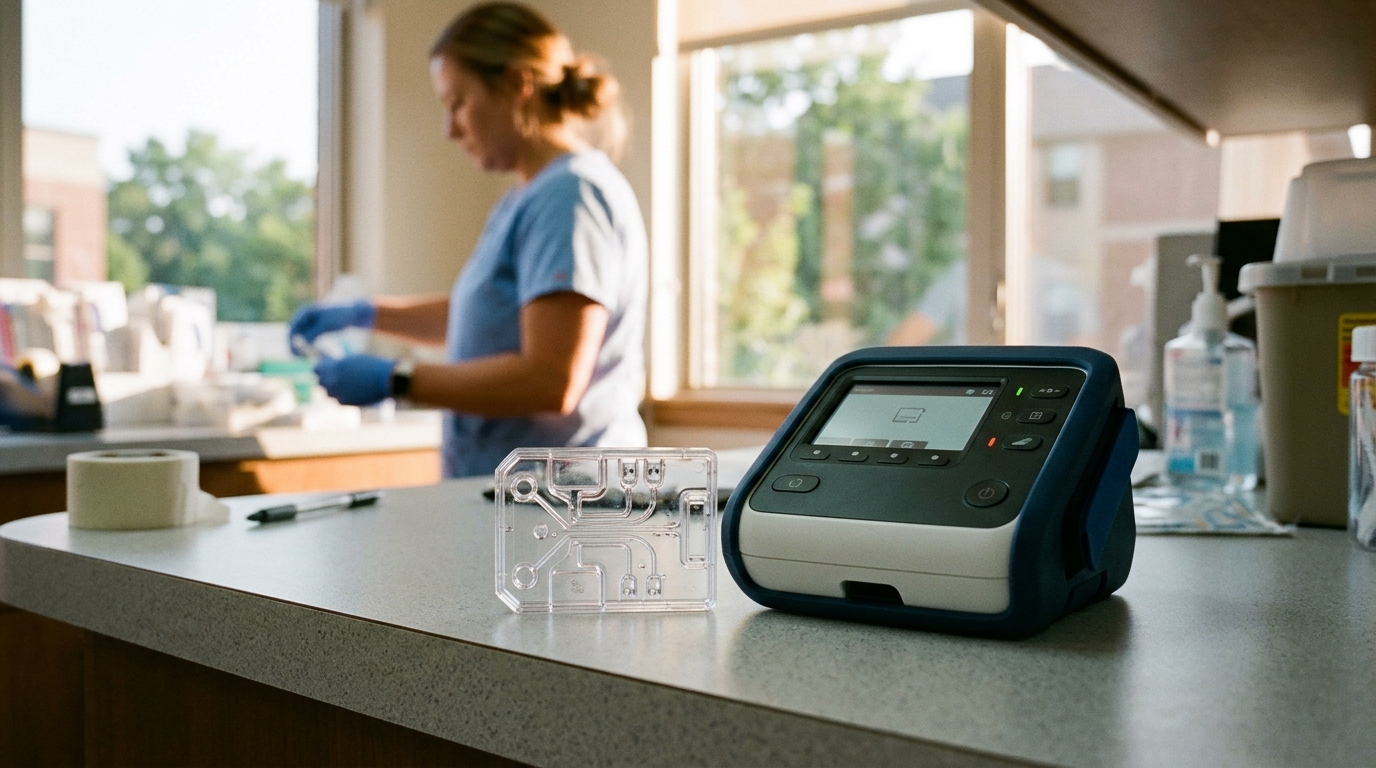
Session 16 of the World Health Organization Hub for Pandemic and Epidemic Intelligence Innovation Forum, co-hosted with the Clinton Health Access Initiative on 7 July 2026, concluded that open polymerase chain reaction platforms and open reagents have demonstrated technical efficacy across low- and middle-income countries but face persistent structural barriers to routine adoption. The meeting report, published in BMC Proceedings, synthesized operational evidence and field evaluations from global health agencies, commercial manufacturers, and national laboratory experts from India and Cameroon. Contributions were provided by the Clinton Health Access Initiative, two tuberculosis laboratory specialists from India speaking in a personal capacity, the National Public Health Laboratory of Cameroon, Huwel Lifesciences, and Thermo Fisher Scientific. Participants examined how molecular diagnostic capacity mobilized during the coronavirus disease 2019 emergency can transition into resilient, long-term national surveillance systems rather than remaining dormant. The forum emphasized that the core challenge is no longer technological validation, but strategically positioning open platforms within tiered national networks, establishing robust quality assurance frameworks, securing transparent supply chains, and establishing rapid validation mechanisms when novel pathogens emerge.
The report highlighted that diagnostic access remains one of the most persistent inequities in global health, noting that the Lancet Commission on Diagnostics estimated that nearly half of the global population lacks adequate access to essential testing. In low- and middle-income countries, molecular diagnostic access has historically been shaped by vertical, disease-specific programmes built around closed proprietary platforms. Within these closed systems, instruments, consumable cartridges, and diagnostic assays are tied exclusively to a single manufacturer. While these systems achieved notable clinical gains for human immunodeficiency virus and tuberculosis, they left recipient countries vulnerable to the commercial decisions, pricing structures, and supply constraints of a few global suppliers. When international supply chains fractured during the coronavirus disease 2019 pandemic, delayed shipments and restricted allocations of closed-system assays exposed the acute operational limitations of single-supplier dependency across national laboratory networks.
To overcome testing shortages during the pandemic, national networks turned to open real-time reverse transcription polymerase chain reaction instruments and distributable assays from diverse suppliers. Across low- and middle-income countries, open polymerase chain reaction accounted for more than 25 million diagnostic tests within the first ten months of the pandemic alone, scaling from almost no baseline testing. According to procurement data from the World Health Organization COVID-19 Diagnostics Consortium, more than twenty manufacturers of distributable assays attained Emergency Use Listing and received procurement approval from the Global Fund, UNICEF, and the World Health Organization. A 2020 assessment by the Clinton Health Access Initiative documented over 4,500 open devices deployed across more than 120 low- and middle-income countries, representing an aggregate capacity exceeding 1.3 billion tests annually. Distributable assays were available earlier than many closed-system alternatives, frequently cost less than half as much, and could be operated effectively following remote training alone.
Commercial contributors demonstrated how emergency demand restructured manufacturing models and highlighted the economic advantages of open diagnostic infrastructure. A 2021 assessment by the Clinton Health Access Initiative reported that countries were motivated to adopt open systems by low costs of two to five United States dollars per test, extensive instrument footprints, and a diversified supplier base that increased market competition. Huwel Lifesciences recalled that early in the pandemic, approximately 80 percent of molecular diagnostic inputs in India were imported. In response, Huwel established domestic manufacturing across the diagnostic workflow, producing plastics, primers, probes, enzymes, amidites, and dNTPs locally, which supplied approximately 52 million tests in India while reducing expenditures substantially. Concurrently, Thermo Fisher Scientific scaled production through the consortium from 1 million to 20 million tests weekly within two months, while introducing bundled pricing models and end-user ceiling prices with regional distributors.
Despite these emergency achievements, the meeting report documented a severe decline in open platform utilization after the acute pandemic phase subsided. A 2024 assessment by the Clinton Health Access Initiative revealed that outside China, India, and Indonesia, open polymerase chain reaction platforms were used predominantly for research and minor testing volumes, with only about 5 percent of deployed capacity in active use. Evaluated countries tested an average of roughly three diseases on open platforms, while three manufacturers accounted for approximately 80 percent of instruments outside India and China. Identified barriers included unclear regulatory pathways, weak quality systems, limited financing, deficient service contracts, and gaps in human resources and specimen transport. The Clinton Health Access Initiative also noted that following reductions in United States development assistance in 2025, regional stakeholders signaled an increased demand for resilient, lower-cost testing solutions. Nevertheless, nineteen of twenty surveyed countries expressed intent to integrate open platforms into routine services, with pilot programmes initiated for human papillomavirus in Rwanda, respiratory infections in Zambia, and tuberculosis in South Africa and Vietnam.
To resolve the gap between available capacity and routine use, the World Health Organization Hub proposed analyzing open diagnostics across a four-layered spectrum rather than treating openness as a single product label. The knowledge layer includes accessible assay designs, primer and probe sequences, and validation data. The reagent layer involves sourcing or manufacturing enzymes, controls, and master mixes from multiple independent suppliers. The platform layer encompasses non-proprietary instruments and consumables. The ecosystem layer covers transferable know-how, quality management, regulatory authorization, and data interoperability. The forum noted that many health systems experienced openness at the instrument level while remaining constrained by proprietary reagent dependencies or missing quality systems. When systematically integrated across all four layers, open diagnostics strengthen public health through four core capacities: improved access from lower procurement costs, operational adaptability as assays evolve, supply resilience through diversified sourcing, and expanded local technical capability.
India offered the most developed national example of integrating open polymerase chain reaction into routine disease programming. Targeting tuberculosis elimination by 2030, the National Tuberculosis Elimination Programme recognized that reliance on a single closed-system pipeline was impractical. The Indian Council of Medical Research established a multicentric laboratory network to validate open polymerase chain reaction kits against standard protocols, leading to official programmatic recommendations for domestically manufactured kits, including products from Huwel Lifesciences. Because extensive reverse transcription polymerase chain reaction instruments were installed during the pandemic, laboratory personnel required only refresher training to deploy the kits. Programmatic evaluations showed encouraging accuracy for multiplex assays detecting Mycobacterium tuberculosis complex, non-tuberculous mycobacteria, and rifampicin and isoniazid resistance under routine laboratory conditions. Additionally, domestic validation extended to extraction-free four-colour open systems detecting dengue, chikungunya, Zika, and malaria in single specimens, providing integrated surveillance for co-circulating arboviruses.
Regionally, the National Public Health Laboratory of Cameroon described initiatives coordinated through the Africa Centres for Disease Control and Prevention Diagnostic Advisory Committee to expand diagnostic access for continental priority diseases. Because global commercial manufacturers rarely prioritize pathogens predominantly affecting Africa, Africa CDC maintains a prioritized roster of roughly eighteen outbreak diseases, including anthrax, cholera, Lassa fever, Marburg virus disease, mpox, and yellow fever. Supported by the African Society for Laboratory Medicine, the United States Centers for Disease Control and Prevention, and the Global Fund, Africa CDC conducts clinical evaluations at regional centres of excellence. During the August 2024 mpox emergency, when commercial assays were limited and primarily designated for research use, this framework evaluated candidate assays, recommending products from South Africa, Morocco, Egypt, and South Korea for continental procurement. A similar evaluation process was undertaken for open polymerase chain reaction assays during subsequent Ebola outbreaks.
Despite progress, technical contributors identified critical operational requirements necessary to maintain diagnostic quality. The senior tuberculosis microbiologist noted that open platforms require higher technical skill, rigorous biosafety discipline, and dedicated internal and external quality control frameworks prior to deployment. The tuberculosis laboratory specialist warned against allowing open systems to drift into proprietary closed workflows through specialized software and automated interpretation that restrict platform flexibility. Furthermore, outbreak responses revealed persistent validation bottlenecks; during the May 2026 Bundibugyo ebolavirus outbreak in the Democratic Republic of the Congo and Uganda, open platforms were initially unavailable because existing open reagents could not detect the virus, leaving closed platforms as the sole confirmatory option. Thermo Fisher Scientific noted that while it designed a hantavirus assay within twenty-four hours in the United States, public health laboratories in low- and middle-income countries rarely possess regulatory options to use laboratory-developed tests without performance data. This operational disparity demonstrates that rapid assay design is insufficient without accelerated validation pathways.
The forum concluded with four strategic priorities for sustaining open molecular diagnostics: national programmes must explicitly position open platforms within tiered laboratory networks; international health bodies must establish harmonized guidance for quality management, proficiency assessment, and standardized reporting; stakeholders must support local manufacturing, transparent pricing, and bundled service models; and health ministries must maintain routine testing volumes between outbreaks to preserve workforce proficiency and equipment readiness. To resolve the bottleneck between rapid assay design and field deployment, the forum proposed establishing a coordinated rapid validation pathway connecting diagnostic developers, regional reference centres, the African Medicines Agency, and the World Health Organization. By operationalizing these integrated measures across the entire diagnostic ecosystem, health systems can protect the substantial investments established during the pandemic, ensuring that open molecular platforms actively sustain national disease surveillance and provide responsive diagnostic capacity for future infectious disease outbreaks.
Subject of Research: Sustaining open molecular diagnostics and reagent supply in national health systems
Article Title: Democratizing molecular diagnostics and building national capacity through open reagents and open PCR
Article References: Gadde, R., Campos, J., Tornimbene, B., Desikan, P., Grande, A., Kumar, S., Mboringong, A. B., Sidiq, Z., & Tuttle, J. (2026). Democratizing molecular diagnostics and building national capacity through open reagents and open PCR. BMC Proceedings, 19(S4), Article 43. https://doi.org/10.1186/s12919-026-00411-2
Image Credits: AI Generated
DOI: 10.1186/s12919-026-00411-2
Keywords: molecular diagnostics, open PCR, reagents, disease surveillance, tuberculosis, COVID-19, global health, Africa CDC, Democratizing, molecular, diagnostics, building
News Source: Tiffany Hanley. (November 9, 2026). Open Molecular Diagnostics Expand Testing Capacity Across Global Health Systems. Scienmag.