


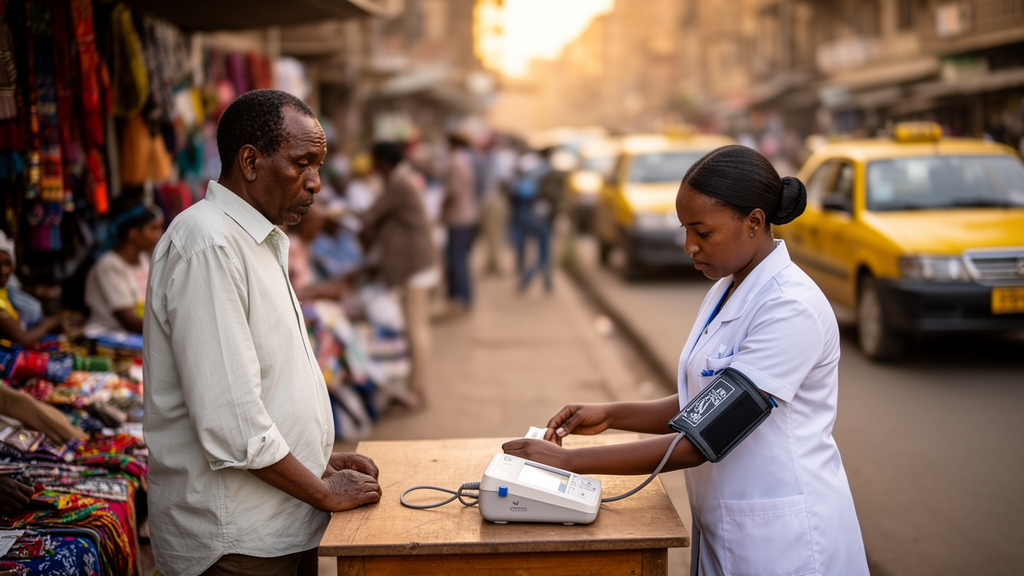
More than a quarter of adults aged 40 and older living in Mekelle City in northern Ethiopia carry a predicted ten-year risk of cardiovascular disease of at least 10 percent, according to a community-based cross-sectional study published in BMC Nutrition. The researchers used the updated 2020 World Health Organization cardiovascular disease risk prediction charts to estimate each participant’s risk, applying both laboratory-based and non-laboratory-based versions of the charts.
The study included 223 participants selected through systematic random sampling from the urban population of Mekelle. Participants were aged 40 years or older, and the researchers collected socio-demographic, lifestyle, anthropometric and biochemical data from each of them. More than half of the participants, 53.4 percent, were female, and the mean age was 52.8 years, with a standard deviation of 11.24 years.
The burden of underlying risk factors in the sample was substantial. Hypertension was present in 52.0 percent of participants, elevated total blood cholesterol in 44.4 percent, diabetes mellitus in 14.3 percent, and 7.6 percent reported being current smokers. These measured conditions form the core inputs of the WHO risk charts, which combine factors such as age, sex, blood pressure, cholesterol and diabetes status to estimate the probability of a cardiovascular event over the following decade.
Using linear regression, the researchers identified several characteristics significantly associated with a higher predicted ten-year risk. Male sex carried a beta coefficient of 2.22, advanced age a coefficient of 0.30, and each unit of systolic blood pressure a coefficient of 0.07, all with p values below 0.001. Diabetes mellitus showed the largest single contribution, with a beta coefficient of 5.71, while elevated total blood cholesterol contributed a coefficient of 0.02, also statistically significant.
In their conclusion, the authors reported that one-quarter of adults aged 40 years and older in the study had an elevated predicted ten-year cardiovascular disease risk of 10 percent or more, and that higher predicted risk was associated with male sex, older age, diabetes mellitus, higher systolic blood pressure and elevated total blood cholesterol.
The authors argue that these findings highlight the need to integrate WHO cardiovascular disease risk assessment into routine primary healthcare and to strengthen targeted prevention strategies, particularly for high-risk populations, in order to reduce the future burden of cardiovascular disease.
As a cross-sectional study, the work captures a single point in time and reports associations rather than causal effects. The predicted risk scores are model-based estimates of future disease probability, not observed diagnoses, and the findings apply to the sampled urban adult population of Mekelle rather than to Ethiopia as a whole. The article was published on 23 October 2026 as an open-access research paper, and the version shared carries a note that it is subject to further edits before the final version of record.
Subject of Research: Ten-year cardiovascular disease risk prediction and its predictors among adults in northern Ethiopia
Article Title: Assessment of the ten-year cardiovascular disease risk score and its predictors among adult urban residents of Northern Ethiopia using the WHO risk prediction algorithms: a community-based cross-sectional study
Article References: Gebreegziabiher, G. (2026). Assessment of the ten-year cardiovascular disease risk score and its predictors among adult urban residents of Northern Ethiopia using the WHO risk prediction algorithms: a community-based cross-sectional study. BMC Nutrition. https://doi.org/10.1186/s40795-026-01533-8
Image Credits: AI Generated
DOI: 10.1186/s40795-026-01533-8
Keywords: cardiovascular disease, WHO risk prediction charts, Ethiopia, hypertension, diabetes, cholesterol, cross-sectional study, primary healthcare, risk factors, Mekelle, Assessment, ten-year
News Source: Ophelia Keating. (October 28, 2026). One in four urban Ethiopian adults shows elevated ten-year cardiovascular risk. Scienmag.



