Adults 50 and older are significantly less active than those younger than 50. Many fall short of the recommended 150 minutes of moderate to vigorous-intensity physical activity per week. However, they still can benefit from some physical activity. Even 15 minutes of daily, moderate-to-vigorous physical activity has shown reductions in all causes of mortality in adults 60 and older.
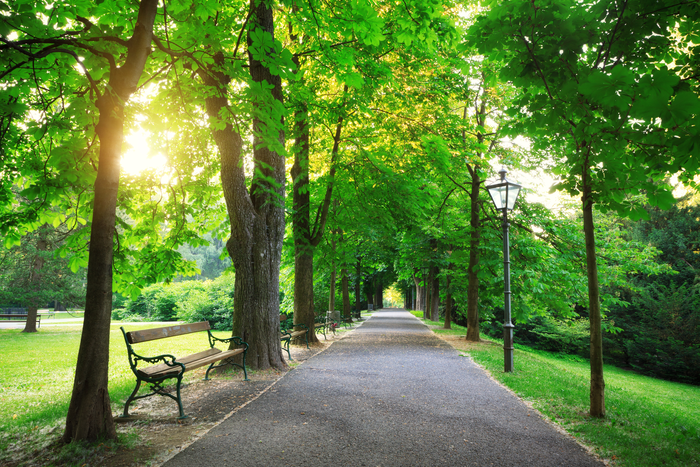
Credit: Florida Atlantic University/Getty Images
Adults 50 and older are significantly less active than those younger than 50. Many fall short of the recommended 150 minutes of moderate to vigorous-intensity physical activity per week. However, they still can benefit from some physical activity. Even 15 minutes of daily, moderate-to-vigorous physical activity has shown reductions in all causes of mortality in adults 60 and older.
Growing evidence suggests that living in walkable neighborhoods with greenspaces such as parks and greenery is associated with physical activity. Yet, evidence of this association in older adults remains limited. In addition, few studies have been nationally representative, have focused on neighborhood walking (versus total walking regardless of location), or examined the differences in association depending on the greenspace type (e.g. open space and forest).
Researchers from Florida Atlantic University’s Charles E. Schmidt College of Science are the first to explore whether greater amounts of neighborhood open space and forest are associated with neighborhood-based walking in older adults in the United States. Moreover, this is the first known nationally representative study to suggest that physical activity levels among older African Americans may benefit from greater amounts of neighborhood open space, including parks.
The study is based on a quantification of minutes of neighborhood walking from travel diaries from a sample of 73,523 adults ages 65 and older from 52,408 households. Researchers investigated whether these associations vary depending on income, race/ethnicity, sex, or neighborhood socioeconomic disadvantage.
Results of the study, published in the American Journal of Preventive Medicine, showed that open spaces, including parks, were associated with 5.4 more minutes of neighborhood walking per day in older African Americans. By contrast, forests were positively associated with more neighborhood walking among whites, where daily neighborhood walking increased by an additional three minutes.
“Although it may seem like an extra three to five minutes of walking per day may not be a clinically significant change in physical activity, it needs to be considered within the context of an additional 35 minutes of physical activity a week,” said Lilah M. Besser, Ph.D., M.S.P.H., first author and an assistant professor in the Department of Urban and Regional Planning, FAU Charles E. Schmidt College of Science, and a member of the FAU Stiles-Nicholson Brain Institute and the FAU Institute for Human Health and Disease Intervention (I-HEALTH). “Importantly, our findings are significant in the context of the established health disparities between African Americans and whites, including greater cardiovascular risk factors/disease among African Americans, and the ever-pressing necessity for health equity.”
Similar associations were not observed for other racial/ethnic groups. However, greater neighborhood forests may be borderline associated with less neighborhood walking in Hispanics. When race and Hispanic ethnicity were entered as separate variables in the adjusted models, greater neighborhood forest was associated with less neighborhood walking in Hispanics.
“In addition to physical health benefits, spending time outside provides opportunities for social interactions with neighbors that can reduce social isolation, depression, and anxiety, which can be common in older adults,” said Diana Mitsova, Ph.D., co-author, professor, John DeGrove Eminent Scholar Chair in Growth Management and Development, and director, Visual Planning Technology Lab, FAU Department of Urban and Regional Planning. “In addition, greenspace exposure helps to restore attention and reduce mental fatigue, which may contribute to a better quality of life and successful aging in place.”
Besser and Mitsova suggest the possibility that a greater amount of neighborhood open space may promote physical activity among African Americans because of the geographic and financial accessibility of neighborhood open spaces/parks for physical activity compared with that of gyms and recreational facilities.
“Plans, policies and interventions that promote increased time spent in greenspaces and provision of more greenspaces tailored to the underlying neighborhood populations may provide population-level benefits to multiple aspects of health in older adults and may help to reduce health disparities and achieve health equity,” said Besser.
Besser is supported by the National Institutes of Health, National Institute on Aging (K01 AG063895).
– FAU –
About Florida Atlantic University:
Florida Atlantic University, established in 1961, officially opened its doors in 1964 as the fifth public university in Florida. Today, the University serves more than 30,000 undergraduate and graduate students across six campuses located along the southeast Florida coast. In recent years, the University has doubled its research expenditures and outpaced its peers in student achievement rates. Through the coexistence of access and excellence, FAU embodies an innovative model where traditional achievement gaps vanish. FAU is designated a Hispanic-serving institution, ranked as a top public university by U.S. News & World Report and a High Research Activity institution by the Carnegie Foundation for the Advancement of Teaching. For more information, visit www.fau.edu.
Journal
International Journal of Environmental Research and Public Health
DOI
10.3390/ijerph18157973
Method of Research
Meta-analysis
Subject of Research
People
Article Title
Longitudinal Associations between the Neighborhood Built Environment and Cognition in US Older Adults: The Multi-Ethnic Study of Atherosclerosis
Article Publication Date
28-Jul-2021