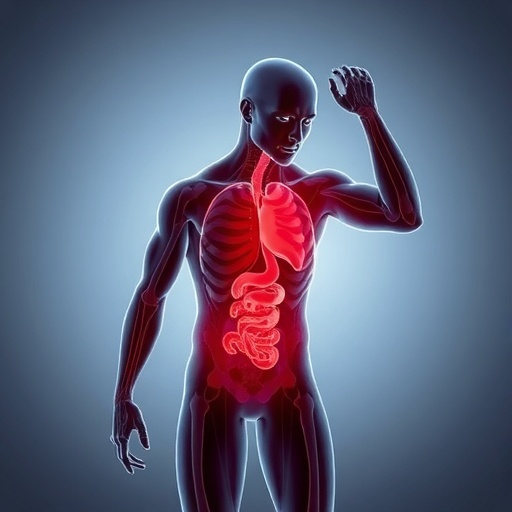
New findings from Keck Medicine of USC reveal critical insights into how patterns of alcohol consumption exacerbate liver disease risks, particularly in individuals suffering from metabolic dysfunction–associated steatotic liver disease (MASLD). While moderate drinking is generally considered safe, this pioneering study demonstrates that episodic heavy drinking—consuming large quantities of alcohol in a single occasion—increases the danger of advanced liver fibrosis far beyond what total alcohol intake alone predicts. This research fundamentally challenges long-standing clinical assumptions and opens new avenues for understanding liver health dynamics.
MASLD, the most prevalent liver condition in the United States, affects roughly one-third of adults, often linked to obesity and metabolic disorders such as Type 2 diabetes, hypertension, and dyslipidemia. Until now, clinical emphasis has largely centered on the cumulative amount of alcohol consumed over time as the key determinant of liver damage. However, the detailed analysis of drinking behaviors in this latest study reveals that the temporal concentration of alcohol intake—particularly episodic heavy drinking—magnifies liver injury, elevating the risk of fibrosis development significantly.
The study, published in Clinical Gastroenterology and Hepatology, utilized data from the National Health and Nutrition Examination Survey (NHANES), encompassing over 8,000 adult participants from 2017 to 2023. Researchers meticulously separated individuals with MASLD into groups based not only on total weekly alcohol consumption but also on drinking patterns, distinguishing episodic heavy drinkers from more evenly paced drinkers. Those classified as episodic heavy drinkers consumed four or more drinks (women) or five or more drinks (men) on at least one day per month, independent of their average weekly consumption.
Crucially, the data show that MASLD patients engaging in episodic heavy drinking faced almost a threefold increase in the likelihood of developing advanced liver fibrosis compared to those who consumed the same volume of alcohol but distributed it more evenly. This elevated risk underscores the liver’s vulnerability to acute spikes in alcohol metabolism, which can precipitate intense inflammatory responses leading to tissue scarring and impaired hepatic function.
Younger adults and males were disproportionately represented among episodic heavy drinkers, suggesting demographic trends that may influence vulnerability to liver damage. Furthermore, the volume of alcohol consumed in these episodes correlated with the severity of liver fibrosis, indicating a dose-dependent toxicity mechanism. These findings offer a nuanced understanding that transcends simplistic metrics of alcohol quantity by highlighting the critical role of drinking patterns in liver pathology.
Brian P. Lee, MD, MAS, the study’s principal investigator and a hepatologist with Keck Medicine of USC, emphasizes that this research serves as a wake-up call to both the medical community and the public. Traditionally, risk assessments for alcohol-related liver disease have focused predominantly on total consumption without adequately considering episodic behaviors. This oversight may contribute to underestimating the danger posed by binge or episodic drinking, even among individuals classified as moderate drinkers overall.
The pathophysiological rationale behind episodic heavy drinking’s amplified harm lies in the liver’s metabolic capacity and its response to oxidative stress. A sudden influx of high alcohol doses can overwhelm hepatic enzymatic pathways, notably those involving alcohol dehydrogenase and cytochrome P450 2E1, leading to increased reactive oxygen species production and subsequent inflammatory cascades. In patients with MASLD, this effect is compounded by pre-existing metabolic stressors that sensitize the liver to damage, making them disproportionately susceptible to fibrosis progression.
Researchers elected to focus on MASLD because of its rising incidence and its complex interplay with alcohol consumption. While MASLD was not previously categorized as an alcohol-related liver condition, the study’s findings indicate that alcohol, particularly when consumed episodically in large quantities, plays a substantial role in advancing liver injury within this patient group. Nearly half of the adults surveyed reported engaging in some form of episodic heavy drinking, with about 16% of MASLD patients falling into this category, highlighting the widespread nature of this risky behavior.
By matching patients for age, sex, and average weekly alcohol intake, the investigators controlled for confounding factors to isolate the effect of drinking patterns on fibrosis risk. This methodological rigor strengthens the causal inferences drawn from the data, underscoring the need for clinicians to incorporate evaluations of drinking frequency and intensity when assessing their patients’ liver health and risk profiles.
The broader public health implications of this study are substantial. Alcohol-related liver disease incidence has more than doubled over the last twenty years, a surge likely exacerbated by pandemic-related changes in alcohol use patterns and increasing prevalence of metabolic risk factors such as obesity and diabetes in the population. This convergence of risk amplifies the burden on healthcare systems and demands urgent attention from both researchers and practitioners to develop targeted interventions.
Lee underscores the urgent need for enhanced public awareness campaigns and for clinicians to routinely query patients about their drinking patterns beyond mere quantity. These steps are essential to identifying individuals at heightened risk for liver fibrosis so that timely preventive measures can be undertaken. Such measures may include counseling on the dangers of binge drinking and integrated treatment approaches for coexisting metabolic syndromes and alcohol use behaviors.
While the study primarily focused on MASLD patients, Lee suggests that the observed relationships between episodic heavy drinking and liver fibrosis may hold true across broader populations. Given that episodic heavy drinking behaviors are common, understanding their true impact on liver health is critical for designing effective public health strategies and personalized medical guidance.
This landmark study was supported by a significant grant from the National Institute on Alcohol Abuse and Alcoholism (NIAAA), demonstrating the increasing prioritization of research on how drinking behaviors influence liver disease progression. The insights provided illuminate a complex but vital aspect of alcohol-related liver pathology and set the stage for future investigations into molecular mechanisms, clinical interventions, and policy development.
For anyone grappling with metabolic conditions or concerned about liver health, this research offers a clear, evidence-based warning: even occasional heavy drinking episodes can inflict severe hepatic damage that may accelerate progression to irreversible liver fibrosis. Avoiding such drinking patterns is essential for preserving liver function and preventing the long-term consequences of chronic liver disease.
Subject of Research: The impact of episodic heavy drinking on liver fibrosis risk in individuals with metabolic dysfunction–associated steatotic liver disease (MASLD).
Article Title: Episodic Heavy Drinking Significantly Elevates Liver Fibrosis Risk in MASLD Patients: New Insights from Keck Medicine of USC.
News Publication Date: April 2026.
Web References:
– Keck Medicine of USC Liver Health Center: https://www.keckmedicine.org/centers-and-programs/usc-liver-health-center/
– Study DOI: https://doi.org/10.1016/j.cgh.2026.03.004
References:
– Lee et al., Clinical Gastroenterology and Hepatology, 2026.
– National Health and Nutrition Examination Survey (NHANES) data, 2017-2023.
Image Credits: Photo courtesy of Brian P. Lee, MD, MAS.
Keywords: Liver, Fibrosis, Episodic Heavy Drinking, MASLD, Metabolic Dysfunction, Alcohol-Related Liver Disease, Hepatology, Liver Scarring, Alcohol Metabolism, Public Health.
Tags: advanced liver fibrosis risk factorsalcohol consumption patterns and liver healthalcohol intake temporal concentration impactclinical implications of drinking behaviorsepisodic heavy alcohol consumption effectsheavy drinking versus total alcohol intake effectsliver fibrosis in metabolic syndromeMASLD and obesity linkmetabolic disorders and liver diseasemetabolic dysfunction-associated steatotic liver disease MASLDNHANES liver health study 2017-2023occasional heavy drinking liver damage risk