• HOME
  • NEWS
  • EXPLORE
    • CAREER
      • Companies
      • Jobs
    • EVENTS
    • iGEM
      • News
      • Team
    • PHOTOS
    • VIDEO
    • WIKI
  • BLOG
  • COMMUNITY
    • FACEBOOK
    • INSTAGRAM
    • TWITTER
Wednesday, April 1, 2026
BIOENGINEER.ORG
No Result
View All Result
  • Login
  • HOME
  • NEWS
  • EXPLORE
    • CAREER
      • Companies
      • Jobs
        • Lecturer
        • PhD Studentship
        • Postdoc
        • Research Assistant
    • EVENTS
    • iGEM
      • News
      • Team
    • PHOTOS
    • VIDEO
    • WIKI
  • BLOG
  • COMMUNITY
    • FACEBOOK
    • INSTAGRAM
    • TWITTER
  • HOME
  • NEWS
  • EXPLORE
    • CAREER
      • Companies
      • Jobs
        • Lecturer
        • PhD Studentship
        • Postdoc
        • Research Assistant
    • EVENTS
    • iGEM
      • News
      • Team
    • PHOTOS
    • VIDEO
    • WIKI
  • BLOG
  • COMMUNITY
    • FACEBOOK
    • INSTAGRAM
    • TWITTER
No Result
View All Result
Bioengineer.org
No Result
View All Result
Home NEWS Science News Biology

Observing brain diseases in real time

Bioengineer by Bioengineer
February 8, 2018
in Biology
Reading Time: 2 mins read
0
Share on FacebookShare on TwitterShare on LinkedinShare on RedditShare on Telegram
IMAGE

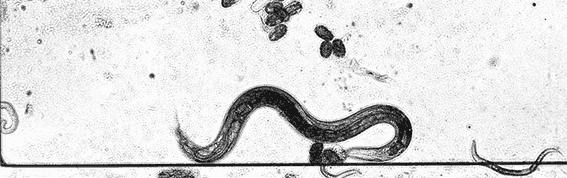
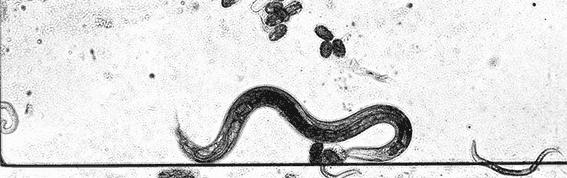
For rent: 32 individual rooms for a combined surface area of 4cm2, heating and food included! Biologists and microfluidics specialists at EPFL have joined forces and developed a highly innovative research tool: a 2cm by 2cm 'chip' with 32 independent compartments, each of which is designed to hold a nematode – a widely used worm in the research world. The device is described in the journal Molecular Neurodegeneration.

"Unlike conventional cultures in petri dishes, this device lets us monitor individual worms rather than a population of them," said Laurent Mouchiroud, from EPFL's Laboratory of Integrative Systems Physiology.

Freeze frame

Each of these 'cells' is fed by microfluidic channels. These allow variable concentrations of nutrients or therapeutic molecules to be injected with precision. The ambient temperature can also be adjusted.

Each worm is observed through a microscope throughout its life. However, for more detailed investigations and very high resolution images, the worms need to be immobilized. "For this we use a temperature-sensitive solution," said Matteo Cornaglia, from the Laboratory of Microsystems. "We inject it in liquid form at 15°C, then bring the temperature up to 25°C, which transforms it into a gel. The worm is immobilized in just a few minutes, then we bring the temperature back down and rinse out the solution – and the worm is able to move again."

Protein aggregates in the cross-hairs

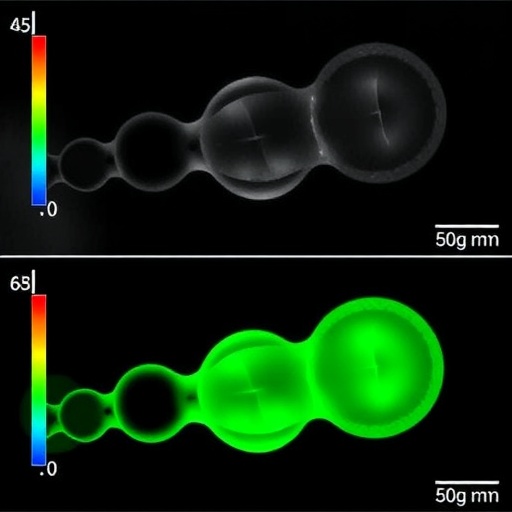
This method is fully reversible and does not affect the nematode's development. Using it, researchers can observe the formation of protein aggregates linked to several neurodegenerative diseases like Alzheimer's, Parkinson's and Huntington's. The same worm can be photographed several times, as the clusters develop. "This is totally new, and it will help us learn more not only about how these aggregates grow, but also about the tissue in which they form," said Mouchiroud. "In addition, we have already been able to test and observe the effect of certain drugs on how the clusters form."

Nematodes are very useful models for studying a number of human diseases. In many cases, they obviate the need to experiment on rodents. But until now, handling nematodes was a delicate affair. By simplifying the process, this new technology should accelerate research on numerous afflictions and how they are treated.

###

Media Contact

Laurent Mouchiroud
[email protected]
41-216-930-954
@EPFL_en

http://www.epfl.ch/index.en.html

Share12Tweet8Share2ShareShareShare2

Related Posts

Ancient 500-Million-Year-Old Clawed Predator Redefines the Evolution of Spiders and Horseshoe Crabs

Ancient 500-Million-Year-Old Clawed Predator Redefines the Evolution of Spiders and Horseshoe Crabs

April 1, 2026
Chikungunya Virus Lingers in Joint Macrophages, Causes Chronic Disease

Chikungunya Virus Lingers in Joint Macrophages, Causes Chronic Disease

April 1, 2026

Unveiling How Two Genes Collaborate to Shape Dental and Facial Features

April 1, 2026

Do Your Genes Influence How Lifestyle Choices Affect Aging?

April 1, 2026
Please login to join discussion

POPULAR NEWS

  • blank

    Revolutionary AI Model Enhances Precision in Detecting Food Contamination

    96 shares
    Share 38 Tweet 24
  • Imagine a Social Media Feed That Challenges Your Views Instead of Reinforcing Them

    1006 shares
    Share 398 Tweet 249
  • Promising Outcomes from First Clinical Trials of Gene Regulation in Epilepsy

    51 shares
    Share 20 Tweet 13
  • Popular Anti-Aging Compound Linked to Damage in Corpus Callosum, Study Finds

    43 shares
    Share 17 Tweet 11

About

BIOENGINEER.ORG

We bring you the latest biotechnology news from best research centers and universities around the world. Check our website.

Follow us

Recent News

Unraveling Sleep Genetics via Wearable Device Data

Dopamine Drives Dynamic Social Specialization

FOLR3 and Neutrophils Worsen Sepsis Inflammation

Subscribe to Blog via Email

Enter your email address to subscribe to this blog and receive notifications of new posts by email.

Join 78 other subscribers
  • Contact Us

Bioengineer.org © Copyright 2023 All Rights Reserved.

Welcome Back!

Login to your account below

Forgotten Password?

Retrieve your password

Please enter your username or email address to reset your password.

Log In
No Result
View All Result
  • Homepages
    • Home Page 1
    • Home Page 2
  • News
  • National
  • Business
  • Health
  • Lifestyle
  • Science

Bioengineer.org © Copyright 2023 All Rights Reserved.