• HOME
  • NEWS
  • EXPLORE
    • CAREER
      • Companies
      • Jobs
    • EVENTS
    • iGEM
      • News
      • Team
    • PHOTOS
    • VIDEO
    • WIKI
  • BLOG
  • COMMUNITY
    • FACEBOOK
    • INSTAGRAM
    • TWITTER
Sunday, February 8, 2026
BIOENGINEER.ORG
No Result
View All Result
  • Login
  • HOME
  • NEWS
  • EXPLORE
    • CAREER
      • Companies
      • Jobs
        • Lecturer
        • PhD Studentship
        • Postdoc
        • Research Assistant
    • EVENTS
    • iGEM
      • News
      • Team
    • PHOTOS
    • VIDEO
    • WIKI
  • BLOG
  • COMMUNITY
    • FACEBOOK
    • INSTAGRAM
    • TWITTER
  • HOME
  • NEWS
  • EXPLORE
    • CAREER
      • Companies
      • Jobs
        • Lecturer
        • PhD Studentship
        • Postdoc
        • Research Assistant
    • EVENTS
    • iGEM
      • News
      • Team
    • PHOTOS
    • VIDEO
    • WIKI
  • BLOG
  • COMMUNITY
    • FACEBOOK
    • INSTAGRAM
    • TWITTER
No Result
View All Result
Bioengineer.org
No Result
View All Result
Home NEWS Science News Biology

Obesity alters airway muscle function, increases Asthma risk

Bioengineer by Bioengineer
September 13, 2018
in Biology
Reading Time: 2 mins read
0
Share on FacebookShare on TwitterShare on LinkedinShare on RedditShare on Telegram

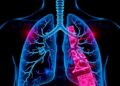
Rockville, Md. (September 13, 2018)–New research suggests that obesity changes how airway muscles function, increasing the risk of developing asthma. The study is published ahead of print in the American Journal of Physiology–Lung Cellular and Molecular Physiology.

The prevalence of asthma and obesity–as both separate and coexisting conditions–has grown considerably in the U.S. in recent years. Obesity is a major risk factor for asthma, in part because of the systemic and localized inflammation of the airways that occurs in people with a high body mass index.

People with obesity "also manifest a higher risk of severe asthma, decreased disease control and decreased response to corticosteroids therapy," explained the bicoastal team of scientists who conducted the research. However, previous studies suggest that some people with obesity may have a type of asthma that is not caused by airway inflammation, but by hyperresponsiveness–a higher-than-normal response to an allergen–in the airway smooth muscle. Hyperresponsiveness causes the airways to narrow, obstructing ease of breathing, and can occur when the muscles contract or begin to spasm.

The research team combined human airway smooth muscle cells with histamine, a chemical the immune system makes in response to an allergen, and carbachol, a drug that stimulates the part of the nervous system that controls the airways. Stimulating airway cells with these substances causes the cells to release calcium, which mimics muscle contraction. The researchers found that muscle cells from obese donors released more calcium and had greater shortening–a function that occurs during muscle contraction–than the cells from normal-weight donors. In addition, the cells from female obese donors released more calcium than cells from male obese donors.

These results suggest that obesity "imprints on structural cells [or airway smooth muscle cells] a unique signature that can be identified and that may lead to novel targeted approaches to improve asthma management without the use of steroids," explained Reynold Panettieri Jr., MD, director of the Rutgers Institute for Translational Medicine and Science and corresponding author of the study.

###

Read the full article, "Obesity increases airway smooth muscle responses to contractile agonists," published ahead of print in the American Journal of Physiology–Lung Cellular and Molecular Physiology.

NOTE TO JOURNALISTS: To schedule an interview with a member of the research team, please contact the [email protected] or 301-634-7209. Find more research highlights in the APS Press Room.

Physiology is the study of how molecules, cells, tissues and organs function in health and disease. Established in 1887, the American Physiological Society (APS) was the first U.S. society in the biomedical sciences field. The Society represents more than 10,000 members and publishes 15 peer-reviewed journals with a worldwide readership.

Media Contact

Stacy Brooks
[email protected]
301-634-7209
@APSPhysiology

http://www.the-aps.org

http://dx.doi.org/10.1152/ajplung.00459.2017

Share12Tweet8Share2ShareShareShare2

Related Posts

Florida Cane Toad: Complex Spread and Selective Evolution

Florida Cane Toad: Complex Spread and Selective Evolution

February 7, 2026
New Study Uncovers Mechanism Behind Burn Pit Particulate Matter–Induced Lung Inflammation

New Study Uncovers Mechanism Behind Burn Pit Particulate Matter–Induced Lung Inflammation

February 6, 2026

DeepBlastoid: Advancing Automated and Efficient Evaluation of Human Blastoids with Deep Learning

February 6, 2026

Navigating the Gut: The Role of Formic Acid in the Microbiome

February 6, 2026
Please login to join discussion

POPULAR NEWS

  • Robotic Ureteral Reconstruction: A Novel Approach

    Robotic Ureteral Reconstruction: A Novel Approach

    82 shares
    Share 33 Tweet 21
  • Digital Privacy: Health Data Control in Incarceration

    63 shares
    Share 25 Tweet 16
  • Breakthrough in RNA Research Accelerates Medical Innovations Timeline

    53 shares
    Share 21 Tweet 13
  • Mapping Tertiary Lymphoid Structures for Kidney Cancer Biomarkers

    50 shares
    Share 20 Tweet 13

About

We bring you the latest biotechnology news from best research centers and universities around the world. Check our website.

Follow us

Recent News

Decoding Phantom Limb Movements via Intraneural Signals

Attitudes Toward Aging Impact Early Nursing Home Quality

Transforming Healthcare: Just Culture and Restorative Practices

Subscribe to Blog via Email

Enter your email address to subscribe to this blog and receive notifications of new posts by email.

Join 73 other subscribers
  • Contact Us

Bioengineer.org © Copyright 2023 All Rights Reserved.

Welcome Back!

Login to your account below

Forgotten Password?

Retrieve your password

Please enter your username or email address to reset your password.

Log In
No Result
View All Result
  • Homepages
    • Home Page 1
    • Home Page 2
  • News
  • National
  • Business
  • Health
  • Lifestyle
  • Science

Bioengineer.org © Copyright 2023 All Rights Reserved.