In a groundbreaking stride toward unraveling the intricate web of immunometabolic regulation, a team of scientists led by Wu, Lei, and Wang has illuminated the critical role of O-GlcNAcylation on Uridine Diphosphate Glucose Dehydrogenase (UGDH). This novel insight, recently published in Cell Death Discovery, heralds a transformative shift in our understanding of cellular metabolism’s crosstalk with immune functions and paves the way for innovative therapeutic avenues that may revolutionize treatments for immune-related disorders.
UGDH, a pivotal enzyme instrumental in synthesizing UDP-glucuronic acid—a substrate essential for glycosaminoglycan production—has long been recognized for its fundamental role in cell surface remodeling and extracellular matrix composition. However, the modification of UGDH via O-GlcNAcylation, a dynamic post-translational modification involving the addition of N-acetylglucosamine residues, introduces a previously obscure dimension to the enzyme’s functionality, with profound implications for metabolic signaling within immune cells.
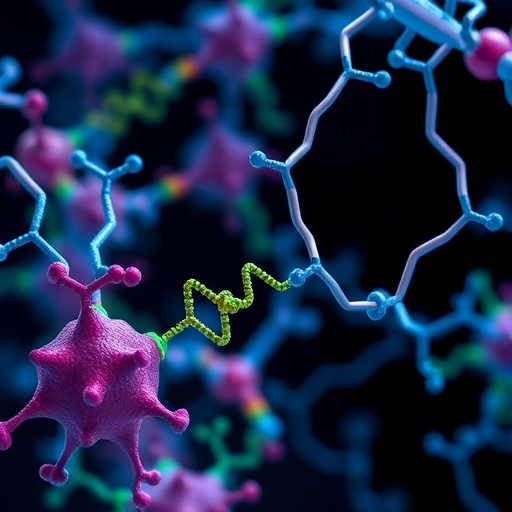
Delving into the molecular intricacies, the researchers employed advanced proteomic analyses, revealing that O-GlcNAcylation induces conformational shifts in UGDH that modulate its enzymatic activity. By fine-tuning the flux through the UDP-glucuronic acid pathway, O-GlcNAc marks dictate the synthesis of essential extracellular glycans and thereby influence immune cell adhesion, migration, and signaling pathways. This biochemical fine-tuning suggests a sophisticated feedback mechanism integrating nutrient sensing with immune responsiveness.
Moreover, the study elucidates that O-GlcNAcylation-dependent regulation of UGDH is tightly linked to the metabolic state of immune cells. Under inflammatory stimuli, the hexosamine biosynthetic pathway, responsible for generating UDP-GlcNAc, is upregulated, enhancing O-GlcNAc modifications on UGDH. This modification therefore acts as a molecular switch, synchronizing metabolic cues with immune activation. The authors highlight that this mechanism is critically involved in macrophage polarization and T-cell differentiation, processes central to immune homeostasis and pathogen defense.
Beyond the fundamental biochemical revelations, these findings bear significant translational potential. The modulation of UGDH O-GlcNAcylation could be harnessed to recalibrate immune responses in chronic inflammatory diseases where metabolic dysregulation and immune overactivation converge. Targeting the enzymes responsible for adding or removing O-GlcNAc residues presents an enticing therapeutic strategy to restore immune balance by modulating the metabolic state of effector cells.
The implications extend further into oncology, where tumor-induced metabolic reprogramming often subverts immune surveillance. Aberrant O-GlcNAcylation patterns on UGDH may thus serve as biomarkers for tumor immunometabolism or as targets to reinvigorate antitumor immune cells. This nexus between metabolism and immunity underlines the emergent concept of “immunometabolic checkpoints,” a frontier deemed critical for future immunotherapy development.
Intriguingly, this study establishes that UGDH’s O-GlcNAc mark facilitates its interaction with other key metabolic regulators. Cross-talk analysis identified an interaction network whereby O-GlcNAcylated UGDH coalesces with enzymes orchestrating glycolysis and oxidative phosphorylation. This interconnectivity suggests a holistic coordination of energy production and structural remodeling during immune activation, underscoring the sophistication of cellular metabolic networks.
The authors also shed light on the reversibility and dynamic nature of UGDH O-GlcNAcylation. Leveraging site-directed mutagenesis and live-cell imaging, they demonstrate that immune cell stimuli rapidly alter O-GlcNAc levels on UGDH, emphasizing its role in real-time metabolic adaptation. Such plasticity is crucial for immune cells to respond efficiently to shifting microenvironmental conditions during infection or tissue injury.
Crucially, the study integrates these molecular insights with in vivo models, showcasing that pharmacological inhibition of O-GlcNAc transferase, the enzyme catalyzing this modification, attenuates pathological immune activation and ameliorates disease phenotypes in animal models of autoimmunity. This translational leap underscores the therapeutic promise of targeting O-GlcNAcylation pathways, opening avenues for next-generation immune modulators.
From a systems biology perspective, the findings advocate for a paradigm wherein metabolic enzymes like UGDH are not mere metabolic cogs but integral hubs within immune signaling networks. This redefines our conceptual framework, urging the re-evaluation of metabolic enzyme modifications as central regulators of immune function rather than peripheral metabolic footnotes.
The research also calls attention to the evolutionary conservation of O-GlcNAcylation machinery and its immune functions, suggesting ancient and indispensable roles across species. Such conservation bolsters the feasibility of leveraging these mechanisms therapeutically, with evolutionary robustness implying a lower risk of adverse effects stemming from pharmacological manipulation.
In summary, Wu and colleagues deliver a compelling narrative that intricately links O-GlcNAcylation of UGDH to the orchestration of immunometabolic interplay. By dissecting the biochemical nuances and tying them to disease-relevant outcomes, the study sets a new benchmark in immunometabolic research. It invites the scientific community to rethink immune regulation through the lens of metabolic enzyme modifications, catalyzing fresh explorations into immunometabolism.
Future investigations are poised to unravel additional layers of control mediated by O-GlcNAcylation in various immune subsets, including dendritic cells and natural killer cells. Furthermore, the development of technologies enabling precise editing of O-GlcNAc sites may empower targeted therapeutic interventions with unprecedented specificity and efficacy.
Ultimately, the discovery that O-GlcNAcylation modulates UGDH activity and, by extension, immune cell metabolism, heralds a new era in the conception of immunometabolic regulation. As we advance toward integrating metabolic insights into clinical immunology, this work represents a monumental leap toward harnessing metabolism-driven immunity for therapeutic gain.
Subject of Research: Immunometabolic regulation via O-GlcNAcylation of Uridine Diphosphate Glucose Dehydrogenase (UGDH).
Article Title: O-GlcNAcylation of UGDH: emerging insights into immunometabolic regulation and therapeutic implications.
Article References:
Wu, Q., Lei, T. & Wang, S. O-GlcNAcylation of UGDH: emerging insights into immunometabolic regulation and therapeutic implications. Cell Death Discov. (2026). https://doi.org/10.1038/s41420-026-03086-y
Image Credits: AI Generated
DOI: https://doi.org/10.1038/s41420-026-03086-y
Tags: enzyme conformational changes by O-GlcNAcextracellular matrix remodelingglycosaminoglycan biosynthesisimmune cell adhesion and migrationimmunometabolic regulation mechanismsmetabolic signaling in immunitynutrient sensing in immune responseO-GlcNAcylation of UGDHpost-translational modification in immune cellsproteomic analysis of UGDHtherapeutic targets for immune disordersUDP-glucuronic acid synthesis