• HOME
  • NEWS
  • EXPLORE
    • CAREER
      • Companies
      • Jobs
    • EVENTS
    • iGEM
      • News
      • Team
    • PHOTOS
    • VIDEO
    • WIKI
  • BLOG
  • COMMUNITY
    • FACEBOOK
    • INSTAGRAM
    • TWITTER
Wednesday, April 1, 2026
BIOENGINEER.ORG
No Result
View All Result
  • Login
  • HOME
  • NEWS
  • EXPLORE
    • CAREER
      • Companies
      • Jobs
        • Lecturer
        • PhD Studentship
        • Postdoc
        • Research Assistant
    • EVENTS
    • iGEM
      • News
      • Team
    • PHOTOS
    • VIDEO
    • WIKI
  • BLOG
  • COMMUNITY
    • FACEBOOK
    • INSTAGRAM
    • TWITTER
  • HOME
  • NEWS
  • EXPLORE
    • CAREER
      • Companies
      • Jobs
        • Lecturer
        • PhD Studentship
        • Postdoc
        • Research Assistant
    • EVENTS
    • iGEM
      • News
      • Team
    • PHOTOS
    • VIDEO
    • WIKI
  • BLOG
  • COMMUNITY
    • FACEBOOK
    • INSTAGRAM
    • TWITTER
No Result
View All Result
Bioengineer.org
No Result
View All Result
Home NEWS Science News

NUS researchers uncover novel pathway to suppress virus-induced cancers

Bioengineer by Bioengineer
December 7, 2017
in Science News
Reading Time: 2 mins read
0
Share on FacebookShare on TwitterShare on LinkedinShare on RedditShare on Telegram
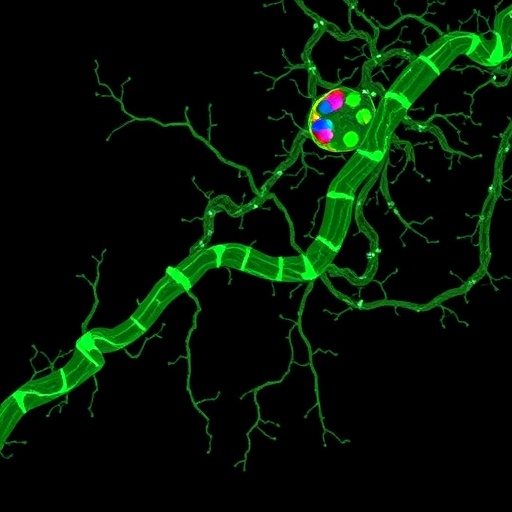
IMAGE

Credit: National University of Singapore

Researchers at the Cancer Science Institute of Singapore (CSI Singapore) at the National University of Singapore (NUS) have identified a novel molecular pathway by which a tumour suppressor, TIP60, inhibits the growth of cancer cells. The study led by Dr Sudhakar Jha, Principal Investigator at CSI Singapore and Deepa Rajagopalan, PhD student at NUS, paves the way for the development of new therapeutic strategies that could impede the spread of virus-induced cancers.

The findings of the study were published in prestigious scientific journal PLOS Pathogens on 18 October 2017.

TIP60, which exists in regular cells, is known to play a vital role in suppressing virus-induced cancers such as cervical cancer, which typically develops from an infection by the human papillomavirus (HPV). While several anti-cancer roles of TIP60 have been discovered, the mechanism through which the protein inhibits telomerase in cancer cells was unknown.

Telomerase is an enzyme that functions to add on telomeres, which are protective caps, to the ends of chromosomes. In normal cells, telomeres shorten each time a cell divides, and the cell eventually stops dividing when the telomeres become too short. Cancer cells, however, are known to bypass this limit by activating mechanisms to keep their telomeres long, thereby allowing them to extend their lifespan indefinitely.

In this in-depth study, the team of researchers employed an array of cutting-edge molecular biology tools to examine the regulation of telomerase by TIP60 in virus-induced cancer cells. The team discovered that TIP60 inhibits telomerase by interacting with and modifying a partner molecule, Sp1, which aids in producing more telomerase protein. The modified Sp1, which can no longer bind to the regulatory sequences of the telomerase gene to activate it, reduces the expression of telomerase thereby preventing the cancer cells from continuous division.

The identification of this novel molecular pathway opens a new window of hope for therapeutic interventions against cancers.

Dr Jha said, "Our findings hold exciting potential in the fight against a range of virus-induced cancers including cervical cancer, liver cancer and Burkitt's Lymphoma. Given that 85 per cent of cancers are triggered by high amounts of telomerase, our study, which lends a deeper insight into the inhibition of telomerase by TIP60, could also be applied to other groups of cancer such as breast, colorectal and ovarian cancer. Our next step is therefore to investigate the new pathway in these groups of cancer."

###

Media Contact

Tan Yun Yun
[email protected]
65-651-62308
@NUSingapore

http://www.nus.edu.sg/

Original Source

http://news.nus.edu.sg/press-releases/novel-pathway-TIP60
Share12Tweet7Share2ShareShareShare1

Related Posts

FGFR2b Links to Biomarkers, Tumor Diversity, Survival

April 1, 2026

Frailty, Malnutrition Link Falls to Daily Functioning

April 1, 2026

Dactylides D, E: Novel 22-Membered Polyol Macrolides

April 1, 2026

Longer Leukocyte Telomeres Linked to Premature Membrane Rupture

April 1, 2026
Please login to join discussion

POPULAR NEWS

  • blank

    Revolutionary AI Model Enhances Precision in Detecting Food Contamination

    96 shares
    Share 38 Tweet 24
  • Imagine a Social Media Feed That Challenges Your Views Instead of Reinforcing Them

    1006 shares
    Share 398 Tweet 249
  • Promising Outcomes from First Clinical Trials of Gene Regulation in Epilepsy

    51 shares
    Share 20 Tweet 13
  • Popular Anti-Aging Compound Linked to Damage in Corpus Callosum, Study Finds

    43 shares
    Share 17 Tweet 11

About

We bring you the latest biotechnology news from best research centers and universities around the world. Check our website.

Follow us

Recent News

FGFR2b Links to Biomarkers, Tumor Diversity, Survival

Frailty, Malnutrition Link Falls to Daily Functioning

Dactylides D, E: Novel 22-Membered Polyol Macrolides

Subscribe to Blog via Email

Enter your email address to subscribe to this blog and receive notifications of new posts by email.

Join 78 other subscribers
  • Contact Us

Bioengineer.org © Copyright 2023 All Rights Reserved.

Welcome Back!

Login to your account below

Forgotten Password?

Retrieve your password

Please enter your username or email address to reset your password.

Log In
No Result
View All Result
  • Homepages
    • Home Page 1
    • Home Page 2
  • News
  • National
  • Business
  • Health
  • Lifestyle
  • Science

Bioengineer.org © Copyright 2023 All Rights Reserved.