Climate change may dramatically affect the animal species observed in North American cities, according to a study published March 27 in the open-access journal PLOS ONE by Alessandro Filazzola of the University of Toronto Mississauga and Apex Resource Management Solutions, Canada, and colleagues.
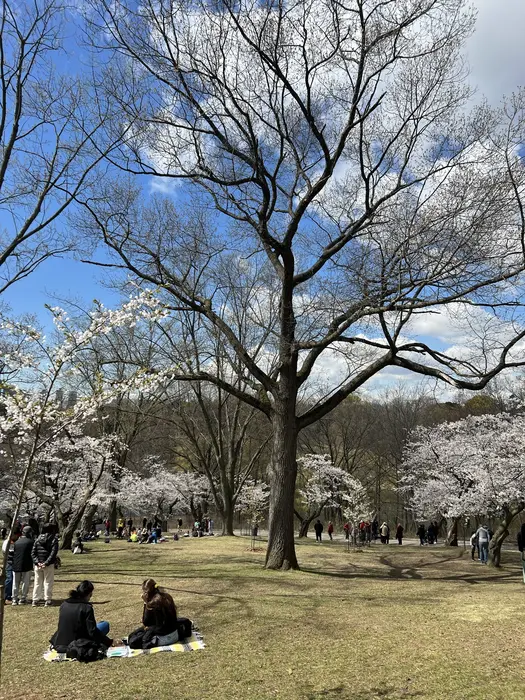
Credit: Scott MacIvor, CC-BY 4.0 (https://creativecommons.org/licenses/by/4.0/)
Climate change may dramatically affect the animal species observed in North American cities, according to a study published March 27 in the open-access journal PLOS ONE by Alessandro Filazzola of the University of Toronto Mississauga and Apex Resource Management Solutions, Canada, and colleagues.
Urban dwellers bond with the biodiversity around them, from backyard birds to the mascots of local sports teams. But due to the effects of climate change, residents of US and Canadian cities may encounter a different cast of animal characters by 2100. Filazzola and colleagues studied the impact of human-caused climate change on more than 2,000 animal species historically found in the 60 most populous North American cities.
First, the researchers used online species distribution databases generated by citizen science initiatives to download a record of terrestrial animal species sightings in each city. They acknowledge potential issues with the reliability of data which is largely generated from citizen science initiatives. The researchers then used machine learning to predict the most suitable conditions for each species, based on three differing emissions scenarios, by the end of the century.
Results indicated a turnover of urban biodiversity by 2100 across almost all cities measured. Cities with high historic species richness were predicted to have the largest declines and fewest gains in species. Geographically, cooler, wetter cities (e.g. Omaha and Kansas City) may welcome the most new species, with Quebec, Ottawa, and Winnipeg nearly doubling their species roster. Warmer cities with higher precipitation (e.g. coastal California) may lose the most species. Arid southwestern cities like Phoenix and Albuquerque are not expected to experience a dramatic species shift, likely due to their resilient ecosystems.
Fifty-four species may vanish entirely from the 60 tested cities. When examining changes by taxon, over 95% of bird and insect species were predicted to experience a change in the number of cities they occupy. Canines, most amphibians, and loons (aquatic birds) may experience the greatest losses in cities, while turtles, mice, toads and pelicans may become more common overall.
The authors suggest that “an individual who lives a lifetime within the same city will likely observe changes in the species that occur around them.”
As this is a modelling study, these predictions need to be followed by ecological analyses. Further research can address how variables other than climate affect species distribution and explore how city living may bring additional stressors to animals. The researchers state that future projections are dependent on society’s ability to curb greenhouse gas emissions, and they encourage future efforts to protect biodiversity.
The authors add: “For people living in cities, the animals in their backyards and local green spaces are going to change significantly with climate change. Over the next few decades, familiar species will be leaving the city and new species will be entering it, forever changing the composition of urban animals.”
#####
In your coverage please use this URL to provide access to the freely available article in PLOS ONE: https://journals.plos.org/plosone/article?id=10.1371/journal.pone.0299217
Citation: Filazzola A, Johnson MTJ, Barrett K, Hayes S, Shrestha N, Timms L, et al. (2024) The great urban shift: Climate change is predicted to drive mass species turnover in cities. PLoS ONE 19(3): e0299217. https://doi.org/10.1371/journal.pone.0299217
Author Countries: Canada
Funding: This research was funded by a Center For Urban Environments Post-doctoral Fellowship Awarded to AF and a School of Cities Urban Challenges Grant Awarded to MJ. The funders had no role in study design, data collection and analysis, decision to publish, or preparation of the manuscript.
Journal
PLoS ONE
DOI
10.1371/journal.pone.0299217
Method of Research
Computational simulation/modeling
Subject of Research
Not applicable
Article Title
The great urban shift: Climate change is predicted to drive mass species turnover in cities
Article Publication Date
27-Mar-2024
COI Statement
The authors have declared that no competing interests exist.