


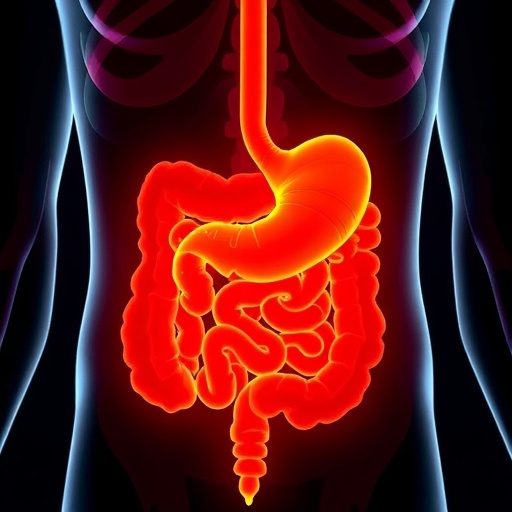
In a groundbreaking study set to reshape our understanding of intestinal physiology, researchers have uncovered a noncanonical mechanism governing fluid homeostasis within the gut, centered around the enigmatic TRPM4 ion channel. This discovery, detailed in their upcoming Nature Communications publication, challenges long-held beliefs about TRPM4’s activation and brings to light a calcium-independent pathway that intricately controls intestinal fluid balance.
Traditionally, TRPM4 (Transient Receptor Potential Melastatin 4) channels have been recognized as calcium-activated nonselective cation channels primarily involved in various cellular excitability processes. Their canonical activation strictly depends on intracellular calcium increases, which trigger TRPM4 to regulate membrane potential and ionic fluxes. However, the new findings from Liu, Hu, Xue, and colleagues propose a paradigm shift by demonstrating a previously unknown activation mechanism that operates independently of calcium signals.
This novel pathway implicates TRPM4 as a pivotal regulator of intestinal fluid transport and homeostasis, a process fundamental for nutrient absorption, barrier function, and overall gastrointestinal health. By decoupling TRPM4 activation from calcium dynamics, the researchers illuminate a complex regulatory network where TRPM4 integrates alternative molecular cues to maintain fluid equilibrium in the intestinal epithelium, thus protecting against dehydration, inflammation, and disease states.
The implications of this study extend beyond fundamental physiology, potentially informing therapeutic strategies for a spectrum of gastrointestinal disorders characterized by aberrant fluid handling such as inflammatory bowel disease, diarrhea, and cystic fibrosis-associated intestinal complications. Targeting the noncanonical TRPM4 activation mechanism may open new avenues for drug development aimed at restoring fluid balance disrupted by pathological insults.
At the molecular level, the team employed an array of sophisticated electrophysiological, biochemical, and imaging techniques to dissect the activation properties of TRPM4 in situ. Their results revealed that, unlike classical calcium-induced activation, this alternate pathway is modulated by distinct intracellular signals and membrane lipid microenvironments, suggesting that TRPM4 functions as a versatile sensor of cellular milieu beyond calcium ions.
Moreover, the spatial distribution of activated TRPM4 channels along the intestinal epithelium was shown to correspond with regions exhibiting high fluid turnover, underscoring the channel’s physiological relevance. This heterogeneity in TRPM4 activity hints at a finely tuned regulatory system enabling rapid adaptation to fluctuating luminal contents and osmotic challenges.
Crucially, the discovery sheds light on the interplay between TRPM4 and other ion channels and transporters that collectively orchestrate ionic and water movement across intestinal barriers. By integrating this calcium-independent activation, the epithelial cells achieve a dynamic balance, ensuring optimal hydration and electrolyte concentrations necessary for digestive efficiency.
Furthermore, this work raises intriguing questions about the broader roles of TRPM4 in other tissues where fluid homeostasis is critical, such as the kidney, lungs, and vascular endothelium. If similar noncanonical activation mechanisms exist elsewhere, it might explain unresolved physiological phenomena and guide cross-organ research collaborations.
Mechanistically, the team explored the intracellular signaling cascades responsible for noncalcium TRPM4 activation. Early evidence suggests involvement of phosphorylation events, interactions with scaffold proteins, and possibly modulation by local phosphoinositide metabolism. These findings advance the understanding of ion channel regulation and invite further investigation into the intracellular machinery governing TRPM4 dynamics.
Importantly, the research also demonstrated how disruption of the noncanonical TRPM4 pathway leads to measurable defects in fluid transport, resulting in pathological manifestations mimicking human intestinal disorders. Animal models genetically modified to impair this activation exhibited increased susceptibility to dehydration and inflammatory responses, confirming the channel’s indispensable role in gut fluid regulation.
This study exemplifies the power of integrative research approaches combining molecular biology, physiology, and advanced imaging to disentangle complex biological systems. By peeling back layers of cellular signaling, the authors contribute a vital piece to the puzzle of epithelial homeostasis and highlight TRPM4 as a multifaceted player in health and disease.
As we absorb the broader significance of these findings, one cannot overlook the translational potential poised to impact clinical practice. Pharmacological modulation of TRPM4’s noncanonical activation could fine-tune intestinal fluid dynamics, providing novel treatment modalities for patients suffering from chronic gastrointestinal ailments.
Moreover, the identification of this unconventional regulatory mode challenges drug discovery pipelines to rethink targeting strategies for ion channels traditionally viewed through a narrow lens of calcium dependence. The nuanced understanding of TRPM4’s activation expands the therapeutic landscape and offers hope for innovative, mechanism-based interventions.
In light of this research, the field of intestinal physiology stands at a crossroads, with emerging opportunities to integrate these molecular insights into comprehensive models of gut function. Future directions may include mapping the interactome of TRPM4 in epithelial cells, exploring its relevance in human clinical samples, and testing candidate compounds for efficacy in restoring fluid homeostasis via noncanonical pathways.
In conclusion, the study by Liu et al. revolutionizes our conception of TRPM4 channel regulation, presenting a calcium-independent activation mechanism that orchestrates intestinal fluid homeostasis with exquisite precision. Their work not only enriches fundamental biological knowledge but also lays a robust foundation for therapeutic innovation aimed at improving gastrointestinal health worldwide. As the scientific community eagerly anticipates further developments, this revelation solidifies TRPM4’s status as a critical molecular gatekeeper of intestinal fluid balance.
Subject of Research: Regulation of intestinal fluid homeostasis via noncanonical calcium-independent activation of TRPM4 ion channels.
Article Title: Noncanonical calcium-independent TRPM4 activation governs intestinal fluid homeostasis
Article References:
Liu, Y., Hu, J., Xue, C. et al. Noncanonical calcium-independent TRPM4 activation governs intestinal fluid homeostasis. Nat Commun (2026). https://doi.org/10.1038/s41467-025-68014-7
Image Credits: AI Generated
Tags: calcium-independent TRPM4 activationcellular excitability and ion channelsdehydration and inflammation preventionfluid transport regulation in intestinesgastrointestinal health and nutritiongroundbreaking intestinal physiology studiesintestinal epithelium fluid equilibriumintestinal fluid homeostasis mechanismsnoncanonical TRPM4 pathwaynutrient absorption and barrier functiontherapeutic implications of TRPM4 researchTRPM4 ion channel function



