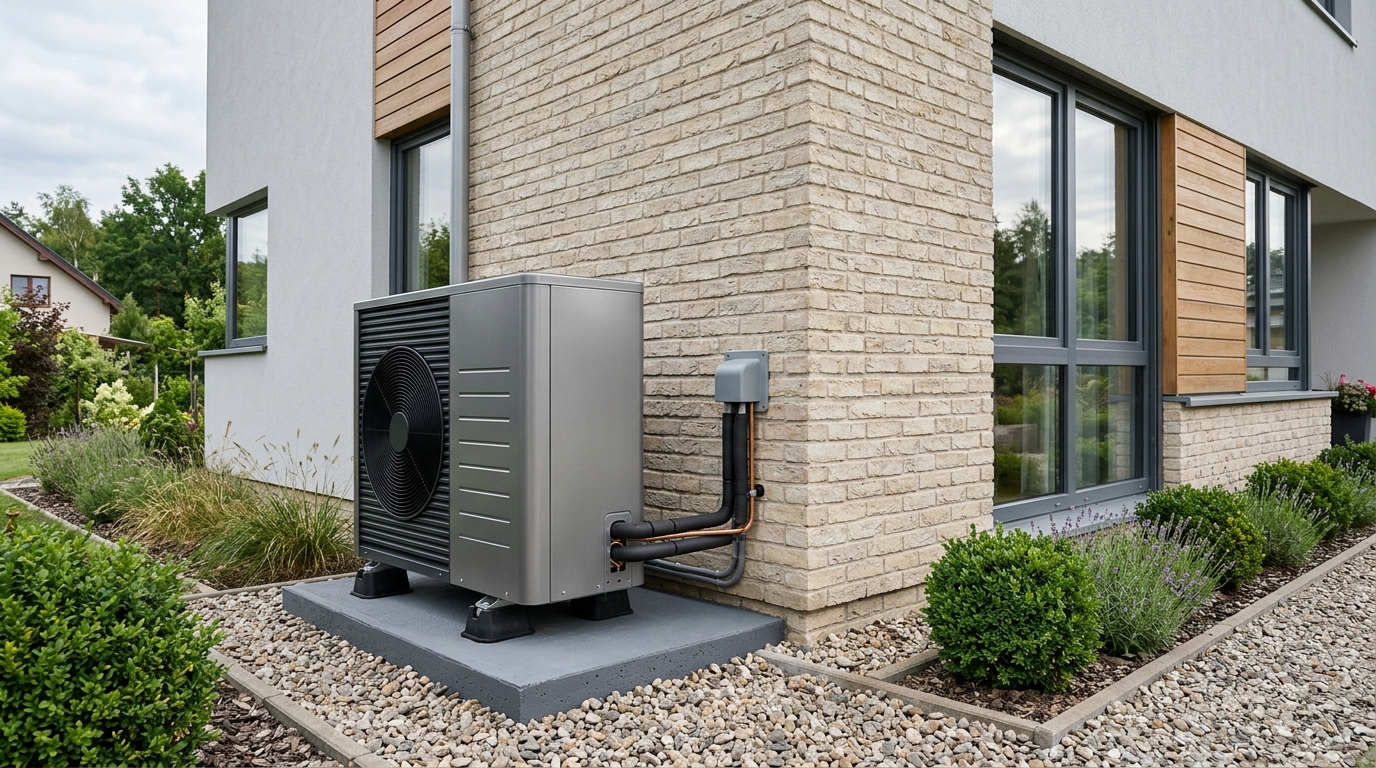
Decentralised electrical energy flexibility from residential heating systems faces pervasive non-technical obstacles that severely constrain real-world deployment despite existing technological readiness. Across Austria, Belgium, Canada, Denmark, Germany, and Spain, researchers evaluated how non-technical barriers impede the utilisation of household thermal capacity to balance power grids and integrate fluctuating renewable energy sources. The core findings demonstrate that the primary impediments stem from high perceived initial investment costs paired with uncertain returns on investment, widespread lack of awareness among both end-users and technical professionals, and regulatory frameworks that fail to account for dynamic thermal storage. Rather than encountering fundamental mechanical limitations, the flexible operation of domestic thermal systems remains held back by fragmented legal structures, complex stakeholder relationships, and underdeveloped compensation mechanisms across all six investigated jurisdictions.
To investigate these structural bottlenecks, the study employed a rigorous mixed-methods research framework combining in-depth expert consultations with a systematic scientific literature review. Working within the International Energy Agency Energy Storage Technology Collaboration Programme Task 43, researchers gathered empirical insights through forty-one semi-structured expert interviews conducted between July 15, 2024, and April 7, 2025. The interview sample spanned six participants in Austria, six in Belgium, seven in Canada, seven in Denmark, nine in Germany, and six in Spain, drawing on professionals from universities, research institutions, ministries, system operators, design firms, consultancies, and energy service providers. In parallel, the team executed a systematic literature review adhering to a modified PRISMA methodological protocol. An initial search of the Web of Science database yielded 350 peer-reviewed records, supplemented by thirty-nine grey and peer-reviewed items gathered through expert snowball sampling. After excluding publications focused on electric vehicles, small batteries, industrial demand response, cybersecurity, purely technical hardware hurdles, pre-2020 literature, or geographical areas outside the six focus nations, fifty-five relevant publications were subjected to standardised thematic extraction.
National preconditions for activating domestic heating flexibility diverge sharply across the six examined countries, as illustrated by baseline indicators evaluated for the year 2023. Variable renewable energy generation shares, which indicate the system-level necessity for flexibility, were led by Denmark at 67 percent of electricity generation primarily from wind, followed by Spain at 41 percent and Germany at 39 percent, both relying on combined solar and wind resources. In contrast, Belgium recorded a 28 percent share, Austria reached 20 percent, and Canada registered only 7 percent due to heavy dependence on hydro, nuclear, and fossil generation. Long-term projections predict that by 2030, variable renewable shares may rise to 86 percent in Denmark, 70 percent in Germany, 58 percent in Spain, 51 percent in Belgium, 34 percent in Austria, and 13 percent in Canada. However, existing heat pump penetration remains low across all territories, standing at 22 percent of buildings in Denmark, 10 percent in Austria, 7 percent in both Canada and Spain, and only 4 percent in Germany and Belgium. Although new heat pump installation shares reached 91 percent in Denmark, 49 percent in Austria, 39 percent in Spain, 27 percent in Germany, 22 percent in Belgium, and 6 percent in Canada, overall building stock penetration severely constrains near-term flexibility scale.
Digital infrastructure deployment and climatic patterns further shape how flexibility can be harnessed across different regions. By 2023, smart meter rollouts had achieved near-universal household coverage in Denmark and Spain, while Austria reached 85 percent with a target of 95 percent by late 2024. Canada attained approximately 80 percent coverage with a 94 percent goal for 2029, whereas Belgium recorded a federal weighted average of 39 percent. Germany exhibited the slowest rollout with just 2 percent smart meter deployment in 2023, though installations became mandatory for households consuming over 6,000 kilowatt-hours annually starting in 2025 under a 95 percent target for 2030. Climatically, classifications based on the ASHRAE system range from cold zones in Canada (zones 7 and 8) and Austria (zones 5A and 7) to moderate conditions in Germany, Denmark, and Belgium, and highly diverse regions across Spain (zones 3A, 3B, 4A, and 4C). In colder northern climates, heat pumps primarily supply space heating, though summer cooling demands are rising; conversely, in warmer regions, heat pumps operate year-round, aligning well with thermally activated building systems and photovoltaic self-consumption during coincident solar generation peaks.
The study structures residential thermal flexibility around five distinct system use cases and four operational utilisation mechanisms. The analysed use cases encompass electricity market trading, electricity grid congestion management, balancing services, local self-consumption, and device optimisation. These use cases inherently compete for finite heat pump capacity, as operational flexibility can generally serve only one objective at any single moment. Furthermore, operational trade-offs emerge between efficiency and flexibility; for example, flattening electrical load profiles through continuous low-output operation maximises a heat pump’s coefficient of performance, whereas charging thermal storage rapidly in response to external signals requires generating higher supply temperatures, thereby reducing operating efficiency. To operationalise these use cases, four utilisation mechanisms were identified: variable tariffs, active market participation, regulated direct load control, and local optimisation. While variable tariffs and individual local optimisation can be accessed directly by single households without intermediaries, active participation in wholesale, balancing, or local flexibility markets requires third-party aggregation because individual residential capacities fall far below mandatory market entry thresholds.
National regulatory frameworks governing decentralised thermal flexibility remain fragmented and inconsistent across the surveyed jurisdictions. Denmark has advanced farthest by legally establishing aggregators in 2020, restructuring balancing services through 2026 under Market Model 3.0, and pairing mandatory dynamic electricity pricing with comprehensive smart metering. Conversely, Germany presents a more divided landscape: although dynamic electricity tariffs became mandatory for suppliers in 2025, aggregator participation continues to face burdensome administrative compliance rules, even while Section 14a of the Energy Industry Act uniquely permits distribution operators to curtail heat pump loads exceeding 4.2 kilowatts during impending network congestion. Austria provides reduced network grid fees to support collective local energy sharing communities, and the city of Vienna mandates thermally activated building systems in new office developments, but broader demand response rules remain limited. Belgium supports collective self-consumption but omits thermal storage from energy performance assessments, while Spain maintains three-period time-of-use network tariffs and tests local flexibility markets through OMIE, yet imposes a prohibitive 1-megawatt minimum threshold on balancing services. In Canada, electricity oversight rests with provincial jurisdictions, leaving competitive demand response restricted to Ontario and Alberta while other provinces operate vertically integrated monopolies.
Regulatory blind spots emerge as a dominant barrier across every evaluated market, particularly concerning building standards and market integration. A critical failure identified across all six countries is that Energy Performance Certificates rely exclusively on static, steady-state calculation models, completely ignoring dynamic thermal inertia and load-shifting performance. Consequently, building owners receive no regulatory credit or compliance incentives for installing flexible thermally activated structures. To rectify this omission, the authors recommend updating certification methodologies to evaluate dynamic load-shifting indicators and restructuring subsidy programmes so that financial support requires equipment to be certified as flexibility-ready. Another structural challenge involves tariff design, where dynamic pricing is frequently weakened because time-varying components apply only to raw wholesale energy costs while network charges and statutory taxes remain entirely fixed, as observed in Denmark and Germany where variable energy comprises merely 30 percent of the total retail bill. Furthermore, self-consumption programs, while financially popular, currently reward private generation through blanket grid fee exemptions without incentivising load alignment with real-time grid conditions, thereby shifting grid maintenance costs onto non-participating consumers.
Stakeholder interactions present additional social and organizational barriers across the multi-tiered energy landscape. The research maps a complex network comprising policymakers, power plant operators, transmission and distribution system operators, market administrators, energy retailers, aggregators, local energy communities, installation contractors, municipal planners, research institutions, and household end-users. A prominent obstacle is the acute lack of knowledge and technical awareness spanning this diverse spectrum. Distribution operators and retail suppliers frequently lack the administrative expertise to implement dynamic flexibility rules, while heating, ventilation, and air conditioning engineers and installation technicians routinely avoid thermally activated building systems due to unfamiliar design protocols, slow response perceptions, and an absence of standardized sizing tools. Instead, installers consistently default to conventional, fast-reacting air-based heating equipment that is simpler to specify and commission. End-users exhibit persistent skepticism driven by privacy apprehensions regarding data exposure, reluctance to cede automated equipment control to external grid operators, and administrative complexity in rental housing where split incentives divide landlords from tenants.
Indoor climate concerns and financial valuation complexities further compound resistance to building-integrated flexibility. End-users frequently express apprehension that pre-heating or pre-cooling building thermal mass will displace room temperatures outside preferred comfort boundaries, prompting manual overrides that trigger rebound effects and negate intended load shifts. Nevertheless, Danish and Spanish operational evidence indicates that well-designed thermally activated systems operating near ambient room temperatures provide superior, stable thermal comfort when managed via predictive algorithms using weather and occupancy forecasts. On the financial side, existing utility valuation models struggle to accurately quantify flexibility benefits under volatile market pricing and shifting weather patterns. Upfront capital requirements for advanced digital control infrastructure, sub-metering, and model predictive control remain substantial. In existing properties, retrofitting heat pumps constitutes an extensive whole-house undertaking that often requires redesigning hydraulic distribution loops, resizing thermal emitters for lower operating temperatures, and upgrading building envelopes, creating an expensive investment barrier that modest energy bill savings cannot quickly offset.
Ultimately, the analysis identifies ten distinct non-technical barriers, four of which act as overarching constraints across nearly all operational mechanisms: widespread lack of knowledge, high stakeholder diversity and poor communication, economic uncertainties surrounding capital recovery, and regulatory fragmentation. To resolve these systemic challenges, the authors outline four coordinated strategic interventions. First, policymakers must establish coherent inter-sectoral regulations by incorporating dynamic thermal performance into building codes, linking heat pump subsidies to mandatory flexibility capabilities, and unbundling energy retail from demand aggregation. Second, governments must foster competitive flexibility markets by lowering prohibitive minimum bidding thresholds and expediting smart meter installations. Third, authorities should enhance financial attractiveness by establishing transparent tariff comparison platforms, testing hybrid tariff designs that balance volatility with consumer stability, and offering targeted capital grants for communication infrastructure. Fourth, industry associations and academic bodies must implement comprehensive technical training programs and standardized sizing tools for heating contractors to eliminate the so-called innovation tax on thermally activated systems. The researchers emphasize that these conclusions reflect market conditions as of early 2025 across European and North American contexts, where addressing non-technical barriers will prove decisive in establishing resilient, low-carbon energy systems.
Subject of Research: Non-technical barriers to residential heat pump and thermal flexibility
Article Title: Activating the electrical energy flexibility of residential thermal systems: an analysis of non-technical barriers in six countries
Article References: Ritter, D., Rohringer, C., Afshari, A., Andrés-Chicote, M., Hernandez-Cruz, P., Duenzen, K., Bauknecht, D., & Attia, S. (2026). Activating the electrical energy flexibility of residential thermal systems: an analysis of non-technical barriers in six countries. Energy Informatics, 9(1), Article 59. https://doi.org/10.1186/s42162-026-00673-2
Image Credits: AI Generated
DOI: 10.1186/s42162-026-00673-2
Keywords: energy flexibility, heat pumps, thermally activated building systems, demand response, smart meters, energy policy, power systems, renewable energy, Activating, electrical, energy, flexibility
News Source: Denise Maddox. (November 6, 2026). Non-Technical Barriers Stifle Residential Heat Pump Flexibility Across Six Countries. Scienmag.