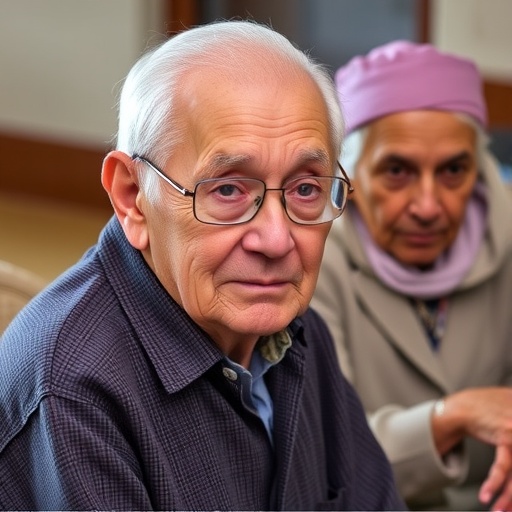
In the unfolding landscape of geriatric health assessment, a recent study published in BMC Geriatrics has illuminated a critical but underexplored dimension: the adverse consequences of non-response to the Kihon checklist among community-dwelling older adults. This 19-month prospective cohort study, spearheaded by Kazawa, K., Moriyama, M., and Sato, K., offers compelling new insights into how ignoring this widely used frailty screening tool may inadvertently signify or precipitate deteriorating health trajectories in elderly populations.
The Kihon checklist, a comprehensive survey instrument initially developed in Japan, is designed to identify older individuals at risk of functional decline and subsequent need for long-term care. Comprising multiple items targeting physical, cognitive, and social domains, this checklist has gained traction globally for its predictive power and practicality in community-based settings. However, until now, relatively little attention has been paid to the subgroup of older adults who do not respond to the checklist at all—a phenomenon often glossed over as mere attrition rather than a potential red flag for deeper health issues.
Kazawa and colleagues embarked on their inquiry with a robust methodology involving a large cohort of older adults living independently in the community. Over the course of 19 months, the researchers meticulously tracked the health outcomes of those who completed the Kihon checklist and, crucially, those who abstained from responding. The longitudinal design enabled the team to observe changes and incident events over time, instead of relying solely on cross-sectional data that may obscure causality or temporality.
The central finding was unequivocal and troubling: non-responders exhibited a markedly higher incidence of adverse health outcomes, including an increased risk of physical disability, cognitive decline, hospitalization, and mortality. This subgroup’s outcomes were significantly worse compared to their responsive counterparts, suggesting that non-response itself may act as a surrogate marker for underlying vulnerabilities or as an early manifestation of health deterioration.
The researchers postulate several mechanisms underlying this association. Foremost, individuals who ignore or are unable to complete the checklist may already be grappling with unrecognized frailty, depressive symptoms, cognitive impairments, or social isolation—factors known to impede participation in health assessments. Non-response may also reflect socioeconomic barriers, lack of support systems, or diminished health literacy, which cumulatively exacerbate risk.
Beyond prevalence and correlations, the study delves into the complex interplay of biopsychosocial factors influencing non-response. For instance, physical limitations such as visual impairments or mobility restrictions might prevent individuals from engaging with the checklist. Cognitive deficits, particularly mild cognitive impairment or early dementia, can interfere with comprehension and recall, rendering completion challenging. Social determinants like loneliness, poverty, or cultural stigma around disability assessments further complicate participation rates in geriatric screening programs.
Notably, the study underscores the dynamic nature of health trajectories in older adults. Non-response to initial screening may initiate a cascade whereby vulnerable individuals miss opportunities for timely intervention, leading to spiraling declines that become progressively harder to reverse. This finding posits non-response as an actionable biomarker that health systems can harness to identify high-risk groups who might otherwise slip under the radar.
The implications for community health practices are profound. Given the widespread use of the Kihon checklist in Japan and increasingly in other countries, health practitioners should integrate strategies for actively following up with non-responders. This could take the form of home visits, telehealth assessments, or personalized outreach by multidisciplinary teams trained in geriatric care. Such proactive approaches would help bridge gaps in detection and ensure that emerging needs are promptly addressed.
Further, the study highlights the necessity for innovations in screening tool design and deployment. Future iterations of the Kihon checklist might incorporate adaptive formats, simplified language, or multimedia elements to cater to varying levels of cognitive and sensory abilities. Deploying the checklist through digital platforms equipped with reminders and assistance could also mitigate non-response rates, particularly in increasingly tech-savvy older populations.
From a research perspective, this investigation opens new avenues for dissecting the causal pathways linking non-response and negative health outcomes. Long-term studies incorporating biological markers, detailed psychosocial profiling, and intervention trials are warranted to unravel these complex relationships and to test the efficacy of targeted outreach programs.
The study conducted by Kazawa et al. arrives amid a global demographic shift toward aging societies, where maintaining functional independence and quality of life among the elderly has become a paramount public health goal. Understanding the barriers to comprehensive assessment and recognizing non-response as more than mere data loss holds the potential to reshape geriatric care paradigms fundamentally.
Moreover, the findings raise important ethical and policy considerations. If non-response signals unmet needs or systemic inequities, health systems and policymakers must prioritize resource allocation to underserved elderly populations. This might include enhancing social support networks, expanding geriatric care infrastructure, and ensuring culturally sensitive communication strategies.
In sum, the research casts a spotlight on a neglected but critical facet of geriatric health surveillance. Non-response to the Kihon checklist is not just a methodological nuisance—it is a potent indicator of vulnerability that demands clinical attention and tailored intervention. Embracing this insight can help close gaps in elder care, foster timely preventive measures, and ultimately reduce the burden of disability and dependency in aging communities worldwide.
As the global population continues to age, integrating nuanced understandings gleaned from studies like this into frontline practice will be central to achieving sustainable health outcomes. The notion that silence or absence in health reporting may signal deeper distress underscores the need for empathy-driven, adaptable, and inclusive assessment strategies in geriatrics.
This study also serves as a beacon for a broader scientific conversation about innovation in health monitoring tools. The digital revolution offers unprecedented opportunities to make screening instruments more accessible, engaging, and responsive to individual needs, thereby reducing non-response and enhancing early detection of health decline.
In conclusion, Kazawa and colleagues provide not only a rich dataset but a call to action for multidimensional approaches addressing the complex realities of ageing. Recognizing the perils of checklists left blank and the stories they silently tell could transform how societies support their elders, shifting the focus from reactive to proactive, and from statistics to human-centered care.
Subject of Research: Negative health outcomes related to non-response to the Kihon checklist in community-dwelling older adults.
Article Title: Negative health outcomes of non-response to the Kihon checklist in community-dwelling older people: a 19-month prospective cohort study.
Article References:
Kazawa, K., Moriyama, M., Sato, K. et al. Negative health outcomes of non-response to the Kihon checklist in community-dwelling older people: a 19-month prospective cohort study. BMC Geriatr (2026). https://doi.org/10.1186/s12877-026-07190-7
Image Credits: AI Generated
Tags: cognitive and social health in elderlycommunity-dwelling elderly health riskselderly health survey attrition impactfrailty screening in older adultsfunctional decline prediction toolshealth trajectories in aging populationsJapanese geriatric assessment toolslong-term care risk factorslongitudinal geriatric health assessmentnon-response to Kihon checklist in elderlypredictive value of Kihon checklistprospective cohort studies in geriatrics