• HOME
  • NEWS
  • EXPLORE
    • CAREER
      • Companies
      • Jobs
    • EVENTS
    • iGEM
      • News
      • Team
    • PHOTOS
    • VIDEO
    • WIKI
  • BLOG
  • COMMUNITY
    • FACEBOOK
    • INSTAGRAM
    • TWITTER
Monday, April 6, 2026
BIOENGINEER.ORG
No Result
View All Result
  • Login
  • HOME
  • NEWS
  • EXPLORE
    • CAREER
      • Companies
      • Jobs
        • Lecturer
        • PhD Studentship
        • Postdoc
        • Research Assistant
    • EVENTS
    • iGEM
      • News
      • Team
    • PHOTOS
    • VIDEO
    • WIKI
  • BLOG
  • COMMUNITY
    • FACEBOOK
    • INSTAGRAM
    • TWITTER
  • HOME
  • NEWS
  • EXPLORE
    • CAREER
      • Companies
      • Jobs
        • Lecturer
        • PhD Studentship
        • Postdoc
        • Research Assistant
    • EVENTS
    • iGEM
      • News
      • Team
    • PHOTOS
    • VIDEO
    • WIKI
  • BLOG
  • COMMUNITY
    • FACEBOOK
    • INSTAGRAM
    • TWITTER
No Result
View All Result
Bioengineer.org
No Result
View All Result
Home NEWS Science News Biology

New valve technology promises cheaper, greener engines

Bioengineer by Bioengineer
March 21, 2018
in Biology
Reading Time: 2 mins read
0
Share on FacebookShare on TwitterShare on LinkedinShare on RedditShare on Telegram
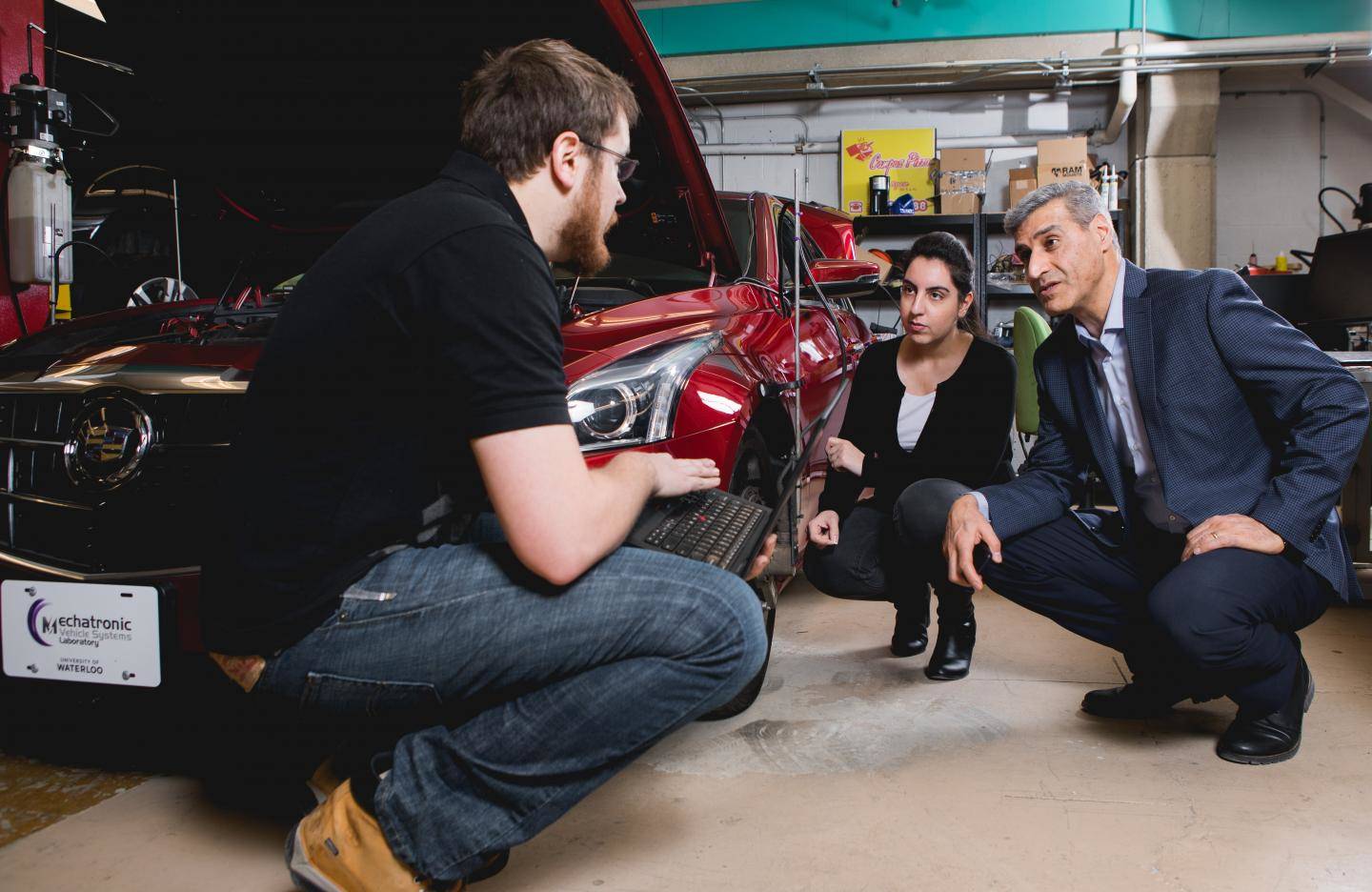
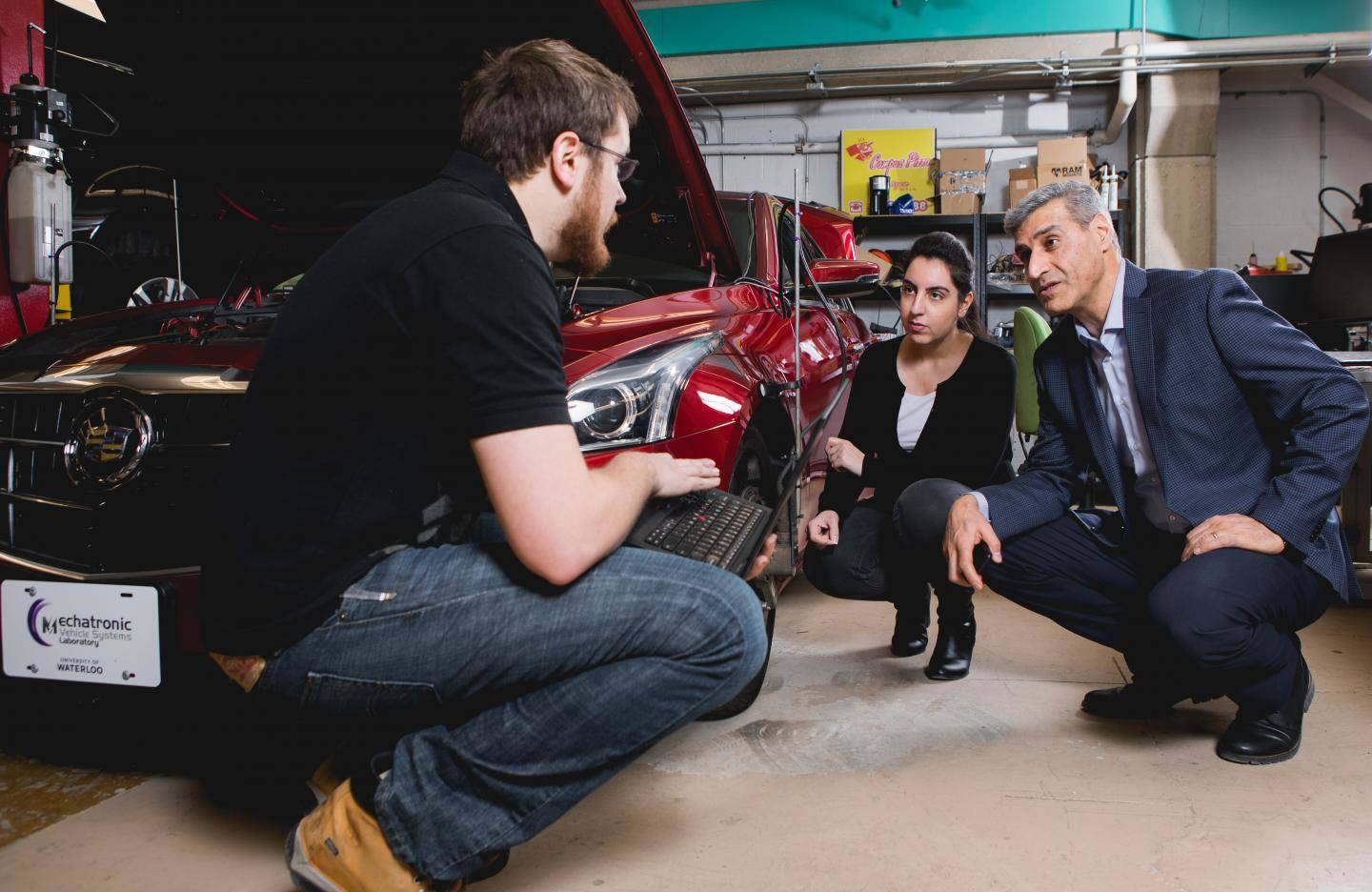
IMAGE

Credit: University of Waterloo

Technology developed at the University of Waterloo reliably and affordably increases the efficiency of internal combustion engines by more than 10 per cent.

The product of a decade of research, this patented system for opening and closing valves could significantly reduce fuel consumption in everything from ocean-going ships to compact cars.

"This method has the potential to bring the well-established benefits of a fully variable valve system out of the lab and into production engines because cost and complexity aren't issues," said Amir Khajepour, a professor of mechanical and mechatronics engineering at Waterloo.

Intake and exhaust valves in internal combustion engines are typically controlled by cam mechanisms that do not allow the timing of their opening and closing to be varied.

The technology developed by Waterloo researchers replaces cams with hydraulic cylinders and rotary hydraulic valves that enable fully variable timing as the speed and torque of an engine change.

This ability to specifically time the opening and closing of valves according to engine operation is a key to increasing fuel efficiency, reducing both costs and greenhouse gas emissions.

"If you think about an ideal solution, it is to make the motion of the valve completely controllable," said Khajepour, who is also a Canada Research Chair and director of Waterloo's Mechatronic Vehicle Systems Lab. "That gives you infinite options to work with."

Although other systems to vary valve timing already exist, they are limited to use in experimental engines in laboratories due to their high cost and complexity.

The technology developed and tested at Waterloo is much simpler and far less expensive, paving the way for its use in engines for power generation, mining vehicles, the trucking industry and a host of other applications, including the consumer automotive market.

Khajepour said an affordable, reliable method to vary valve timing in internal combustion engines could substantially reduce our carbon footprint during the transition to cleaner electric powertrains over the next few decades.

"We should be able to easily improve efficiency by over 10 per cent, which is significant," he said.

The study on optimizing the hydraulic variable valve system, which builds on research that began in 2008, appears in the journal Mechatronics.

###

Media Contact

Matthew Grant
[email protected]
226-929-7627
@uWaterlooNews

http://www.uwaterloo.ca/

Share12Tweet8Share2ShareShareShare2

Related Posts

Damselfly Mating Strategies Shed Light on Reproductive Barriers

Damselfly Mating Strategies Shed Light on Reproductive Barriers

April 4, 2026
blank

Custom Biochar Approaches Enhance Alfalfa Growth and Stress Tolerance in Saline Soils

April 3, 2026

Mutant Clownfish Sheds Light on How Nature Defines Boundaries

April 3, 2026

Scientists Discover How Bacterial Enzyme Breaks Down Sturdy Collagen

April 3, 2026
Please login to join discussion

POPULAR NEWS

  • blank

    Revolutionary AI Model Enhances Precision in Detecting Food Contamination

    97 shares
    Share 39 Tweet 24
  • Promising Outcomes from First Clinical Trials of Gene Regulation in Epilepsy

    51 shares
    Share 20 Tweet 13
  • Imagine a Social Media Feed That Challenges Your Views Instead of Reinforcing Them

    1009 shares
    Share 399 Tweet 249
  • Popular Anti-Aging Compound Linked to Damage in Corpus Callosum, Study Finds

    44 shares
    Share 18 Tweet 11

About

We bring you the latest biotechnology news from best research centers and universities around the world. Check our website.

Follow us

Recent News

Inkjet Printers Now Capable of Producing Structural Colors

Smart System Enhances Skin Cancer Detection Accuracy

Single Molecule Model Unveils V-ATPase Role in Blastocyst

Subscribe to Blog via Email

Enter your email address to subscribe to this blog and receive notifications of new posts by email.

Join 78 other subscribers
  • Contact Us

Bioengineer.org © Copyright 2023 All Rights Reserved.

Welcome Back!

Login to your account below

Forgotten Password?

Retrieve your password

Please enter your username or email address to reset your password.

Log In
No Result
View All Result
  • Homepages
    • Home Page 1
    • Home Page 2
  • News
  • National
  • Business
  • Health
  • Lifestyle
  • Science

Bioengineer.org © Copyright 2023 All Rights Reserved.