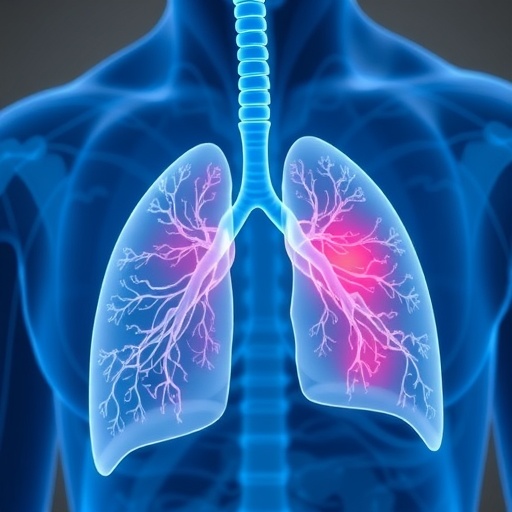
Lung transplantation remains a vital intervention for patients with end-stage pulmonary diseases, offering renewed hope and extending survival. Despite advances in surgical techniques and immunosuppressive regimens, post-transplant complications continue to pose significant challenges. Among these, acute kidney injury (AKI) emerges as a particularly frequent and consequential complication, often precipitating a cascade of adverse outcomes. Critically, a subset of these AKI cases progresses to severe renal impairment necessitating continuous renal replacement therapy (CRRT), a complex intervention associated with markedly elevated mortality rates and substantial healthcare resource utilization.
The clinical community has long grappled with determining precise indications and optimal timing for CRRT initiation post-solid organ transplantation, particularly following lung transplant surgeries. Decisions tend to hinge on subjective clinical judgment rather than evidence-based quantitative evaluations, underscoring a critical unmet need for reliable prognostic tools. Early identification of lung transplant recipients at heightened risk for CRRT initiation could catalyze timely, targeted interventions, potentially attenuating the progression of renal dysfunction and improving overall outcomes.
In a groundbreaking study led by Dr. Man Huang and colleagues at The Second Affiliated Hospital of Zhejiang University School of Medicine, a novel predictive model for CRRT risk was meticulously developed and validated. Utilizing robust retrospective data from 448 lung transplant patients, the team concentrated on individuals who developed postoperative AKI. Employing a sophisticated statistical approach, they applied the least absolute shrinkage and selection operator (LASSO) regression to distill relevant predictive factors, minimizing overfitting inherent in high-dimensional datasets. This was followed by multivariable logistic regression, which grounded the construction of a comprehensive, quantitatively precise risk prediction nomogram.
The nomogram integrates a constellation of perioperative and early postoperative variables emblematic of the unique physiological milieu of lung transplantation. Notably, independent predictors included advanced patient age, significant intraoperative blood loss, a net positive fluid balance during surgery, the complexity of bilateral lung transplantation procedures, and prolonged support with extracorporeal membrane oxygenation (ECMO) in the postoperative phase. Dynamic serum creatinine metrics—such as delayed peak concentrations, accelerated rates of increase, and overall elevations—further enhanced the model’s predictive accuracy. Strikingly, preoperative mechanical ventilation emerged as a protective factor, a finding that adds nuance to previous conceptions concerning respiratory support and renal outcomes.
The statistical rigor of the model was affirmed by outstanding performance metrics, exhibiting an area under the receiver operating characteristic (ROC) curve (AUC) of 0.972 within the training cohort and 0.882 in validation groups. These values underscore exceptional discriminative capacity in distinguishing patients at risk for CRRT, coupled with well-calibrated prediction outputs as verified through calibration and decision curve analyses. This level of validity supports the model’s potential applicability as a clinical decision-support tool.
Lung transplant patients present distinct challenges compared to recipients of other solid organs. The routine employment of ECMO intra- and postoperatively, combined with significant inflammatory responses inherent to pulmonary pathology and transplantation, further complicates renal function trajectories. Additionally, divergent outcomes between single and bilateral lung transplantation necessitate individualized consideration. The model encapsulates these transplant-specific characteristics alongside dynamic postoperative renal biomarker trajectories to yield a refined, tailored risk estimate for CRRT necessity.
The innovation represented by this study lies in its integration of multifaceted variables spanning preoperative status, intraoperative events, and early postoperative biomarker evolution. This comprehensive scope enables clinicians to quantitatively assess CRRT risk with unprecedented granularity, surpassing conventional experience-based heuristics. The visually intuitive nomogram facilitates rapid bedside application, rendering complex statistical predictions accessible for practical use in high-stakes clinical contexts.
Early identification of high-risk patients allows for precise targeting of renal protection strategies during the vulnerable perioperative period. Optimizing fluid management to avoid detrimental positive balances, judicious hemodynamic stabilization, careful avoidance of nephrotoxic agents, and prompt nephrology consultations can be strategically prioritized based on individualized risk scores. Such proactive interventions hold promise to delay or avert initiation of CRRT, ultimately translating into improved patient survival and reduced healthcare burden.
Dr. Huang emphasizes the utility and clinical implications of the model, highlighting its potential to transform decision-making paradigms. By shifting from subjective clinical impressions to data-driven assessments, providers gain a powerful tool for augmenting patient management. This paradigm shift not only benefits individual patients through personalized care optimization but also enhances broader healthcare efficiency.
Given the serious prognostic implications of CRRT initiation in lung transplant recipients, this risk prediction model represents a significant advance in transplant nephrology and critical care medicine. Its adoption could herald improved outcomes through enhanced risk stratification, early intervention, and resource allocation.
While these findings derive from a single-center cohort, the rigorous validation efforts and robust statistical methodologies signal strong foundational evidence. Future multicenter prospective studies will be essential to confirm generalizability and integrate the tool seamlessly into clinical workflows. Nonetheless, this pioneering work lays a vital cornerstone for precision medicine approaches in the complex domain of lung transplantation and renal injury management.
In summation, the development and validation of this CRRT risk prediction model exemplify a critical leap forward in addressing the substantial clinical challenge posed by AKI after lung transplantation. Through harnessing rich perioperative data and applying advanced statistical techniques, the model empowers clinicians with actionable insights, fostering precise, proactive interventions that can mitigate renal deterioration and enhance patient outcomes in this vulnerable population.
Subject of Research: People
Article Title: Risk prediction of continuous renal replacement therapy in patients with acute kidney injury after lung transplantation
News Publication Date: 11-Mar-2026
Web References: http://dx.doi.org/10.1016/j.jointm.2026.01.007
References: DOI: 10.1016/j.jointm.2026.01.007
Image Credits: Dr. Man Huang from The Second Affiliated Hospital of Zhejiang University School of Medicine, China
Keywords: Lung transplantation, acute kidney injury, continuous renal replacement therapy, risk prediction model, nomogram, perioperative factors, serum creatinine dynamics, extracorporeal membrane oxygenation, predictive analytics, nephrology, postoperative complications, precision medicine
Tags: acute kidney injury after lung transplantclinical decision support in transplantationcontinuous renal replacement therapy risk predictionearly AKI management strategiesend-stage pulmonary disease treatmenthealthcare resource utilization in CRRTimmunosuppressive regimens and kidney injurylung transplant patient outcomeslung transplantation complicationspredictive modeling in transplant nephrologyprognostic tools for CRRT initiationrenal dysfunction post-transplant