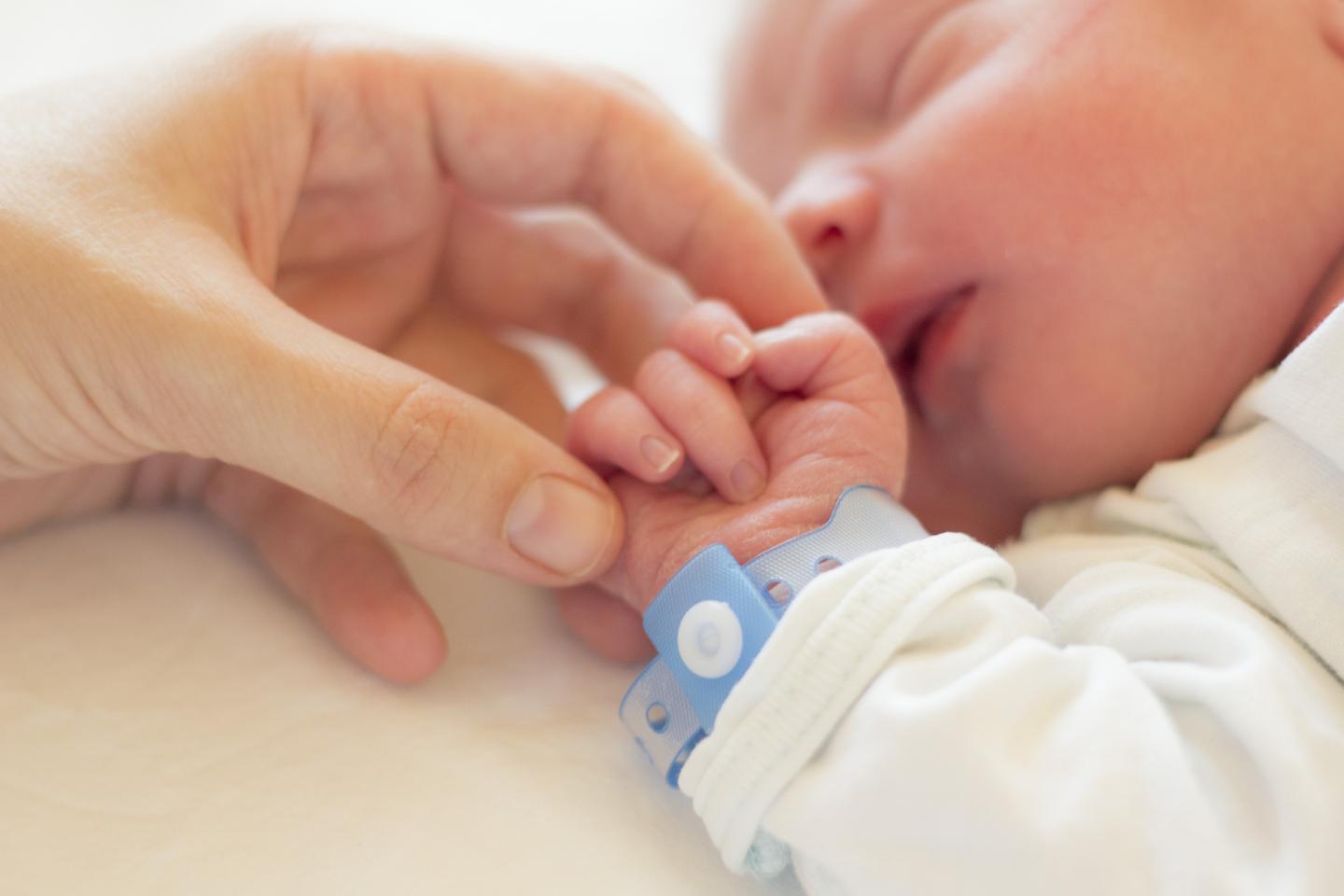
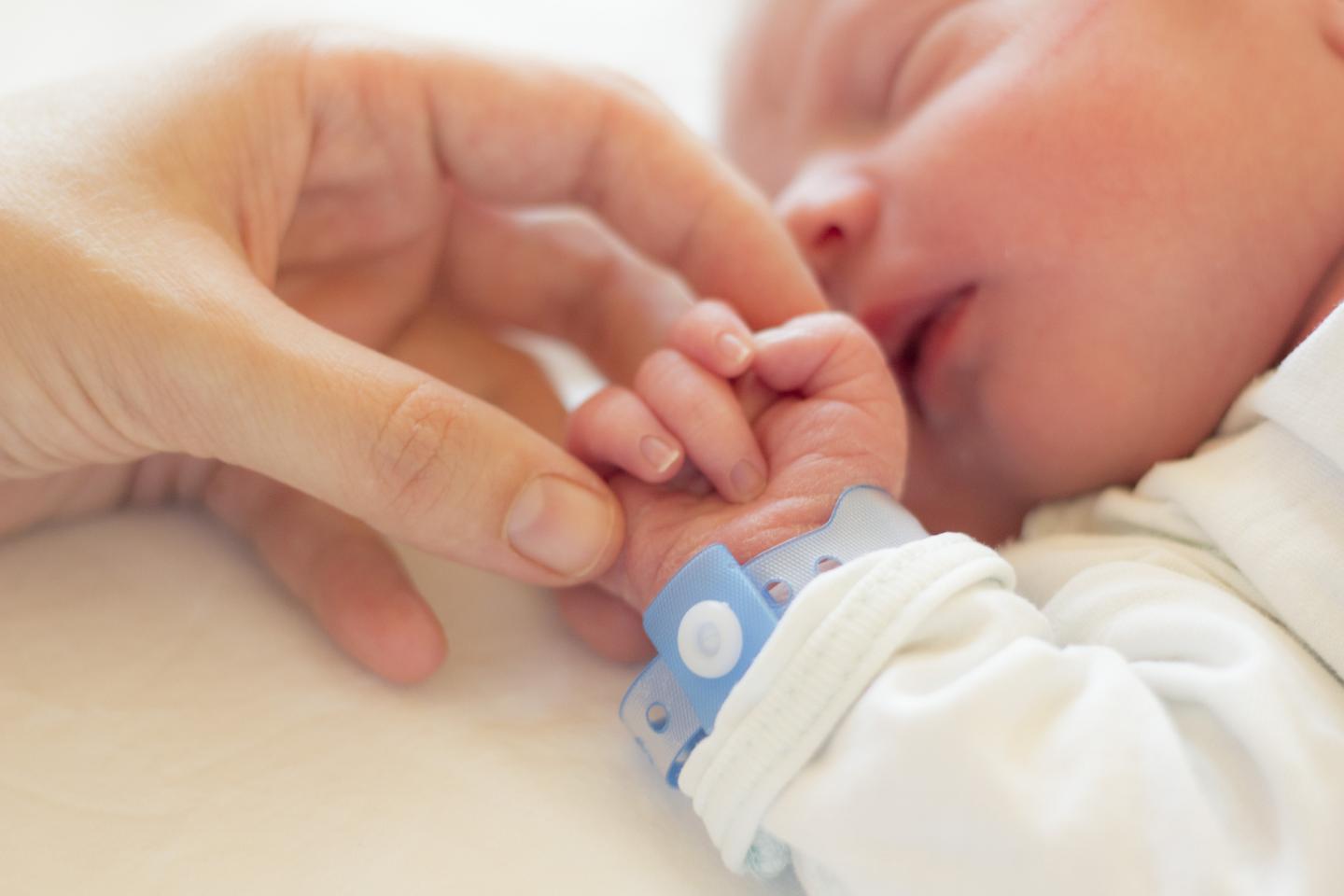
Credit: Intermountain Medical Center
Researchers are launching the first study of its kind involving up to 10,000 women that will use a new test to identify those at risk for premature birth, and, in those with high risk, to evaluate the impact of early interventions designed to prolong their pregnancy and reduce the rate of premature delivery.
For the Prevent PTB study being conducted by researchers at Intermountain Healthcare in Salt Lake City, half of the 10,000 study participants will undergo normal medical screening to determine their risk of preterm birth. The other half will give a blood sample for Sera Prognostics' validated PreTRM test.
Previous research of more than 5,500 women found the PreTRM test accurately identifies pregnant women at high risk of preterm birth, even if they have no previous history or other signs of the condition, such as a shortened cervix.
"This is the first time we're able to use a blood test to identify the women at highest risk and start to intervene to prevent the preterm birth," said D. Ware Branch, MD, medical director of Intermountain Healthcare's Women and Newborns Clinical Program, who is principal investigator of the study.
Pregnant women will be recruited for the Prevent PTB study at five Intermountain Healthcare hospitals in Utah: Intermountain Medical Center in Murray, Dixie Regional Medical Center in St. George, LDS Hospital in Salt Lake City, Utah Valley Medical Center in Provo, and McKay-Dee Hospital in Ogden. Salt Lake City-based Sera Prognostics is funding the research.
"We are pleased to see Intermountain leading clinical research with this important study. The Prevent PTB study is designed to show the benefits of early identification and proactive intervention in reducing preterm birth rates and improving the health of babies," said Gregory C. Critchfield, MD, MS, chair and CEO of Sera Prognostics. "By identifying more pregnancies where earlier, more proactive intervention is beneficial, society, families and, most importantly newborn infants, have the potential for better outcomes and lower healthcare costs."
Preterm birth is the leading cause of newborn death — and it can afflict babies who survive for the rest of their lives with blindness, deafness, cerebral palsy, developmental delays, and learning disabilities. Other long-term complications include chronic respiratory illness, seizures, and vision and hearing loss. Lifelong care for children with such conditions is expensive.
A March of Dimes national report found that preterm birth – defined as birth before 37 weeks of the normal 40 weeks – affects 15 million infants worldwide each year and causes 1 million deaths. Of almost 4 million babies delivered annually in the U.S., approximately 11 percent of births are preterm. The rate in Utah is slightly less.
"The biggest challenge we have in trying to treat preterm birth is we don't know who's going to have it," said researcher Sean Esplin, MD, a maternal-fetal specialist at Intermountain Medical Center and director of research for women and newborn services for Intermountain Healthcare, who is a scientific founder of Sera Prognostics. "Out of every 100 pregnant women who come to my office, I know 10 of them will deliver early. But I don't know which 10 to focus on, except for a few with a previous preterm birth, shortened cervix, or other risk factors. Otherwise, I have to wait until they come in with symptoms, and by then, it's often too late to stop it."
That's why Intermountain Healthcare is using the PreTRM blood test to assess risk earlier. Previous published research shows that when blood is tested as early as 19 or 20 weeks gestation, PreTRM accurately predicts a woman's chance of having a preterm birth by measuring and analyzing a pattern of proteins in the blood, focusing on two with high predictive performance.
"Of all the women who are pregnant, our current clinical methods identify fewer than half of those who eventually will give birth before 37 weeks," said Dr. Branch. "We hope to show this test will identify a goodly proportion of the remaining patients to determine whether doing the test can enable interventions that prevent preterm births and/or improve neonatal outcomes among those who are born prematurely."
The new Prevent PTB study will use such treatments on women who are carrying one baby and lack common symptoms, but are identified by the PreTRM test as being at high risk of preterm birth.
Women with a history of preterm birth, who are under age 18, or more than 21 weeks pregnant aren't eligible for the study. Pregnant women enrolled in the study will be randomly assigned to the experimental group or a control group.
Women in the experimental group will receive the PreTRM blood test, and those found to be at high risk of preterm birth will undergo the study's early, pre-emptive treatments to determine if they can reduce the number of preterm births and newborn deaths, and shorten hospital stays for premature babies.
Medical interventions used to reduce the likelihood of preterm birth or to lengthen gestation include injected or intravaginal progesterone hormone, which alone can reduce the risk of pre-term birth by 30 percent; use of a vaginal device to support the cervix or stitching the cervix shut until late pregnancy; visits to prematurity prevention clinics and weekly nurse contacts to check on expectant mothers' symptoms; and baby aspirin to reduce inflammation.
Treatments to help babies who are born prematurely may include antibiotics, magnesium sulfate to reduce neurological disabilities and umbilical cord "milking" to push more oxygen-carrying red blood cells into premature babies just after delivery.
Women who are shown by the test to not be at high risk and those randomly assigned to the control group will receive normal obstetrical care, unless they later develop symptoms that require treatment for possible preterm birth at a high-risk obstetrics clinic.
The study design is adaptive, with readouts expected to occur sometime between 18 and 24 months.
If the study shows the PreTRM test and early intervention can reduce preterm births, the researchers hope to subsequently study whether that translates into fewer disabilities and lower healthcare expenses for premature babies.
"Every day a woman stays pregnant after 24 weeks saves $10,000 in the cost of taking care of the baby," Dr. Branch said. "Each year in the United States, we spend tens of billions of dollars taking care babies who are born too early. That's why this study is so important."
###
Media Contact
Jess C. Gomez
[email protected]
801-718-8495
@IntermtnMedCtr
http://www.ihc.com