• HOME
  • NEWS
  • EXPLORE
    • CAREER
      • Companies
      • Jobs
    • EVENTS
    • iGEM
      • News
      • Team
    • PHOTOS
    • VIDEO
    • WIKI
  • BLOG
  • COMMUNITY
    • FACEBOOK
    • INSTAGRAM
    • TWITTER
Thursday, April 2, 2026
BIOENGINEER.ORG
No Result
View All Result
  • Login
  • HOME
  • NEWS
  • EXPLORE
    • CAREER
      • Companies
      • Jobs
        • Lecturer
        • PhD Studentship
        • Postdoc
        • Research Assistant
    • EVENTS
    • iGEM
      • News
      • Team
    • PHOTOS
    • VIDEO
    • WIKI
  • BLOG
  • COMMUNITY
    • FACEBOOK
    • INSTAGRAM
    • TWITTER
  • HOME
  • NEWS
  • EXPLORE
    • CAREER
      • Companies
      • Jobs
        • Lecturer
        • PhD Studentship
        • Postdoc
        • Research Assistant
    • EVENTS
    • iGEM
      • News
      • Team
    • PHOTOS
    • VIDEO
    • WIKI
  • BLOG
  • COMMUNITY
    • FACEBOOK
    • INSTAGRAM
    • TWITTER
No Result
View All Result
Bioengineer.org
No Result
View All Result
Home NEWS Science News Biology

New study changes our view on flying insects

Bioengineer by Bioengineer
September 29, 2017
in Biology
Reading Time: 3 mins read
0
Share on FacebookShare on TwitterShare on LinkedinShare on RedditShare on Telegram
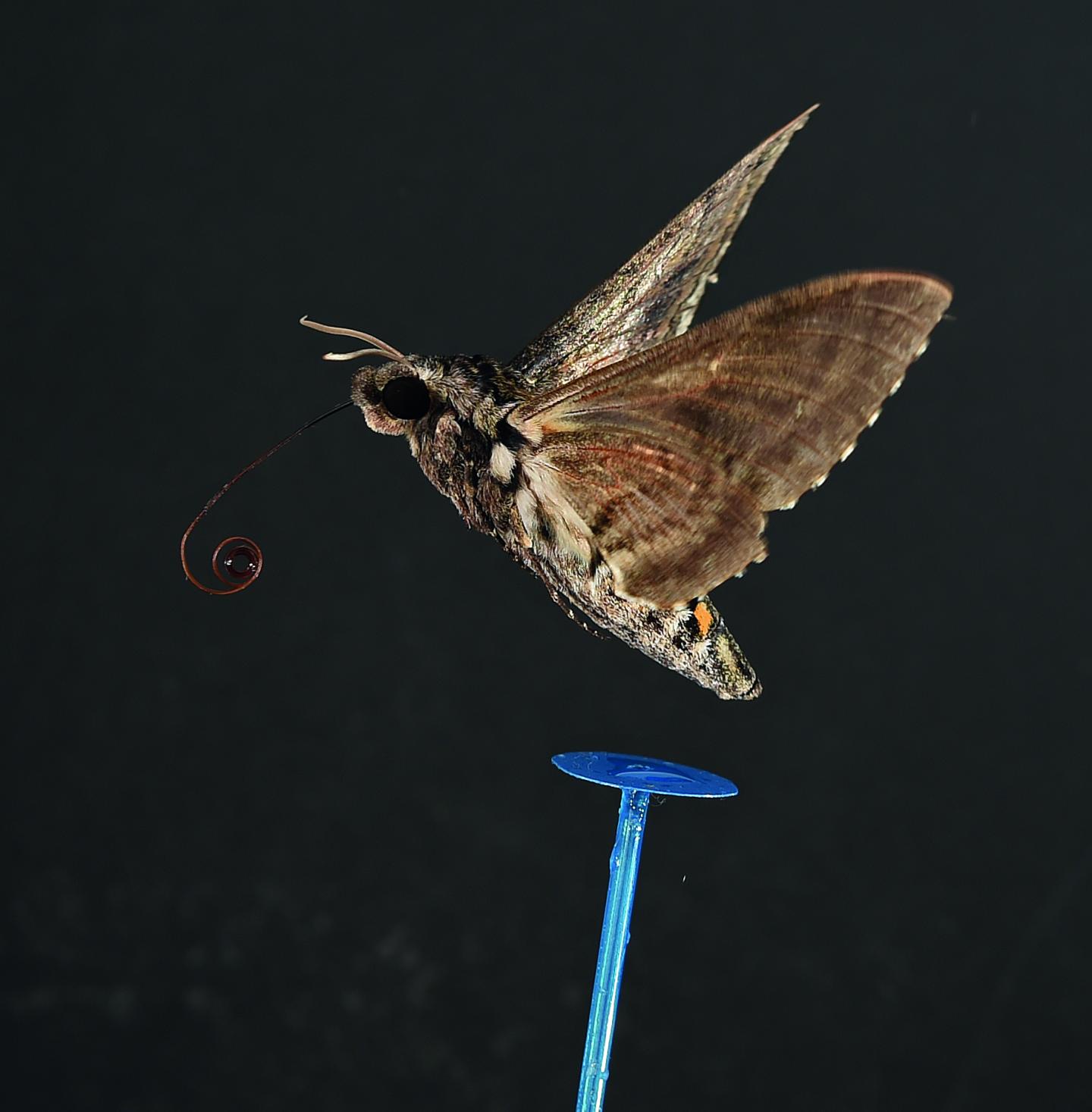
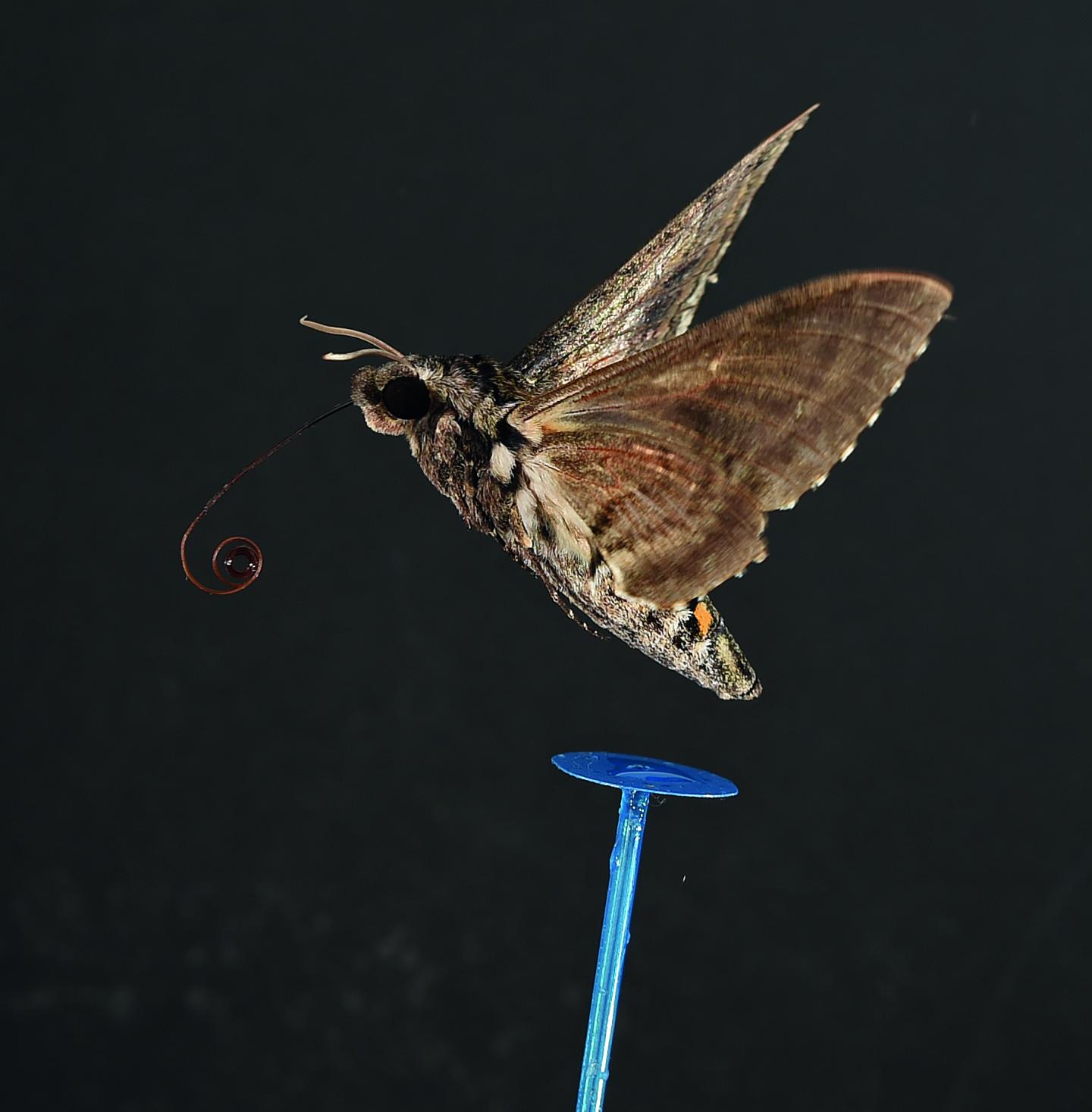
IMAGE

Credit: Anders Hedenström

WATCH: A tobacco hawkmoth flies in a wind tunnel (https://www.youtube.com/watch?v=4Sgqb8wnQGA)

For the first time, researchers are able to prove that there is an optimal speed for certain insects when they fly. At this speed, they are the most efficient and consume the least amount of energy. Corresponding phenomena have previously been demonstrated in birds, but never among insects.

Previous studies of bumblebees have shown that they consume as much energy in forward flight as when they hover, i.e. remain still in the air. New findings from Lund University in Sweden show that this does not apply to all insects.

Biologist Kajsa Warfvinge, together with her colleagues at Lund University, has studied the large moths known as tobacco hawkmoths or Manduca sexta. The results show that these moths, like birds, consume different amounts of energy depending on their flight speed. Flying really slowly or really fast requires the most effort.

The discovery may help other researchers who study how insects migrate from one environment to another.

"I imagine that our results could be used indirectly to predict how well different species respond to changing temperatures in view of global warming. By knowing how much energy is needed to fly at different speeds, we can calculate how far and fast the animals can travel given a certain amount of energy", says Kajsa Warfvinge.

The experiments were performed in a wind tunnel. Using a specially developed technique known as tomographic PIV, the researchers can record the way the air moves in three dimensions when the tobacco hawkmoth flaps its wings. The vortices left in the air can be seen as the insect's aerodynamic footprint. The vortex strength reflects the amount of kinetic energy added by the insect, which in itself is a measurement of how exerting it is to fly at different speeds.

The results show that classic aviation theory can be applied also to tobacco hawkmoths; that is, it takes a lot of energy to fly slowly (one metre per second), since it is difficult to create lift at these speeds. The same applies when insects fly fast (four metres per second), but here it is the air resistance that makes the flight less efficient from an energy perspective.

"We demonstrate that moths have the same U-shaped relationship between speed and power as birds and aircrafts do. Flying slowly or fast is exhausting and requires more energy. You could say that flying at a moderate speed is optimal. The most energy-efficient speed for these moths is 2-3 metres per second", says Kajsa Warfvinge.

However, the aim and purpose of the flight determines which speed is most beneficial. If the moths want to stay in the air for as long as possible, they should preserve their energy and maintain a speed of about 2.5 metres per second. If the goal is to fly far, they should increase their speed to about 4 metres per second. Despite the air resistance and the fact that they are unable to fly for the same amount of time, this is the optimal speed for long distances.

###

Media Contact

Kajsa Warfvinge
[email protected]
46-702-092-535
@lunduniversity

http://www.lu.se

Original Source

http://rsif.royalsocietypublishing.org/content/14/134/20170372

Share12Tweet8Share2ShareShareShare2

Related Posts

Newly Discovered Chronic Pain Circuit Unveils Potential Avenues for Innovative Treatments

Newly Discovered Chronic Pain Circuit Unveils Potential Avenues for Innovative Treatments

April 2, 2026
DNA Transforms from Blueprint to Active Field Agent

DNA Transforms from Blueprint to Active Field Agent

April 2, 2026

UBC Okanagan Study Reveals How Trees Visually Signal Their Spring Rehydration

April 1, 2026

Rising Temperatures from Climate Change Associated with Reduced Newborn Size

April 1, 2026
Please login to join discussion

POPULAR NEWS

  • blank

    Revolutionary AI Model Enhances Precision in Detecting Food Contamination

    96 shares
    Share 38 Tweet 24
  • Imagine a Social Media Feed That Challenges Your Views Instead of Reinforcing Them

    1007 shares
    Share 398 Tweet 249
  • Promising Outcomes from First Clinical Trials of Gene Regulation in Epilepsy

    51 shares
    Share 20 Tweet 13
  • Popular Anti-Aging Compound Linked to Damage in Corpus Callosum, Study Finds

    44 shares
    Share 18 Tweet 11

About

We bring you the latest biotechnology news from best research centers and universities around the world. Check our website.

Follow us

Recent News

Chemical Reprogramming Resets Epiblast Cells to Totipotency

Breakthrough Enables Infinite Recycling of Acrylic Plastics Without Environmental Impact

How Science Can Advance and Strengthen the High Seas Treaty

Subscribe to Blog via Email

Success! An email was just sent to confirm your subscription. Please find the email now and click 'Confirm' to start subscribing.

Join 78 other subscribers
  • Contact Us

Bioengineer.org © Copyright 2023 All Rights Reserved.

Welcome Back!

Login to your account below

Forgotten Password?

Retrieve your password

Please enter your username or email address to reset your password.

Log In
No Result
View All Result
  • Homepages
    • Home Page 1
    • Home Page 2
  • News
  • National
  • Business
  • Health
  • Lifestyle
  • Science

Bioengineer.org © Copyright 2023 All Rights Reserved.