• HOME
  • NEWS
  • EXPLORE
    • CAREER
      • Companies
      • Jobs
    • EVENTS
    • iGEM
      • News
      • Team
    • PHOTOS
    • VIDEO
    • WIKI
  • BLOG
  • COMMUNITY
    • FACEBOOK
    • INSTAGRAM
    • TWITTER
Wednesday, February 4, 2026
BIOENGINEER.ORG
No Result
View All Result
  • Login
  • HOME
  • NEWS
  • EXPLORE
    • CAREER
      • Companies
      • Jobs
        • Lecturer
        • PhD Studentship
        • Postdoc
        • Research Assistant
    • EVENTS
    • iGEM
      • News
      • Team
    • PHOTOS
    • VIDEO
    • WIKI
  • BLOG
  • COMMUNITY
    • FACEBOOK
    • INSTAGRAM
    • TWITTER
  • HOME
  • NEWS
  • EXPLORE
    • CAREER
      • Companies
      • Jobs
        • Lecturer
        • PhD Studentship
        • Postdoc
        • Research Assistant
    • EVENTS
    • iGEM
      • News
      • Team
    • PHOTOS
    • VIDEO
    • WIKI
  • BLOG
  • COMMUNITY
    • FACEBOOK
    • INSTAGRAM
    • TWITTER
No Result
View All Result
Bioengineer.org
No Result
View All Result
Home NEWS Science News Ecology

New species of metal-eating plant discovered in the Philippines

Bioengineer by Bioengineer
May 9, 2014
in Ecology
Reading Time: 2 mins read
0
Share on FacebookShare on TwitterShare on LinkedinShare on RedditShare on Telegram

Scientists from the University of the Philippines, Los Baños have discovered a new plant species with an unusual lifestyle — it eats nickel for a living — accumulating up to 18,000 ppm of the metal in its leaves without itself being poisoned, says Professor Edwino Fernando, lead author of the report. Such an amount is a hundred to a thousand times higher than in most other plants. The study was published in the open access journal PhytoKeys.
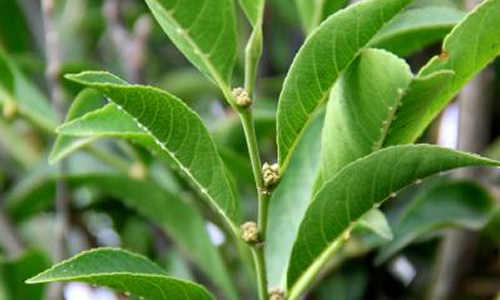
New species of metal-eating plant discovered in the Philippines

This photo shows the newly described metal-eating plant, Rinorea niccolifera. Photo Credit: Dr. Edwino S. Fernando

The new species is called Rinorea niccolifera, reflecting its ability to absorb nickel in very high amounts. Nickel hyperaccumulation is such a rare phenomenon with only about 0.5–1% of plant species native to nickel-rich soils having been recorded to exhibit the ability. Throughout the world, only about 450 species are known with this unusual trait, which is still a small proportion of the estimated 300,000 species of vascular plants.

The new species, according to Dr Marilyn Quimado, one of the lead scientists of the research team, was discovered on the western part of Luzon Island in the Philippines, an area known for soils rich in heavy metals.

“Hyperacccumulator plants have great potentials for the development of green technologies, for example, ‘phytoremediation’ and ‘phytomining'”, explains Dr Augustine Doronila of the School of Chemistry, University of Melbourne, who is also co-author of the report.

Phytoremediation refers to the use of hyperacccumulator plants to remove heavy metals in contaminated soils. Phytomining, on the other hand, is the use of hyperacccumulator plants to grow and harvest in order to recover commercially valuable metals in plant shoots from metal-rich sites.

Story Source:

The above story is based on materials provided by Pensoft Publishers.
Share12Tweet8Share2ShareShareShare2

Related Posts

15 years of carbon dioxide emissions on Earth mapped

September 12, 2014

Plants may use newly discovered molecular language to communicate

August 16, 2014

Light-sensitive “eyes” in plants

May 5, 2014

New insight into links among nitrogen, herbivores and plant biodiversity

April 2, 2014
Please login to join discussion

POPULAR NEWS

  • Enhancing Spiritual Care Education in Nursing Programs

    158 shares
    Share 63 Tweet 40
  • Robotic Ureteral Reconstruction: A Novel Approach

    81 shares
    Share 32 Tweet 20
  • Digital Privacy: Health Data Control in Incarceration

    63 shares
    Share 25 Tweet 16
  • Study Reveals Lipid Accumulation in ME/CFS Cells

    57 shares
    Share 23 Tweet 14

About

BIOENGINEER.ORG

We bring you the latest biotechnology news from best research centers and universities around the world. Check our website.

Follow us

Recent News

Evaluating Pazopanib: Efficacy and Risks in Sarcomas

Revolutionizing Protein Digestibility Assessment: INFOGEST Quant

Backward Walking Study Reveals Promising New Approach to Enhance Mobility and Reduce Falls in Multiple Sclerosis Patients

Subscribe to Blog via Email

Enter your email address to subscribe to this blog and receive notifications of new posts by email.

Join 73 other subscribers
  • Contact Us

Bioengineer.org © Copyright 2023 All Rights Reserved.

Welcome Back!

Login to your account below

Forgotten Password?

Retrieve your password

Please enter your username or email address to reset your password.

Log In
No Result
View All Result
  • Homepages
    • Home Page 1
    • Home Page 2
  • News
  • National
  • Business
  • Health
  • Lifestyle
  • Science

Bioengineer.org © Copyright 2023 All Rights Reserved.