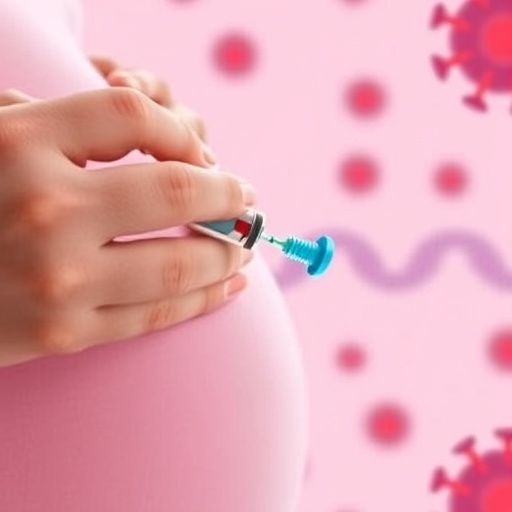
In a groundbreaking revelation unveiled at the Society for Maternal-Fetal Medicine (SMFM) 2026 Pregnancy Meeting™, new scientific findings have decisively shown that the mRNA COVID-19 vaccine, administered during or shortly before pregnancy, bears no association with autism or other neurodevelopmental disorders in early childhood. This research carries significant implications for public health, specifically addressing concerns about vaccine safety during pregnancy—a critical period marked by intricate biological and developmental processes.
The context of the study emerges from the widespread recommendation by public health authorities in the United States endorsing COVID-19 vaccination among pregnant individuals. Two vaccine types predominate these recommendations: messenger ribonucleic acid (mRNA) vaccines, which instruct the body’s cells to produce an antigen to elicit immunity, and protein subunit vaccines, which introduce fragments of the virus to stimulate immune defense. Both approaches have demonstrated safety profiles deemed compatible with any stage of pregnancy, safeguarding maternal and neonatal health outcomes against SARS-CoV-2 infection.
This multi-center prospective observational study, conducted from May 2024 to March 2025 and overseen by the Maternal-Fetal Medicine Units Network, meticulously analyzed neurodevelopmental outcomes in a cohort of 434 toddlers aged 18 to 30 months. The cohort was evenly divided between children whose mothers received at least one dose of an mRNA vaccine near or during pregnancy, and those whose mothers remained unvaccinated during the same timeframe. By capturing a diverse population across multiple clinical settings, the study offers robust generalizability to real-world scenarios.
To ensure methodological rigor, researchers employed stringent matching criteria, aligning vaccinated and unvaccinated subjects by factors such as delivery site, timing of birth, insurance status, and racial demographics. Furthermore, potential confounders were minimized by excluding cases of preterm birth before 37 weeks, multifetal gestations, and neonates presenting with significant congenital anomalies. These careful controls bolster the validity of the study’s conclusions by reducing bias and ensuring comparable baseline characteristics.
Neurodevelopmental health was evaluated through a comprehensive battery of standardized assessments. Principal among these was the Ages and Stages Questionnaire Version 3 (ASQ-3), a validated tool probing five domains critical to early childhood development: communication skills, gross motor abilities, fine motor coordination, problem-solving aptitude, and personal-social interaction. Complementing this, researchers utilized the Child Behavior Checklist, the Modified Checklist for Autism in Toddlers, and the Early Childhood Behavior Questionnaire to provide a multidimensional picture of cognitive and behavioral functioning.
The findings were unequivocal: there was no significant difference in the prevalence of neurodevelopmental delays, autism spectrum signs, or behavioral anomalies between the two groups. Dr. George R. Saade, a leading figure in maternal-fetal medicine and the senior investigator of the study, emphasized that these outcomes underscore the neurodevelopmental safety of receiving mRNA vaccines during the periconceptional and prenatal periods. This data lends much-needed reassurance amid vaccine hesitancy fueled by concerns of potential long-term neurologic effects on offspring.
Interestingly, the ability to match subjects on socio-economic and medical parameters ensured that the study controlled for confounding social determinants of health, which themselves can impact neurodevelopment. This methodological sophistication lends confidence that observed outcomes are directly attributable to maternal vaccination status rather than external socio-environmental factors, thereby strengthening the argument for vaccine safety.
This investigation was conducted under the auspices of the Eunice Kennedy Shriver National Institute of Child Health and Human Development, reinforcing its scientific credibility and adherence to rigorous clinical research standards. It is also notable that the study was embedded within the highly respected National Institutes of Health (NIH) clinical trials network, facilitating adherence to gold-standard protocols and enhancing data reliability.
Dr. Brenna L. Hughes, a distinguished professor at Duke University who co-led the research, commented on the findings, highlighting their critical importance in dispelling myths and reinforcing vaccine advocacy. The absence of deleterious neurodevelopmental outcomes after prenatal mRNA COVID-19 vaccination addresses a major public health barrier by reassuring pregnant individuals and healthcare providers alike about the vaccine’s safety profile.
Given these impactful findings, healthcare practitioners specializing in obstetrics, pediatrics, and public health are likely to incorporate this evidence into clinical counseling. It empowers them to confidently recommend COVID-19 vaccination during pregnancy, thus enhancing protection not only for the expectant mother but also for the infant through potential passive immunity and mitigated risks of maternal infection.
Beyond immediate clinical implications, this study contributes substantively to the broader scientific discourse concerning vaccine safety during critical periods of immune and neural development. It sets a precedent for future vaccine safety monitoring and post-marketing surveillance, establishing a framework for addressing vaccine hesitancy with high-quality evidence.
In summary, this comprehensive study decisively corroborates that mRNA COVID-19 vaccines administered proximate to or during pregnancy are devoid of neurodevelopmental risks such as autism in early childhood. As global vaccination campaigns continue to evolve in the face of emerging SARS-CoV-2 variants, this research provides a robust foundation supporting the continued implementation of immunization strategies among pregnant populations worldwide.
Subject of Research: People
Article Title: Association between SARS-CoV-2 vaccine in pregnancy and child neurodevelopment at 18-30 months
News Publication Date: February 11, 2026
Web References: https://smfm2026.eventscribe.net/
References: Oral abstract #8 “Association between SARS-CoV-2 vaccine in pregnancy and child neurodevelopment at 18-30 months,” published in Pregnancy, February 2026 issue
Keywords: mRNA COVID-19 vaccine, pregnancy, neurodevelopment, autism, SARS-CoV-2, maternal vaccination, child development, observational study, Ages and Stages Questionnaire, vaccine safety, maternal-fetal medicine
Tags: autism research findingsCOVID-19 vaccination and pregnancymaternal health and vaccinationmaternal-fetal health implicationsmRNA COVID-19 vaccination during pregnancymulti-center observational studyneurodevelopmental disorders in childrenpublic health and vaccine safetypublic health recommendations for pregnant individualsSociety for Maternal-Fetal Medicine researchtoddler neurodevelopment outcomesvaccine safety during pregnancy