USA, Ireland and Northern Ireland to shine new light on solar technologies
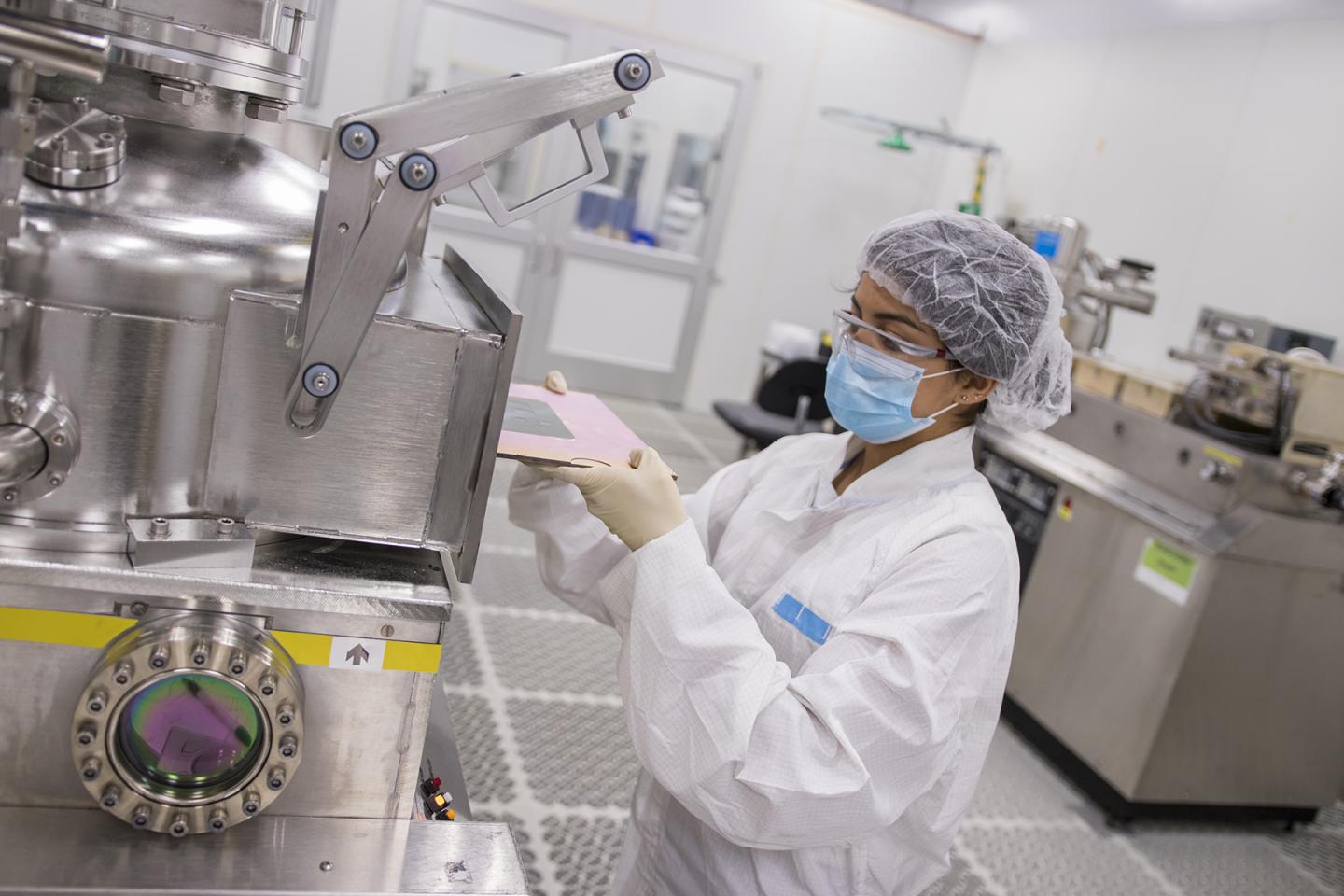
Credit: Marco-Alexis Chaira, Arizona State University
Tempe, Arizona, Oct. 7, 2019 – A new research project spanning five universities in three countries and led by Arizona State University will work to improve solar cell technology and look into new uses for photovoltaic (PV) devices.
ASU’s Quantum Energy and Sustainable Solar Technologies (QESST) Engineering Research Center will take the lead in the collaborative project to advance PV technology and applications. The partnership includes QESST member the Massachusetts Institute of Technology’s MIT Photovoltaics Research Laboratory, the I-Form, Advanced Manufacturing Research Centre at Dublin City University (DCU) (I-Form), the Tyndall National Institute’s (Cork) Irish Photonic Integration Center (IPIC), and Ulster University’s Nanotechnology and Integrated Bio-Engineering Center (NBEC).
“This project speaks to ASU’s ability to bring together key partners to advance an innovative technology and develop meaningful, scalable strategies for effective deployment,” said Sethuraman “Panch” Panchanathan, executive vice president of ASU Knowledge Enterprise. “The research center provides a platform for promoting transdisciplinary work among prominent scientists and researchers, and will explore technologies with the potential to address global grand challenges.”
I-Form at DCU will provide expertise in additive manufacturing and 3D printing, including the fabrication and testing of solar cell devices at ASU’s Solar Power Laboratory, to demonstrate low cost solar cell manufacturing. The integration of I-Form’s quality by design nano-colloid production and additive manufacturing capabilities with the latest material development for the next generation of solar cell production provides an exciting new opportunity.
NBEC and ASU will integrate advances in nanoparticle plasma deposition technology into photovoltaics technology for new thin film applications.
Finally, IPIC’s success in nano- and microphotonics will combine with MIT’s research to integrate small solar cells into indoor Internet of Things (IoT) sensors and wearables. Converting indoor lighting into electrical power with solar panels will reduce the growing need for extended battery life for devices that don’t have access to sunlight.
“Photovoltaics is a rapidly growing and changing field, not only in its technology but also in its use and applications. Innovative technologies and approaches have helped photovoltaics on its own Moore’s Law-like advancement, with costs declining and performance improving,” said QESST Director Christiana Honsberg. “The collaboration is exciting because it combines advances from new materials and fields, such as additive manufacturing, with those from photovoltaics to achieve both new technologies and transformative PV applications.”
Cross-center educational opportunities include a student exchange program and the development of web-streamed technology modules on the key technology developments.
Funding partners for the project are the National Science Foundation (NSF) in the U.S., the Science Foundation of Ireland, (SFI) and Northern Ireland’s Department for the Economy (DfE).
###
About ASU
Arizona State University has developed a new model for the American Research University, creating an institution that is committed to access, excellence and impact. ASU measures itself by those it includes, not by those it excludes. As the prototype for a New American University, ASU pursues research that contributes to the public good, and ASU assumes major responsibility for the economic, social and cultural vitality of the communities that surround it.
Media Contact
Theresa Grant
[email protected]
480-727-4058