• HOME
  • NEWS
  • EXPLORE
    • CAREER
      • Companies
      • Jobs
    • EVENTS
    • iGEM
      • News
      • Team
    • PHOTOS
    • VIDEO
    • WIKI
  • BLOG
  • COMMUNITY
    • FACEBOOK
    • INSTAGRAM
    • TWITTER
Thursday, June 25, 2026
BIOENGINEER.ORG
No Result
View All Result
  • Login
  • HOME
  • NEWS
  • EXPLORE
    • CAREER
      • Companies
      • Jobs
        • Lecturer
        • PhD Studentship
        • Postdoc
        • Research Assistant
    • EVENTS
    • iGEM
      • News
      • Team
    • PHOTOS
    • VIDEO
    • WIKI
  • BLOG
  • COMMUNITY
    • FACEBOOK
    • INSTAGRAM
    • TWITTER
  • HOME
  • NEWS
  • EXPLORE
    • CAREER
      • Companies
      • Jobs
        • Lecturer
        • PhD Studentship
        • Postdoc
        • Research Assistant
    • EVENTS
    • iGEM
      • News
      • Team
    • PHOTOS
    • VIDEO
    • WIKI
  • BLOG
  • COMMUNITY
    • FACEBOOK
    • INSTAGRAM
    • TWITTER
No Result
View All Result
Bioengineer.org
No Result
View All Result
Home NEWS Science News Biology

New pathways for sustainable agriculture

Bioengineer by Bioengineer
April 8, 2019
in Biology
Reading Time: 2 mins read
0
IMAGE
Share on FacebookShare on TwitterShare on LinkedinShare on RedditShare on Telegram

IMAGE

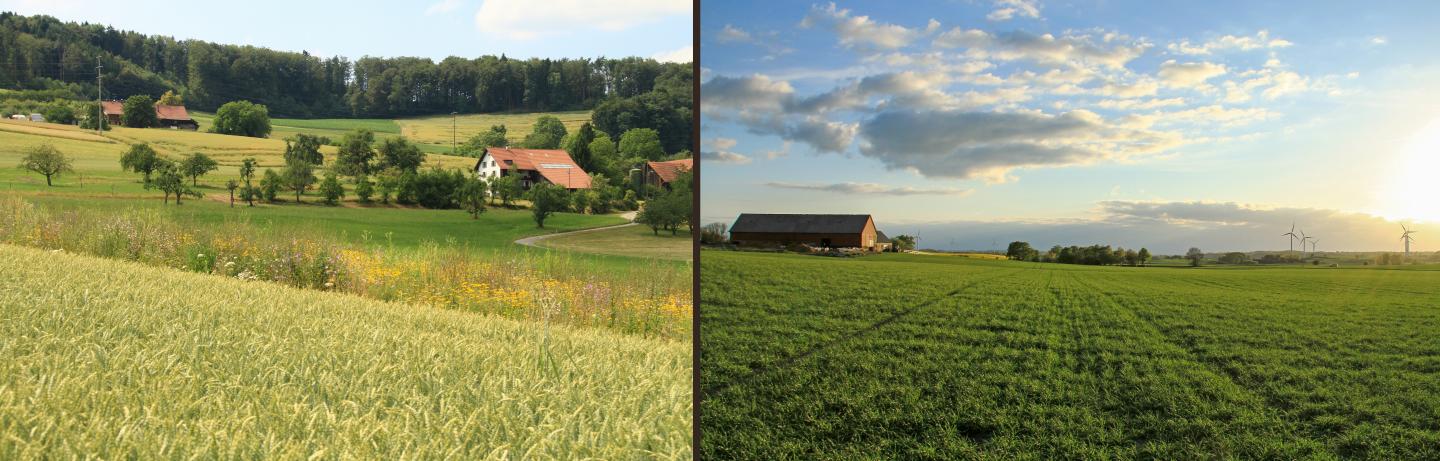
Credit: (Photos: Matthias Tschumi)

Hedges, flowering strips and other seminatural habitats provide food and nesting places for insects and birds in agricultural landscapes. This also has advantages for agriculture: bees, flies, beetles and other animal groups pollinate crops and control pest insects in adjacent fields.

But how much of these habitats is necessary and how should they be arranged to make use of these nature-based ecosystem services?

This question has been addressed by a new study from the Chair of Animal Ecology and Tropical Biology at the Biocenter of Julius-Maximilians-Universität Würzburg (JMU) in Bavaria, Germany. The results are published in the journal “Ecology Letters“.

Small-scale land use is advantageous

According to the study, biodiversity, pollination, and pest control can be improved in landscapes even with a relatively small amount of non-crop habitat. To reach this effect, these habitats must be arranged to create a small-scale agricultural landscape.

For this study, Dr. Emily A. Martin’s team took a closer look at data from ten European countries and 1,515 different agricultural landscapes. This clearly showed that small-scale land use is advantageous: it leads to a greater density of beneficial insects and spiders. And it increases the services provided by ecosystems for agriculture – pollination and natural pest control.

Creating a web of seminatural habitats

“In order to reduce pests and promote biodiversity, increasing the density of seminatural habitat elements can be an ideal solution for farms. You don’t have to remove much land from cultivation to reach a significant effect,” says Dr. Martin.

“The implementation of these findings would be an important step forward in the effort to achieve a sustainable and biodiversity-friendly agriculture”, Professor Ingolf Steffan-Dewenter, head of the Chair of Animal Ecology and Tropical Biology and co-author of the study, emphasises.

The JMU research team is now focusing on intensified cooperation with agricultural and environmental stakeholders. The scientists want to help implement a landscape management system that benefits everyone – nature and mankind.

###

The publication involves data from 24 research groups from ten European countries (France, Germany, Hungary, Italy, The Netherlands, Serbia, Spain, Sweden, Switzerland, UK).

Media Contact
Dr. Emily A. Martin
[email protected]

Original Source

https://go.uniwue.de/martin-en

Related Journal Article

http://dx.doi.org/10.1111/ele.13265

Tags: Agricultural Production/EconomicsAgricultureBiodiversityEcology/Environment
Share12Tweet8Share2ShareShareShare2

Related Posts

Natural Hallucinogens: Evolution’s Ecological Tools, Not Mere Chemical Byproducts

June 25, 2026

This Famous Butterfly Revealed: Three Distinct Species Hidden in One

June 25, 2026

Scientists Attack Soybean Cyst Nematode by Starving Its Food Source

June 25, 2026

Decoding the Secret Code of a Crucial Immune Sensor

June 24, 2026
Please login to join discussion

POPULAR NEWS

  • Saying Goodbye to PGY-6: Pediatric Fellowship Realities

    103 shares
    Share 41 Tweet 26
  • Multi-Hospital Study Reveals Long Covid Burden Is Twice as High as Current Estimates

    92 shares
    Share 36 Tweet 23
  • Detection of EDCs in Breast Milk and Infant Urine Up to Six Months Highlights Early Exposure Risks

    77 shares
    Share 31 Tweet 19
  • New Drug Candidate Developed at McMaster Shows Potential for Treating Brain Cancer

    58 shares
    Share 23 Tweet 15

About

We bring you the latest biotechnology news from best research centers and universities around the world. Check our website.

Follow us

Recent News

Tracking Lanthanide-Labeled Microplastics in Plants

POSTECH Researchers Slash Cost of Reconstituted Cell-Free Systems by 95%

AI and Physics Collaborate to Design Advanced Hydrogen Storage Materials

Subscribe to Blog via Email

Enter your email address to subscribe to this blog and receive notifications of new posts by email.

Join 82 other subscribers
  • Contact Us

Bioengineer.org © Copyright 2023 All Rights Reserved.

Welcome Back!

Login to your account below

Forgotten Password?

Retrieve your password

Please enter your username or email address to reset your password.

Log In
No Result
View All Result
  • Homepages
    • Home Page 1
    • Home Page 2
  • News
  • National
  • Business
  • Health
  • Lifestyle
  • Science

Bioengineer.org © Copyright 2023 All Rights Reserved.