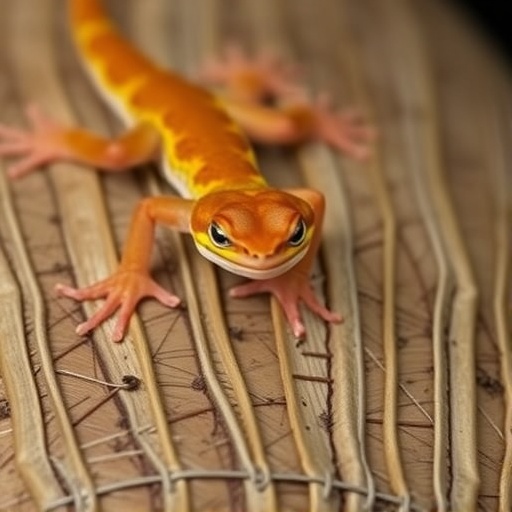
In the depths of the Brazilian Amazon, a groundbreaking discovery has emerged from the realm of parasitology, unveiling a previously unknown nematode species that challenges our understanding of biodiversity in one of Earth’s most complex ecosystems. This newly described parasite, Spauligodon caxiuana n. sp., represents a significant advancement in the identification of nematode diversity within the Pharyngodonidae family, specifically infecting the gecko species Thecadactylus rapicauda, a member of the Phyllodactylidae family. The discovery opens windows not only into the intimate ecological relationships within tropical environments but also into the evolutionary trajectories of parasitic nematodes linked to their reptilian hosts.
The meticulous taxonomic work underlying this discovery was conducted in the Brazilian Amazon, an area notorious for its vast, yet still underexplored, biological wealth. Parasites often reveal hidden layers of biodiversity as they co-evolve with their hosts, and the identification of Spauligodon caxiuana hitherto underlines the complexity of these interactions. The new species’ description includes advanced morphological and molecular techniques that distinguish it from other known species within the genus Spauligodon, providing key insights into nematode taxonomy and phylogenetics.
Spauligodon nematodes belong to the family Pharyngodonidae, a group known for its diverse parasitism predominantly in reptiles and amphibians. These nematodes exhibit intricate life cycles and host specificities, which complicates their taxonomic resolution. However, leveraging modern technologies like scanning electron microscopy and molecular markers such as ribosomal DNA sequencing, researchers have successfully delineated Spauligodon caxiuana from its congeners. This methodological synergy underscores the increasing importance of integrated taxonomic approaches when dealing with cryptic and minute organisms.
The gecko host, Thecadactylus rapicauda, colloquially known as the turnip-tailed gecko, inhabits tropical forests and has a wide distribution across Central and South America. Its parasitological profile was previously poorly understood, with scant documentation of nematode parasites infecting this reptile species. Finding Spauligodon caxiuana within this host strengthens the argument that neotropical herpetofauna harbors an untapped reservoir of parasite diversity, waiting to be uncovered by targeted biodiversity surveys.
Importantly, the research includes an updated taxonomic key to Neotropical and Panamanian species of Spauligodon, a crucial tool that significantly assists parasitologists and wildlife biologists working in these regions. This key aids in identification, comparison, and further exploration of parasite species, making it indispensable for ongoing and future studies into parasite-host dynamics, biogeography, and conservation biology.
From a molecular evolution perspective, the discovery of Spauligodon caxiuana contributes new data points to phylogenetic trees that elucidate the evolutionary relationships within Pharyngodonidae. Comparing the genetic makeup of this nematode to other members of the genus reveals patterns of divergence likely influenced by geographic isolation and host specificity. These evolutionary insights have broader implications for understanding how parasite species diversify in relation to their hosts’ ecological niches.
Furthermore, the ecological implications of this newly identified species ripple beyond pure taxonomy. Parasites such as Spauligodon caxiuana can affect host behavior, fitness, and survival, influencing population dynamics and ecosystem functioning. The Brazilian Amazon, rife with ecological interdependence, embodies a delicate balance where parasitic interactions play subtle but vital roles in maintaining biodiversity and environmental health.
The significance of this discovery is compounded by the ongoing threats to Amazonian habitats, including deforestation, climate change, and habitat fragmentation. Parasite biodiversity often reflects ecosystem health, and the characterization of novel organisms like Spauligodon caxiuana serves as a biological indicator of environmental stability. Documenting such species before habitat loss underscores the urgency for conservation efforts grounded in comprehensive biodiversity knowledge.
The integration of classical parasitological techniques with cutting-edge molecular tools embodied in this study exemplifies the future pathway for parasitology research. This multidisciplinary method not only refines species identification but also enhances reproducibility and comparability across geographic and taxonomic boundaries. The study’s methodological framework is likely to inspire subsequent research in tropical nematode ecology and beyond.
In addition, the research brings attention to the vast unknown diversity of parasites worldwide. While often overlooked or stigmatized, parasitic organisms are pivotal to ecological networks and evolutionary processes. Findings such as Spauligodon caxiuana highlight the necessity to broaden scientific focus and resource allocation towards parasitology, a field with profound implications for biodiversity conservation, public health, and understanding biological complexity.
This discovery also invites deeper discussions about host-parasite coevolution in tropical ecosystems. The close association between Thecadactylus rapicauda and Spauligodon caxiuana underscores the coadaptations that have likely shaped physiological and behavioral traits in both organisms. Unraveling these relationships provides insights into selective pressures and adaptive strategies that govern survival and reproduction across generations.
Moreover, documenting a new nematode species in such a globally significant region adds a substantial layer to the growing evidence that tropical biodiversity is far more intricate than previously believed. The Amazon’s unseen biological constituents like Spauligodon caxiuana suggest that many symbiotic, parasitic, and mutualistic relationships remain uncharted, urging scientists to expand biodiversity inventories and ecological research in these vital biomes.
Ultimately, the identification of Spauligodon caxiuana n. sp. stands as a testament to the enduring mysteries within natural ecosystems, waiting to be discovered through detailed and relentless scientific inquiry. It highlights the value of taxonomic precision and ecological understanding in unveiling the hidden fabric of life, which is vital for preserving the natural heritage of the Brazilian Amazon and the global ecological balance.
As researchers continue to explore and map biodiversity in tropical regions, integrating parasitology with conservation biology, the findings from this study are poised to influence future research agendas and conservation policies. Recognizing and protecting such intricate biological relationships is a cornerstone for maintaining the richness and resilience of Earth’s ecosystems amid rapidly changing environmental conditions.
In conclusion, the discovery of Spauligodon caxiuana not only adds a new species to the taxonomy of nematodes but also enriches our understanding of the complex ecological relationships within one of the world’s most biodiverse regions. It marks a seminal advance in parasitology and tropical biology, illustrating how much remains to be uncovered in the shadows of the Amazonian canopy.
Subject of Research: Discovery and description of a new nematode species, Spauligodon caxiuana, parasitizing the gecko Thecadactylus rapicauda in the Brazilian Amazon, including taxonomy, phylogenetics, and ecological significance.
Article Title: “First of its Kind” in Brazilian Amazon: Spauligodon caxiuana n. sp. (Nematoda: Pharyngodonidae) Parasite of Thecadactylus rapicauda (Squamata: Phyllodactylidae), with an Updated Key to the Neotropical and Panamanian Species of the Genus.
Article References:
Neves, J.K.S., da Silva, G.F., Santos, A.N. et al. “First of its Kind” in Brazilian Amazon: Spauligodon caxiuana n. sp. (Nematoda: Pharyngodonidae) Parasite of Thecadactylus rapicauda (Squamata: Phyllodactylidae), with an Updated Key to the Neotropical and Panamanian Species of the Genus. Acta Parasit. 70, 226 (2025). https://doi.org/10.1007/s11686-025-01151-7
Image Credits: AI Generated
DOI: https://doi.org/10.1007/s11686-025-01151-7
Tags: advanced morphological techniques in taxonomyBrazilian Amazon biodiversityecological relationships in tropical ecosystemsevolutionary biology of parasitesgecko parasite identificationhidden biodiversity in Amazon rainforestmolecular methods in parasitologynew nematode species discoveryparasitology research in reptilesPharyngodonidae family nematodesreptilian host-parasite interactionsSpauligodon caxiuana