Published in the journal Genomics & Informatics, the brief report introduces a structured approach that prioritizes human intellectual contribution over the blind generation of text by large language models. The central argument of the study is that transparency in academic publishing should focus on capturing the author’s core research perspective and section-specific key points, rather than requiring the disclosure of increasingly complex and impractical AI prompts. This methodology aims to preserve scientific integrity while democratizing access to high-quality academic writing, particularly for non-native English speakers who face significant linguistic barriers in scholarly communication.
The rise of AI-assisted manuscripts in academic journals has led to frequent encounters with publications demonstrating clear evidence of artificial intelligence involvement. While the application of AI technology itself is not the primary concern, the maintenance of originality and reproducibility in scholarly communication remains a critical challenge. A major risk associated with current AI tools is the potential for hallucinations, which can introduce fabricated citations and erroneous information into manuscripts. These issues are exacerbated in the absence of adequate human verification, threatening the integrity of the scientific discourse. Park argues that complete prohibition of AI assistance fails to recognize its substantial benefits, particularly for researchers navigating complex academic writing demands in languages that are not their native tongue.
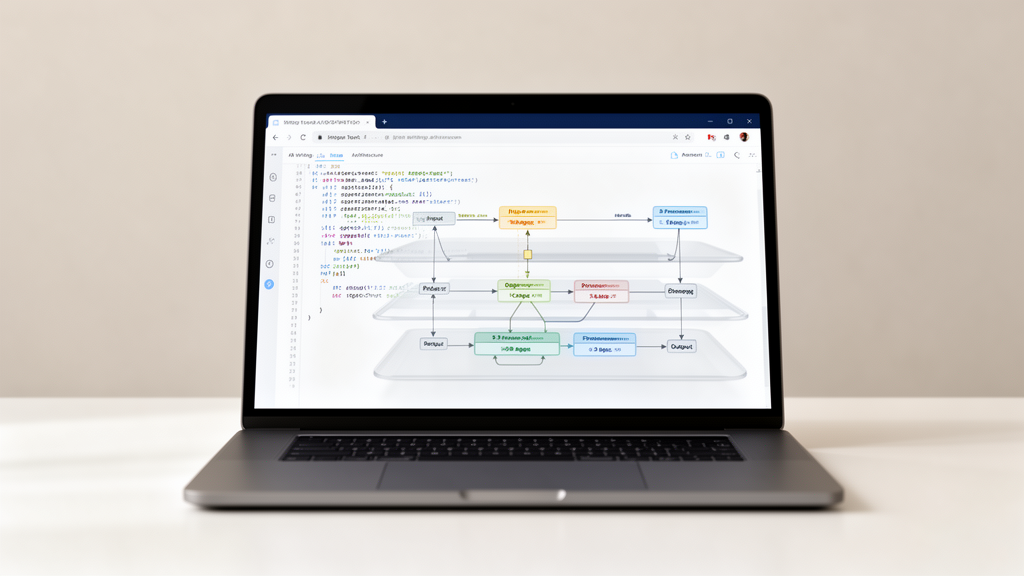
Current commercial tools for AI-assisted scientific writing, such as Scite and Paperpal, are often described as black boxes. There is no clear way to understand how human originality is incorporated into the final text or how these tools mitigate hallucinations during the generation process. In response to these limitations, Park developed a fully open-sourced web-based tool that implements a human-in-the-loop approach. This tool incorporates multiple AI-assisted steps, including perspective defining, outlining, and text drafting. The step-by-step nature of the workflow promotes human interaction at each stage, enabling authors to develop their research concepts transparently while utilizing the linguistic capabilities of AI.
The workflow of the proposed tool consists of five straightforward steps that build on established methods for learning to write scientific papers. In the first step, authors choose the format of the paper and define the total length. In the second step, authors select the literature they wish to reference from their specific field. The third step involves writing down the main perspective on the research topic in whatever language feels most comfortable to the author, with an AI assistant helping to refine and clarify these ideas. In the fourth step, authors create a detailed outline with key points for each section and paragraph, again working in their native language with AI assistance to structure their thoughts. Finally, in the fifth step, the AI generates an English manuscript based on these author-created perspectives and outlines using pre-written prompts.
To mitigate the risk of AI hallucinations, the prompts used in the tool are designed to include all user-provided materials and generated texts from previous steps, such as paper references, perspectives, and key points. The prompts explicitly include a declaration that the generated output should be based only on the user-provided materials. This strategy is similar to retrieval-augmented generation, or RAG, which provides additional contextual information to large language models for reference. However, while RAG is a common technique, it has been reported that it cannot completely eliminate hallucinations. Instead, the effectiveness of this tool relies on the continuous involvement of the authors, who can review what the system produces and make changes whenever the output does not match their intended meaning.
After the writing process is complete, the web tool automatically generates a transparency report. This document contains the author’s perspective and the specific key points that were used to generate the text. By reading this report, editors and reviewers can see exactly what ideas drove the research and how the AI was utilized. Because the tool is fully open-sourced, with the prompts available as part of the source code, the transparency report combined with the publicly available prompts provides the complete AI prompts used to generate the paper. This addresses the requirements of many journals that currently mandate the disclosure of AI usage details, offering a more practical and meaningful form of transparency than simply sharing raw prompt data.
The tool is designed with a strong emphasis on data security and privacy. It works entirely within the client-side web browser without a backend server, which means all user data remains on the author’s local machine rather than being transmitted to and saved on remote servers. This design enhances security by keeping sensitive research content under the author’s direct control. For researchers working with particularly sensitive material or those in institutions with strict data security requirements, the tool also offers an option to run AI models locally on their own hardware. This provides an additional layer of privacy protection. Furthermore, the tool was packaged using Docker, making it easy to deploy in any computing environment, even allowing it to be accessed without an internet connection if a local large language model is used.
The implementation of the tool was built using SvelteKit with TypeScript, ensuring that it runs efficiently in the user’s browser. To avoid the AI model from writing overly complex text, the prompts were customized using writing samples from the author’s PhD dissertation as a style reference. This choice was made because the dissertation was free from copyright issues and written in typical academic writing standards. This customization helped produce clearer, more accessible text while maintaining scientific accuracy. The prompts were also designed to explicitly prohibit the generation of fake references or data, requiring the models to work only with the information provided by the users. This approach ensures that the final manuscript remains grounded in the author’s actual research and cited literature.
Validation of this approach was conducted by writing the paper itself using the tool. The process began with selecting relevant literature on AI-assisted scientific writing and entering citations into the tool. The core perspective on transparent AI use in academic publishing was then developed, and key points for each section were outlined in the author’s native language. English text was generated by the tool based on these inputs, which were then revised and edited by the author. A transparency report was generated to demonstrate how to disclose the report in practice.
The discussion in the paper highlights that the main challenge in AI-assisted scientific writing lies in establishing appropriate boundaries between tool usage and human oversight. The work proposes that maintaining originality requires deliberate human intellectual investment at critical decision points, such as defining research perspectives, curating literature, and structuring arguments, rather than merely reviewing AI outputs after generation. The structured workflow presented enforces this by requiring authors to articulate their contributions explicitly before AI assistance occurs. This creates clear delineations between human intellectual work and AI linguistic processing, addressing concerns about diminished originality while maintaining the practical benefits of AI assistance.
While the tool represents a starting point for addressing current challenges in AI-assisted academic writing, the author acknowledges potential negative effects. These include the creation of new dependencies on AI services, which could disadvantage researchers in resource-constrained environments, or the potential for the homogenization of writing styles, which might reduce diversity in academic discourse. However, because the tool is open-sourced, community-driven development may address these limitations through collaborative improvement over time. The tool is freely available online, with complete source code accessible to the research community, allowing for further adaptation and enhancement.
As AI tools become more sophisticated and prompts more complex, the traditional requirement for authors to disclose full AI prompts is becoming increasingly impractical. Park’s approach offers a viable alternative by focusing on the fundamental elements that constitute meaningful scientific communication. By making the author’s core research perspective and section-specific key points the focus of transparency, the tool ensures that the human element of research remains central to the writing process. This methodology not only helps to mitigate the risks of AI hallucinations but also supports the goal of equitable access to high-quality academic writing across linguistic and cultural boundaries.
Subject of Research: Development of a transparent and reproducible AI-assisted research paper writing tool
Article Title: Towards a transparent and reproducible AI-assisted research paper writing
Article References: Park, J. (2025). Towards a transparent and reproducible AI-assisted research paper writing. Genomics & Informatics, 23(1), Article 26. https://doi.org/10.1186/s44342-025-00057-0
Image Credits: AI Generated
DOI: 10.1186/s44342-025-00057-0
Keywords: AI-assisted writing, Scientific publishing, Open-source tools, Research integrity, Human-in-the-loop, Transparency reports, Genomics & Informatics, Academic communication, Large language models, Reproducibility, Towards, transparent
News Source: Gregory Coleman. (November 8, 2026). New Open-Source Tool Aims to Make AI Paper Writing Transparent. Scienmag.