In a groundbreaking study published in Cell Death Discovery, researchers have unveiled a novel cellular mechanism that could revolutionize our understanding of how neurons respond to hypoxic stress. The team, led by Li, Xu, Tian, and colleagues, has identified the HIF-1α/STOML2 axis as a key player in triggering PINK1-dependent mitophagy, a protective process that mitigates neuronal injury under low oxygen conditions. This discovery opens new avenues for therapeutic strategies targeting neurodegenerative diseases linked to mitochondrial dysfunction.
The brain’s sensitivity to oxygen deprivation has long posed a substantial challenge in neuroscience, given the organ’s high metabolic demands. Hypoxia, or insufficient oxygen supply, can lead to devastating neuronal injury and contribute to the progression of conditions such as stroke, Alzheimer’s disease, and Parkinson’s disease. Although the hypoxia-inducible factor 1-alpha (HIF-1α) is known to orchestrate cellular adaptation to low oxygen, the downstream molecular events that specifically protect neurons remained elusive until now.
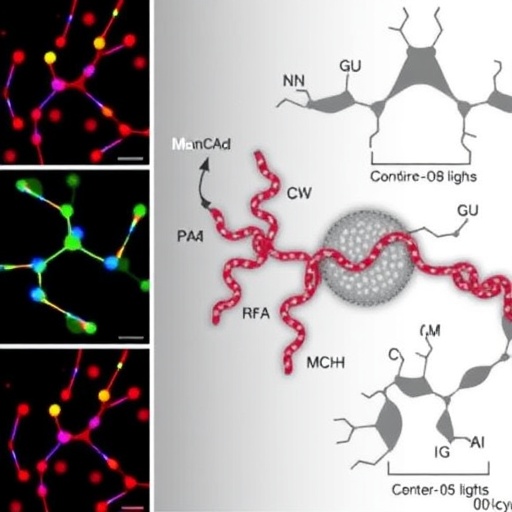
By meticulously exploring the molecular landscape of hypoxic neurons, the research team discovered that HIF-1α directly upregulates STOML2, a mitochondrial inner membrane protein previously implicated in maintaining mitochondrial integrity. Elevated STOML2 levels in neurons under hypoxic stress were found to promote the stabilization and activation of PINK1, a critical mitophagy regulator known for its role in Parkinson’s disease pathology. This chain reaction triggers mitophagy, a selective autophagic process that removes damaged mitochondria, thereby preventing neuronal death.
Mitophagy has emerged as a vital quality control mechanism, safeguarding cells from the toxic buildup of dysfunctional mitochondria. The findings by Li et al. suggest that the HIF-1α/STOML2 axis acts as a crucial hypoxia-responsive module that initiates PINK1-mediated mitophagy. This self-repair system equips neurons with a survival advantage under oxygen-deprived conditions, potentially halting or delaying the cascade of events leading to neuronal injury and neurodegeneration.
The team employed a combination of molecular biology techniques, live-cell imaging, and in vivo models to validate their findings. They observed that silencing STOML2 in neuronal cultures exposed to hypoxia severely impaired mitophagy, resulting in increased mitochondrial damage and cell death. Conversely, overexpression of STOML2 enhanced mitophagic flux and improved neuronal survival, providing compelling evidence of STOML2’s therapeutic promise.
Further mechanistic insights revealed that STOML2 stabilizes PINK1 on the outer mitochondrial membrane by directly interacting with it, preventing its degradation. This stabilization is essential for the recruitment of Parkin, an E3 ubiquitin ligase that ubiquitinates damaged mitochondrial proteins, marking them for autophagic clearance. The integrity of this pathway underscores a finely tuned neuroprotective response that could be harnessed pharmacologically.
From a clinical perspective, the implications of this discovery are vast. Neurodegenerative diseases often feature mitochondrial dysfunction and impaired mitophagy, leading to neuronal loss and cognitive decline. By targeting the HIF-1α/STOML2/PINK1 pathway, it may be possible to develop interventions that restore mitochondrial quality control and arrest neurodegeneration. Additionally, this mechanism may provide novel biomarkers for early detection and monitoring of hypoxia-related neuronal damage.
The discovery also poses intriguing questions about the broader role of mitophagy in neuronal resilience. While previous studies have highlighted PINK1 and Parkin in familial Parkinson’s disease, the connection to hypoxia and HIF-1α/STOML2 adds a new layer of complexity to mitochondrial homeostasis in the brain. It suggests that neurons have evolved sophisticated adaptive mechanisms to survive transient oxygen deprivation, which can be potentiated through molecular interventions.
Importantly, the researchers emphasize that the HIF-1α/STOML2-dependent mitophagy activation is not merely a secondary consequence of hypoxia but a primary defense mechanism. This underscores the necessity for therapeutic strategies to focus on early-stage modulation of this axis to maximize neuroprotection before irreversible damage occurs. It also highlights the potential pitfalls of interventions that broadly suppress HIF-1α, which could inadvertently impair neuronal survival.
Beyond neurodegeneration, this novel pathway might have implications for acute neuronal injuries such as ischemic stroke. During stroke, rapid oxygen deprivation triggers a complex cascade of cellular events leading to brain tissue damage. Enhancing the HIF-1α/STOML2/PINK1 mitophagy pathway could help mitigate stroke-induced neuronal death, improving recovery and long-term outcomes.
The study by Li and colleagues exemplifies the power of integrating molecular insights with disease models to uncover novel therapeutic targets. Their work encourages a paradigm shift from merely managing symptoms to addressing fundamental cellular processes underlying neuronal survival. It represents a significant contribution to the field of neuronal hypoxia research, paving the way for innovative treatments that harness the cell’s innate protective machinery.
Looking ahead, further research is needed to translate these findings into clinical applications. Future studies should explore small molecules or gene therapy approaches that can selectively upregulate STOML2 or enhance PINK1 stabilization in human neurons. Moreover, investigating the interplay between this pathway and other hypoxia-responsive systems will deepen our understanding of neuronal adaptation.
In summary, the unveiling of the HIF-1α/STOML2 mediated activation of PINK1-dependent mitophagy represents a leap forward in brain hypoxia research. By elucidating a key survival pathway in neurons, this discovery offers hope for new neuroprotective therapies against a host of hypoxia-related neurological disorders. The exquisite molecular choreography revealed by Li et al. highlights the remarkable resilience of neurons and the untapped potential of targeting mitochondrial quality control mechanisms.
This study not only enhances our grasp of neuronal biology under stress but also ignites excitement for future innovations in combating neurodegeneration. As the global burden of neurological diseases continues to rise, breakthroughs like this illuminate the path toward effective interventions that preserve brain function and improve quality of life for millions worldwide.
Subject of Research: Neuronal response to hypoxia and mitochondrial quality control mechanisms.
Article Title: Novel mechanism of neuronal hypoxia response: HIF-1α/STOML2 mediated PINK1-dependent mitophagy activation against neuronal injury.
Article References:
Li, Y., Xu, Z., Tian, Z. et al. Novel mechanism of neuronal hypoxia response: HIF-1α/STOML2 mediated PINK1-dependent mitophagy activation against neuronal injury. Cell Death Discov. (2026). https://doi.org/10.1038/s41420-026-02960-z
Image Credits: AI Generated
DOI: https://doi.org/10.1038/s41420-026-02960-z
Tags: cellular response to low oxygenHIF-1α role in hypoxiaHIF-1α/STOML2 signaling pathwayhypoxia-induced neuronal injuryMitochondrial dysfunction in neurodegenerative diseasesmitophagy activation in Alzheimer’s and Parkinson’smitophagy in neuroprotectionneurodegeneration and mitochondrial quality controlneuronal hypoxia defense mechanismsPINK1-dependent mitophagySTOML2 mitochondrial functiontherapeutic targets for stroke