• HOME
  • NEWS
  • EXPLORE
    • CAREER
      • Companies
      • Jobs
    • EVENTS
    • iGEM
      • News
      • Team
    • PHOTOS
    • VIDEO
    • WIKI
  • BLOG
  • COMMUNITY
    • FACEBOOK
    • INSTAGRAM
    • TWITTER
Thursday, April 9, 2026
BIOENGINEER.ORG
No Result
View All Result
  • Login
  • HOME
  • NEWS
  • EXPLORE
    • CAREER
      • Companies
      • Jobs
        • Lecturer
        • PhD Studentship
        • Postdoc
        • Research Assistant
    • EVENTS
    • iGEM
      • News
      • Team
    • PHOTOS
    • VIDEO
    • WIKI
  • BLOG
  • COMMUNITY
    • FACEBOOK
    • INSTAGRAM
    • TWITTER
  • HOME
  • NEWS
  • EXPLORE
    • CAREER
      • Companies
      • Jobs
        • Lecturer
        • PhD Studentship
        • Postdoc
        • Research Assistant
    • EVENTS
    • iGEM
      • News
      • Team
    • PHOTOS
    • VIDEO
    • WIKI
  • BLOG
  • COMMUNITY
    • FACEBOOK
    • INSTAGRAM
    • TWITTER
No Result
View All Result
Bioengineer.org
No Result
View All Result
Home NEWS Science News Biology

New ‘NanoZymes’ use light to kill bacteria

Bioengineer by Bioengineer
April 4, 2018
in Biology
Reading Time: 2 mins read
0
Share on FacebookShare on TwitterShare on LinkedinShare on RedditShare on Telegram
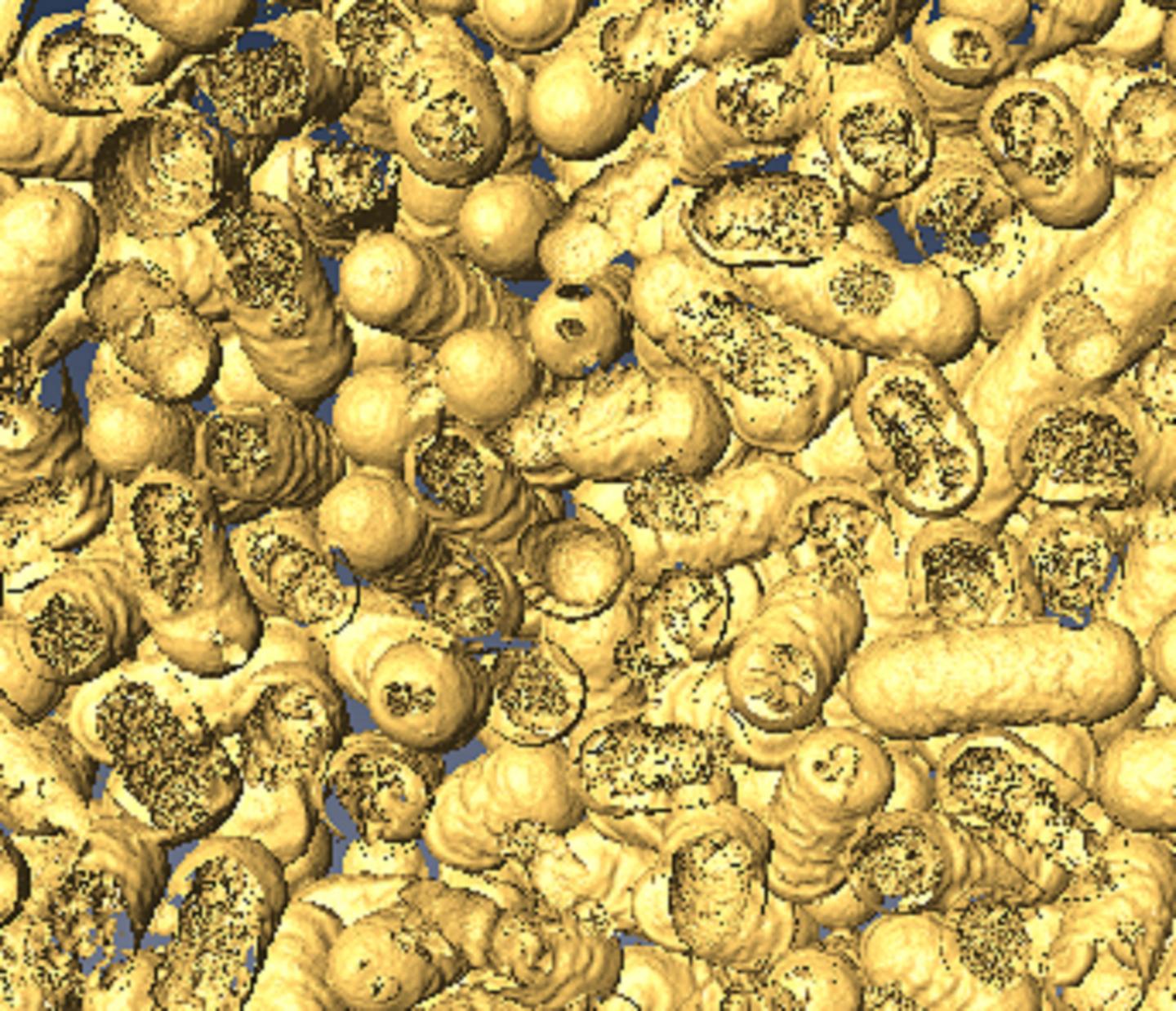
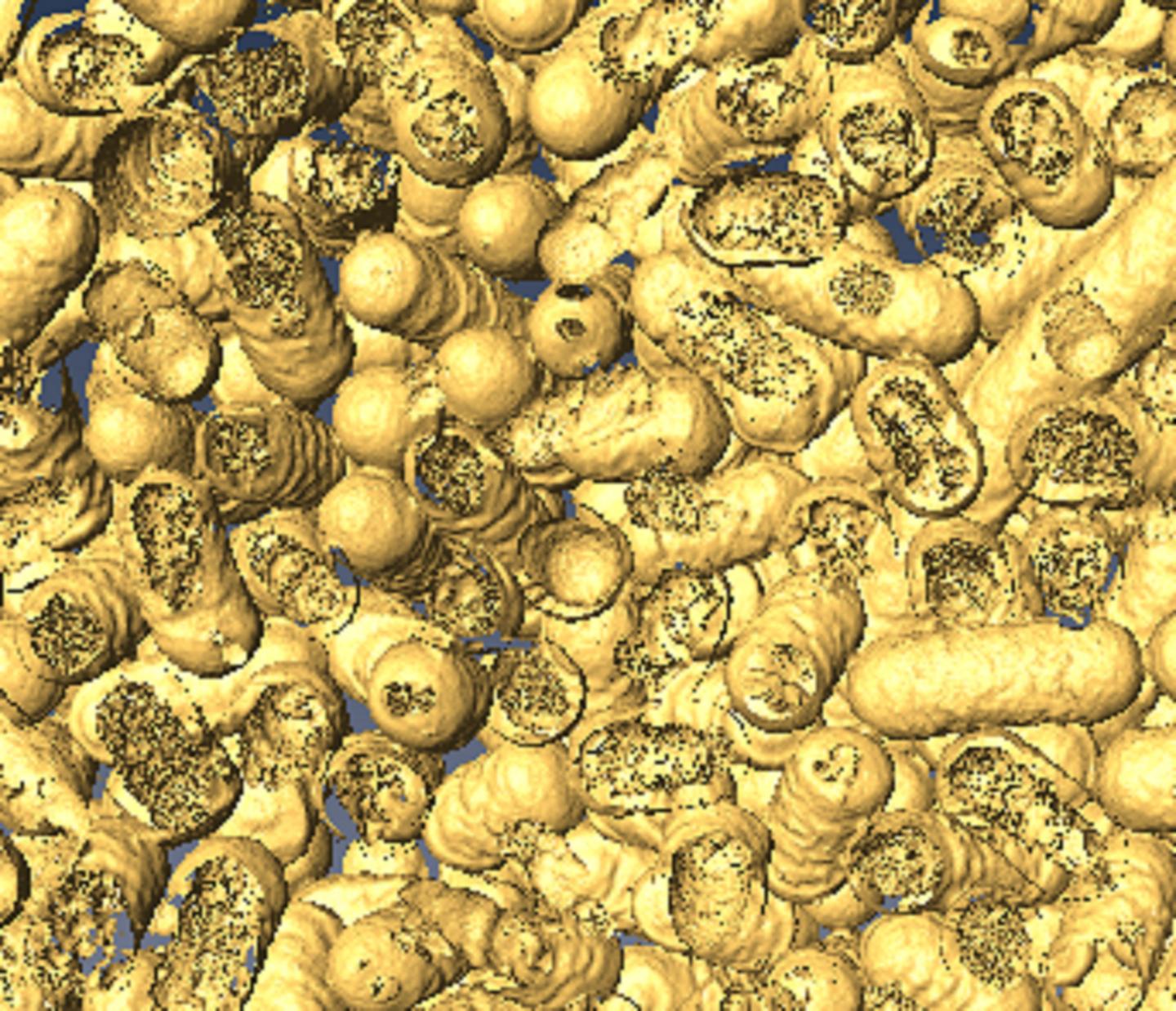
IMAGE

Credit: Dr. Chaitali Dekiwadia/ RMIT Microscopy and Microanalysis Facility

Researchers from RMIT University have developed a new artificial enzyme that uses light to kill bacteria.

The artificial enzymes could one day be used in the fight against infections, and to keep high-risk public spaces like hospitals free of bacteria like E. coli and Golden Staph.

E. coli can cause dysentery and gastroenteritis, while Golden Staph is the major cause of hospital-acquired secondary infections and chronic wound infections.

Made from tiny nanorods – 1000 times smaller than the thickness of the human hair – the "NanoZymes" use visible light to create highly reactive oxygen species that rapidly break down and kill bacteria.

Lead researcher, Professor Vipul Bansal who is an Australian Future Fellow and Director of RMIT's Sir Ian Potter NanoBioSensing Facility, said the new NanoZymes offer a major cutting edge over nature's ability to kill bacteria.

"For a number of years we have been attempting to develop artificial enzymes that can fight bacteria, while also offering opportunities to control bacterial infections using external 'triggers' and 'stimuli'," Bansal said. "Now we have finally cracked it.

"Our NanoZymes are artificial enzymes that combine light with moisture to cause a biochemical reaction that produces OH radicals and breaks down bacteria. Nature's antibacterial activity does not respond to external triggers such as light.

"We have shown that when shined upon with a flash of white light, the activity of our NanoZymes increases by over 20 times, forming holes in bacterial cells and killing them efficiently.

"This next generation of nanomaterials are likely to offer new opportunities in bacteria free surfaces and controlling spread of infections in public hospitals."

The NanoZymes work in a solution that mimics the fluid in a wound. This solution could be sprayed onto surfaces.

The NanoZymes are also produced as powders to mix with paints, ceramics and other consumer products. This could mean bacteria-free walls and surfaces in hospitals.

Public toilets — places with high levels of bacteria, and in particular E. coli — are also a prime location for the NanoZymes, and the researchers believe their new technology may even have the potential to create self-cleaning toilet bowls.

While the NanoZymes currently use visible light from torches or similar light sources, in the future they could be activated by sunlight.

The researchers have shown that the NanoZymes work in a lab environment. The team is now evaluating the long-term performance of the NanoZymes in consumer products.

"The next step will be to validate the bacteria killing and wound healing ability of these NanoZymes outside of the lab," Bansal said.

"This NanoZyme technology has huge potential, and we are seeking interest from appropriate industries for joint product development."

The NanoZyme breakthrough has recently been published in the journal ACS Applied Nano Materials.

###

For images and general media enquiries: James Giggacher, +61 3 9925 4143, +61 413 665 143 or [email protected].

Media Contact

James Giggacher
[email protected]
61-413-665-143
@RMIT

http://www.rmit.edu.au

Related Journal Article

http://dx.doi.org/10.1021/acsanm.8b00153

Share12Tweet7Share2ShareShareShare1

Related Posts

“’Stemness Checkpoint’ Key to Regulating Stem Cell Identity”

“’Stemness Checkpoint’ Key to Regulating Stem Cell Identity”

April 9, 2026
Temperate Region Studies Lead in Robustness Despite Majority of Discoveries in Tropical Mammals

Temperate Region Studies Lead in Robustness Despite Majority of Discoveries in Tropical Mammals

April 8, 2026

Zebrafish Uncover Breakthrough Insights into Autism Biology

April 8, 2026

New Glassfrog Species Discovered, Honoring Ecuador’s First Female Olympic Gold Medalist

April 8, 2026
Please login to join discussion

POPULAR NEWS

  • blank

    Revolutionary AI Model Enhances Precision in Detecting Food Contamination

    98 shares
    Share 39 Tweet 25
  • Imagine a Social Media Feed That Challenges Your Views Instead of Reinforcing Them

    1011 shares
    Share 399 Tweet 250
  • Popular Anti-Aging Compound Linked to Damage in Corpus Callosum, Study Finds

    44 shares
    Share 18 Tweet 11
  • Revolutionary Theory Transforms Quantum Perspective on the Big Bang

    40 shares
    Share 16 Tweet 10

About

We bring you the latest biotechnology news from best research centers and universities around the world. Check our website.

Follow us

Recent News

GSK3α Regulates Stemness Across Stem Cell States

Skin’s Hidden Prep: How Cells ‘Pre-Learn’ to Boost Regeneration Before Injury

Self-Employed Hispanic Women Show Lower Cardiovascular Disease Risk Than Salaried Peers, Study Finds

Subscribe to Blog via Email

Enter your email address to subscribe to this blog and receive notifications of new posts by email.

Join 78 other subscribers
  • Contact Us

Bioengineer.org © Copyright 2023 All Rights Reserved.

Welcome Back!

Login to your account below

Forgotten Password?

Retrieve your password

Please enter your username or email address to reset your password.

Log In
No Result
View All Result
  • Homepages
    • Home Page 1
    • Home Page 2
  • News
  • National
  • Business
  • Health
  • Lifestyle
  • Science

Bioengineer.org © Copyright 2023 All Rights Reserved.