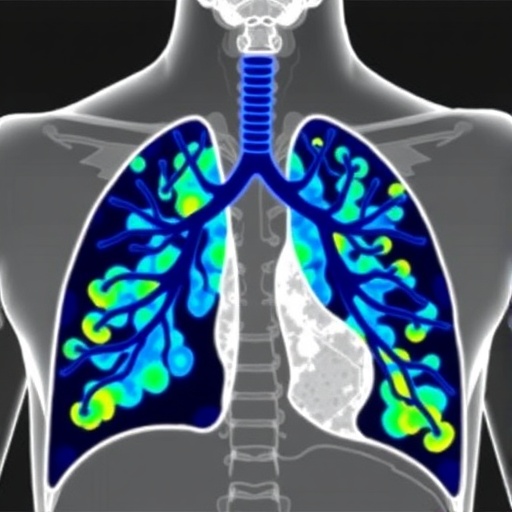
In an innovative stride towards cancer prognosis and treatment, researchers have unveiled a groundbreaking model associated with succinylation that aims to transform how lung adenocarcinoma is approached. Researchers from various institutions collaborated on this pressing issue, focusing on a specific form of lung cancer that currently presents formidable challenges for effective treatment. The study, as outlined in their recent publication, seeks to illuminate the extensive implications of succinylation, a biochemical modification, in establishing a prognostic framework that could pave the way for tailored immunotherapy strategies.
Lung adenocarcinoma, a predominant subtype of lung cancer, is notorious for its aggressive nature and high mortality rate. Patients diagnosed with lung adenocarcinoma often face grim prognoses, largely due to late-stage diagnosis and limited treatment options. The development of reliable prognostic models is essential to improve patient outcomes, enabling healthcare professionals to customize treatment plans based on individual tumor characteristics and biological behaviors.
The researchers explored the landscape of succinylation—an acetylation-like post-translational modification that can influence protein function and stability. Understanding this modification is not merely a biochemical curiosity; it has substantial implications for cellular processes, including metabolic regulation, gene expression, and immune system interactions. By focusing on succinylation, the team aimed to define its relevance in lung adenocarcinoma and ascertain whether it could serve as a reliable biomarker for prognosis and treatment response.
The methodology employed was robust and multifaceted, incorporating bioinformatics analyses, clinical data evaluation, and experimental validation. The researchers analyzed extensive RNA sequencing datasets from publicly available databases, as well as clinical samples collected from patients. This comprehensive approach ensured that their findings were grounded in significant empirical evidence, reinforcing the validity of their succinylation-related model.
Central to their research was the identification of a panel of key succinylation-related genes. These genes were meticulously selected based on their expression patterns and associations with patient survival. The researchers employed various computational techniques to enhance the accuracy of their prognostic model, which ultimately demonstrated the potential to categorize patients into distinct risk groups based on their unique genetic profiles. This stratification is crucial for clinical practice, as it would allow oncologists to identify high-risk patients who may benefit from more aggressive treatment strategies or participation in clinical trials.
Equally significant was the researchers’ exploration of the therapeutic implications of their findings. They investigated the interplay between succinylation and the immune landscape of lung adenocarcinoma, postulating that the modification might play a critical role in tumor immune evasion. For instance, tumors with altered succinylation patterns could influence the natural response of immune cells, a key consideration in the context of immunotherapy. By delineating these relationships, the researchers contributed to the growing knowledge-base surrounding personalized medicine in oncology.
The prognostic model also posits that significant insights into patient responses to immunotherapy can be gleaned from succinylation levels. As immunotherapy continues to reshape cancer treatment paradigms, understanding the molecular underpinnings of how cancers respond to such therapies becomes imperative. The model offers a step towards predicting which patients are most likely to benefit from immunotherapeutic interventions based on succinylation-related gene expression, redefining treatment strategies.
Furthermore, the implications of this research extend beyond lung adenocarcinoma. The insights gleaned regarding succinylation might be applicable to other cancers as well, opening the door for a broader exploration of this post-translational modification across various tumor types. This cross-cancer applicability positions succinylation as a potential universal biomarker, providing a template for developing prognostic models in diverse oncological contexts.
As the research team emphasizes, the journey does not end with their findings; rather, it marks the beginning of a critical discourse. Collaborative efforts will be needed among oncologists, biochemists, and bioinformaticians to translate this laboratory-based research into real-world applications. Clinical trials will be essential in validating the model, and further studies will be required to explore the full spectrum of immunotherapy responses related to succinylation alterations.
In conclusion, the development of a succinylation-related prognostic model has emerged as a pivotal advance in the quest to combat lung adenocarcinoma. By harnessing the intricate biochemical pathways governed by succinylation, researchers have taken substantial strides toward facilitating a more personalized and effective approach to cancer treatment. This model not only holds the promise of improving prognostic capabilities but also encourages a deeper understanding of cancer biology, shaping the future landscape of oncology where both patients and clinicians may benefit from more informed decisions.
The implications of this research serve to galvanize the ongoing battle against lung cancer and highlight the urgent need for continued exploration into novel biomarkers and therapeutic strategies. As we stand on the cusp of breakthroughs in cancer treatment, the insights from this innovative model underscore the dynamic intersection of biochemistry and clinical effectiveness in addressing one of the most pressing health challenges of our time.
Subject of Research: A succinylation-related prognostic model for lung adenocarcinoma.
Article Title: A succinylation-related prognostic model for predicting lung adenocarcinoma prognosis and guiding immunotherapy.
Article References:
Li, Z., Liu, Q., Lu, E. et al. A succinylation-related prognostic model for predicting lung adenocarcinoma prognosis and guiding immunotherapy.
Clin Proteom (2026). https://doi.org/10.1186/s12014-025-09570-4
Image Credits: AI Generated
DOI:
Keywords: Succinylation, Lung adenocarcinoma, Prognostic model, Immunotherapy, Cancer treatment, Biomarker, Post-translational modification, Oncology, Personalized medicine.
Tags: aggressive lung cancer subtypesbiochemical modifications in oncologycancer treatment innovationscollaborative cancer research effortsimmune system and lung cancerimmunotherapy strategies for lung cancerlung adenocarcinoma prognosismetabolic regulation in cancerpersonalized treatment for lung adenocarcinomapost-translational modifications in cancersuccinylation in cancertumor characteristics and outcomes