

• HOME
  • NEWS
  • EXPLORE
    • CAREER
      • Companies
      • Jobs
    • EVENTS
    • iGEM
      • News
      • Team
    • PHOTOS
    • VIDEO
    • WIKI
  • BLOG
  • COMMUNITY
    • FACEBOOK
    • INSTAGRAM
    • TWITTER
Wednesday, April 8, 2026
BIOENGINEER.ORG
No Result
View All Result
  • Login
  • HOME
  • NEWS
  • EXPLORE
    • CAREER
      • Companies
      • Jobs
        • Lecturer
        • PhD Studentship
        • Postdoc
        • Research Assistant
    • EVENTS
    • iGEM
      • News
      • Team
    • PHOTOS
    • VIDEO
    • WIKI
  • BLOG
  • COMMUNITY
    • FACEBOOK
    • INSTAGRAM
    • TWITTER
  • HOME
  • NEWS
  • EXPLORE
    • CAREER
      • Companies
      • Jobs
        • Lecturer
        • PhD Studentship
        • Postdoc
        • Research Assistant
    • EVENTS
    • iGEM
      • News
      • Team
    • PHOTOS
    • VIDEO
    • WIKI
  • BLOG
  • COMMUNITY
    • FACEBOOK
    • INSTAGRAM
    • TWITTER
No Result
View All Result
Bioengineer.org
No Result
View All Result
Home NEWS Science News Biology

New method speeds up development of medication

Bioengineer by Bioengineer
March 26, 2018
in Biology
Reading Time: 2 mins read
0
Share on FacebookShare on TwitterShare on LinkedinShare on RedditShare on Telegram
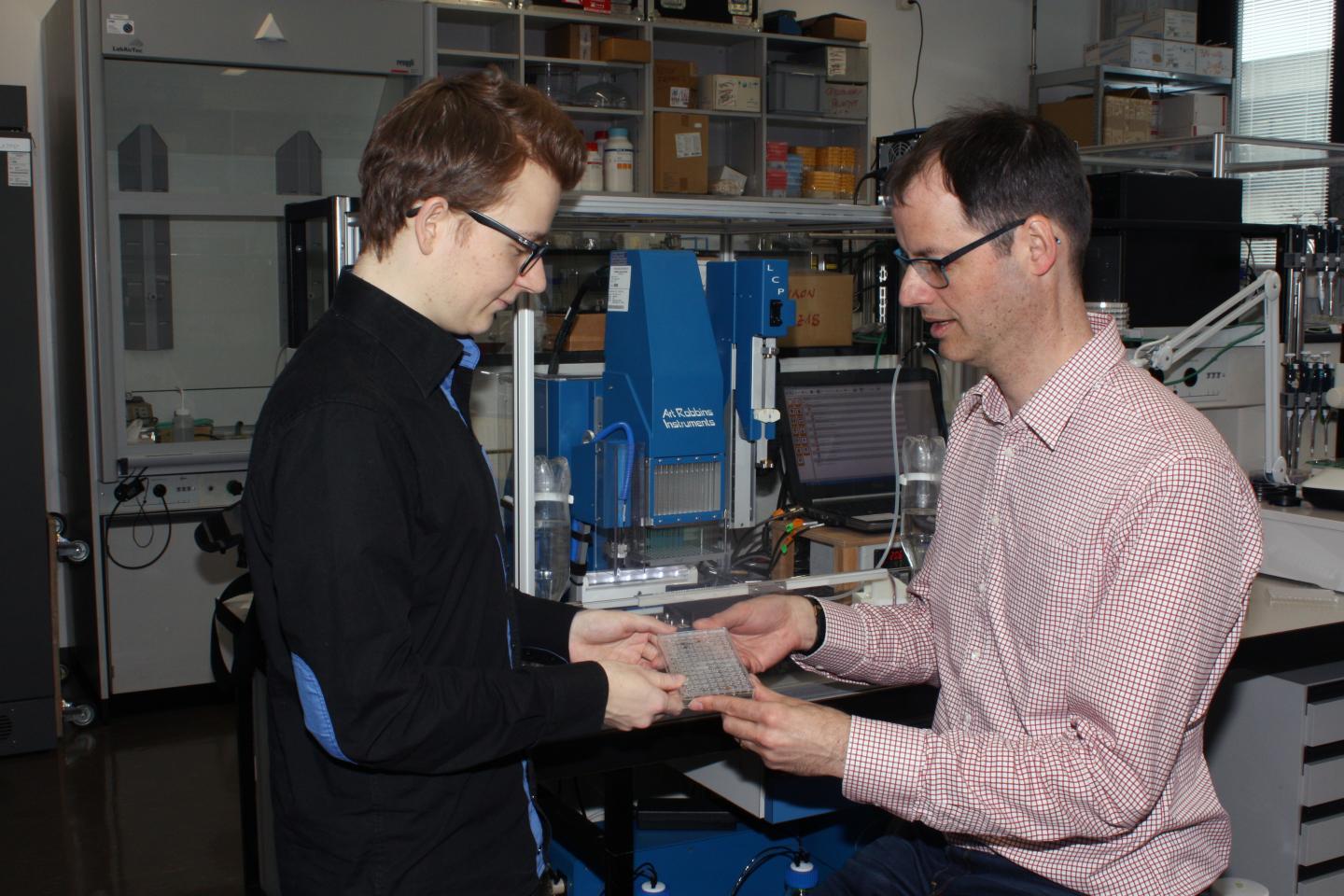
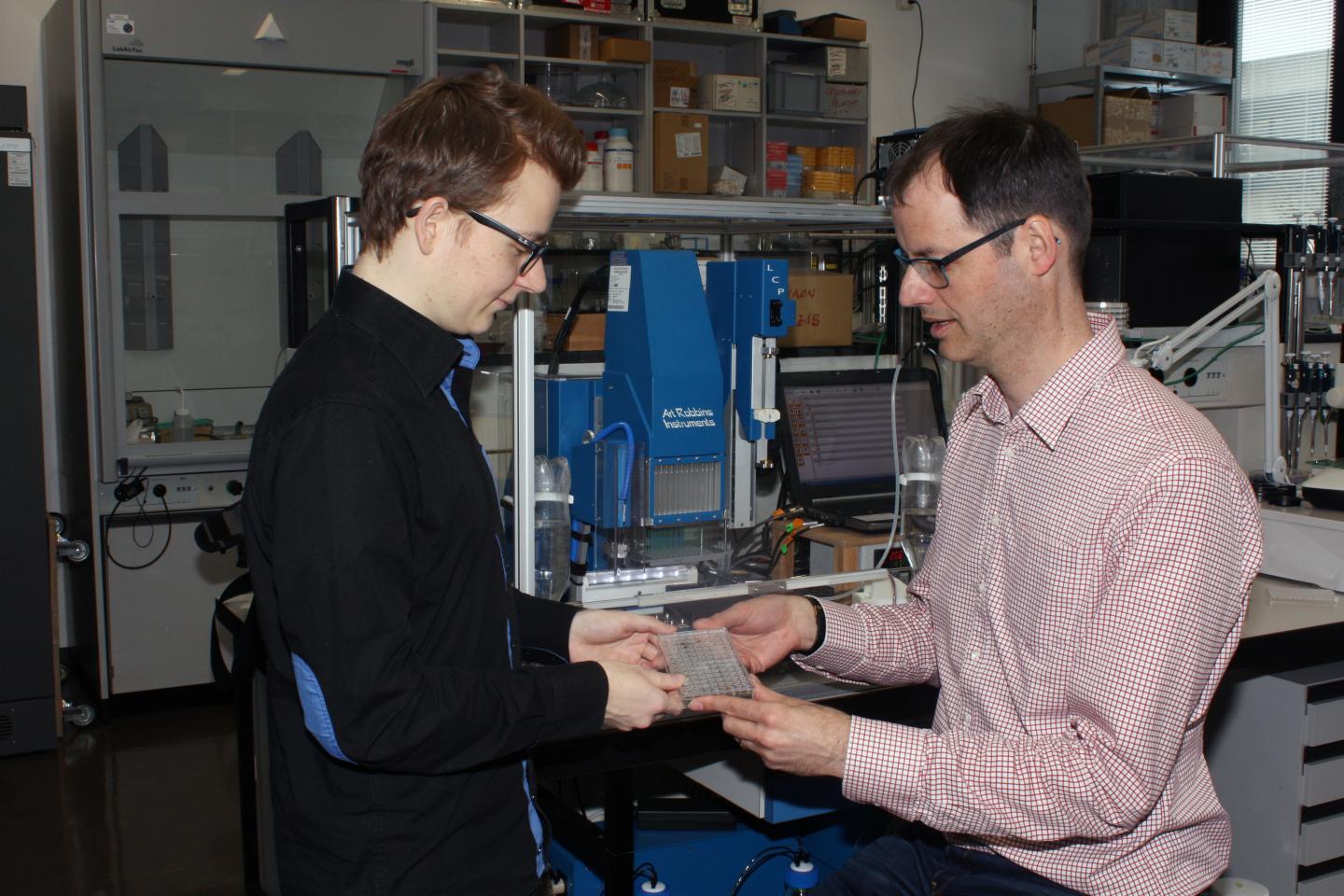
IMAGE

Credit: UZH

One of the key steps in developing new drugs is determining the atomic structure of its biologically active substances. This generally involves performing X-ray analyses of single crystal structures to determine the ingredient's detailed three-dimensional set-up. However, growing suitable single crystals is often a complex and time-consuming process.

Determining crystal structures more quickly and efficiently

A research group headed up by Bernhard Spingler, professor at the Department of Chemistry of the University of Zurich, has now modified a method that had previously been used exclusively for the crystallization of proteins, and successfully applied it to organic salts. The team was able to determine the crystal structures of several organic salts with significantly less time and effort. "As organic salts make up about 40 percent of all active pharmaceutical ingredients, this new method can greatly speed up the development of drugs," says Spingler.

Simplified screening of organic salts

The generation of solid salts of organic molecules is a key step in developing certain pharmaceutical ingredients. The positively and negatively charged particles that make up organic salts determine their properties, such as their solubility, crystal shape, ability to absorb water, melting point, and stability. The search for the ideal negatively charged anion to match the salt's positively charged cation has until now been a very resource-intensive process. Thanks to the semi-automatic combination of ion exchange screening and vapor diffusion for crystallization, this is not only done quicker and at lower costs. "We can now also determine the structures of the salt combinations directly after screening, since doing so only requires only very small amounts," adds crystallography expert Spingler.

Trainee achieves breakthrough

The breakthrough in developing the novel method was achieved by Philipp Nievergelt, a trainee who had spent 10 months in Bernhard Spingler's lab after graduating from Gymnasium. The successful junior researcher is listed as first author of the study and is now four semesters into his business chemistry studies at UZH. "The traineeship got me excited about lab work and encouraged me to continue doing research," explains Nievergelt.

###

Media Contact

Bernhard Spingler
[email protected]
41-446-354-656
@uzh_news

http://www.uzh.ch

Original Source

http://www.media.uzh.ch/en/Press-Releases/2018/crystal-structures-organic-salts.html http://dx.doi.org/10.1039/C8SC00783G


Share12Tweet8Share2ShareShareShare2

Related Posts

Climate Change Impacts Extend into the Lives of Great-Great-Grandchildren

Climate Change Impacts Extend into the Lives of Great-Great-Grandchildren

April 8, 2026
Scans Reveal ‘Oldest Octopus’ Fossil Is Not an Octopus After All

Scans Reveal ‘Oldest Octopus’ Fossil Is Not an Octopus After All

April 8, 2026

Bacteria Engineered with Dual Enzyme System Achieve Full Alginate Breakdown, Unlocking Seaweed’s Potential

April 7, 2026

New Insights into Acute Respiratory Distress Syndrome (ARDS) in Critically Ill Cirrhosis Patients

April 7, 2026
Please login to join discussion

POPULAR NEWS

  • blank

    Revolutionary AI Model Enhances Precision in Detecting Food Contamination

    98 shares
    Share 39 Tweet 25
  • Imagine a Social Media Feed That Challenges Your Views Instead of Reinforcing Them

    1010 shares
    Share 399 Tweet 250
  • Popular Anti-Aging Compound Linked to Damage in Corpus Callosum, Study Finds

    44 shares
    Share 18 Tweet 11
  • Promising Outcomes from First Clinical Trials of Gene Regulation in Epilepsy

    51 shares
    Share 20 Tweet 13

About

We bring you the latest biotechnology news from best research centers and universities around the world. Check our website.

Follow us

Recent News

Retraction: Algae-Copper Nanocatalyst in Wastewater Treatment

XPANCEO Advances High-Precision Passive Eye-Tracking Technology for Smart Contact Lenses

Young Forest Owners in Finland Face Challenges Balancing Their Values

Subscribe to Blog via Email

Enter your email address to subscribe to this blog and receive notifications of new posts by email.

Join 78 other subscribers
  • Contact Us

Bioengineer.org © Copyright 2023 All Rights Reserved.

Welcome Back!

Login to your account below

Forgotten Password?

Retrieve your password

Please enter your username or email address to reset your password.

Log In
No Result
View All Result
  • Homepages
    • Home Page 1
    • Home Page 2
  • News
  • National
  • Business
  • Health
  • Lifestyle
  • Science

Bioengineer.org © Copyright 2023 All Rights Reserved.
