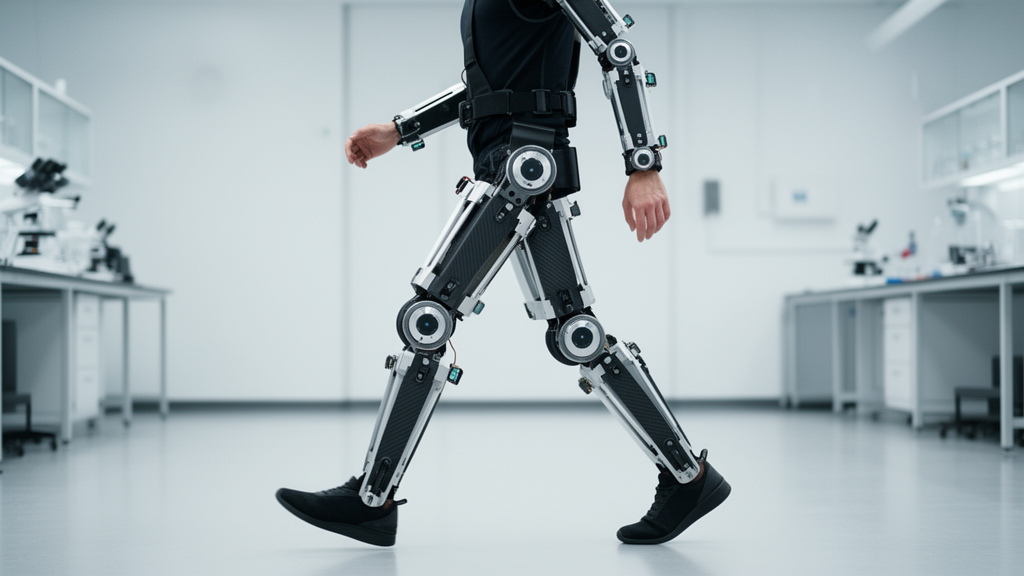
A research team has successfully developed a kinematic-muscular synergy-based framework to evaluate how users interact with upper-limb robotic exoskeletons. The study, published in the Journal of NeuroEngineering and Rehabilitation, utilized the ALEx robotic device to investigate the neural mechanisms of user transparency, which allows individuals to move naturally and remain actively engaged during rehabilitation tasks. The researchers applied a novel approach using kinematic-muscular synergies to compare how these robotic systems integrate with human motor patterns during different operational states.
The study recruited sixteen healthy subjects to perform standardized arm movements across three distinct modalities. These included Free movement, where no robotic interference occurred; Transparent, where the robot was active but provided no assistance; and Assisted, where the robot actively supported the subject’s motion. To capture the full scope of muscular and kinematic activity, the researchers collected data from fifteen electromyographic (EMG) sensors placed on upper-limb and trunk muscles, alongside comprehensive kinematic tracking of the trunk and arm.
Central to the investigation was the use of the Mixed Matrix Factorization (MMF) algorithm, which allowed the team to extract kinematic-muscular synergies. These synergies describe the relationship between muscle activity and the resulting task space performance. By comparing these motor modules across the different modalities, the researchers aimed to establish a neurophysiological indicator of transparency, verifying whether the presence of the exoskeleton fundamentally altered the user’s natural motor control patterns.
Analysis revealed that six distinct synergies were consistently extracted across all three experimental conditions, facilitating a direct comparison of spatial and temporal structures. The research demonstrated that the fundamental organization of motor patterns was largely preserved during interaction with the ALEx system. When subjects moved in the Transparent modality, the spatial and temporal structures maintained high similarity levels, with spatial similarities exceeding 0.85 and temporal similarities over 0.75 compared to free movement.
Similar consistency was observed in the Assisted modality, where spatial similarities remained above 0.90 and temporal components maintained similarities above 0.70. These metrics suggest that the ALEx exoskeleton effectively achieves a high level of user transparency, allowing subjects to maintain their natural movement patterns while the robot is engaged. The findings support the utility of this synergy-based approach in providing a detailed look at how robotic devices interface with human neural control during task execution.
A significant finding emerged when examining the temporal magnitude of muscular effort during the Assisted modality. The researchers registered a decrease in temporal magnitude, with a statistical significance of p = 0.004. This result indicates a measurable reduction in the physical muscular effort required by the subjects when robotic assistance was applied, without compromising the underlying structure of their physiological motor patterns.
Ultimately, the study suggests that the ALEx system provides a well-balanced interaction that supports task performance while preserving essential motor control elements.
Subject of Research: Evaluation of exoskeleton-user interaction transparency using kinematic-muscular synergies
Article Title: A kinematic-muscular synergy-based framework to evaluate user transparency and assistance in human-exoskeleton interaction
Article References: Moscatelli, N., Guanziroli, E., Brambilla, C., Lanzani, V., Specchia, A., Molinari Tosatti, L., Molteni, F., & Scano, A. (2026). A kinematic-muscular synergy-based framework to evaluate user transparency and assistance in human-exoskeleton interaction. Journal of NeuroEngineering and Rehabilitation. https://doi.org/10.1186/s12984-026-02212-2
Image Credits: AI Generated
DOI: 10.1186/s12984-026-02212-2
Keywords: human-exoskeleton interaction, robotic rehabilitation, kinematic-muscular synergies, ALEx exoskeleton, motor control, electromyography, Mixed Matrix Factorization, transparency evaluation, neural mechanisms, robotic assistance, motor recovery, biomechanics, physiological motor patterns, rehabilitation robotics, assistive technology, arm movement, muscular effort, neuroengineering, upper-limb exoskeletons
News Source: Ophelia Keating. (November 17, 2026). New Kinematic Framework Measures User Transparency in Exoskeleton-Assisted Movement. Scienmag.