• HOME
  • NEWS
  • EXPLORE
    • CAREER
      • Companies
      • Jobs
    • EVENTS
    • iGEM
      • News
      • Team
    • PHOTOS
    • VIDEO
    • WIKI
  • BLOG
  • COMMUNITY
    • FACEBOOK
    • INSTAGRAM
    • TWITTER
Wednesday, April 1, 2026
BIOENGINEER.ORG
No Result
View All Result
  • Login
  • HOME
  • NEWS
  • EXPLORE
    • CAREER
      • Companies
      • Jobs
        • Lecturer
        • PhD Studentship
        • Postdoc
        • Research Assistant
    • EVENTS
    • iGEM
      • News
      • Team
    • PHOTOS
    • VIDEO
    • WIKI
  • BLOG
  • COMMUNITY
    • FACEBOOK
    • INSTAGRAM
    • TWITTER
  • HOME
  • NEWS
  • EXPLORE
    • CAREER
      • Companies
      • Jobs
        • Lecturer
        • PhD Studentship
        • Postdoc
        • Research Assistant
    • EVENTS
    • iGEM
      • News
      • Team
    • PHOTOS
    • VIDEO
    • WIKI
  • BLOG
  • COMMUNITY
    • FACEBOOK
    • INSTAGRAM
    • TWITTER
No Result
View All Result
Bioengineer.org
No Result
View All Result
Home NEWS Science News

New guidelines aim treat brain tumors more effectively

Bioengineer by Bioengineer
August 10, 2017
in Science News
Reading Time: 2 mins read
0
Share on FacebookShare on TwitterShare on LinkedinShare on RedditShare on Telegram
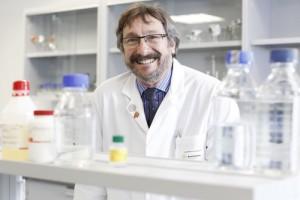
IMAGE

Credit: University of Portsmouth

A University of Portsmouth academic has helped to develop European guidelines to treat brain tumours more effectively.

Geoff Pilkington, Professor of Cellular and Molecular Neuro-oncology and one of the UK's leading brain tumour specialists, was one of only three UK academics who devised the European Association for Neuro-Oncology (EANO) guidelines on the diagnosis and treatment of adult patients with astrocytic and oligodendroglial gliomas, including glioblastomas.

The guidelines provide guidance for diagnostic and management decisions, while limiting unnecessary treatments and costs. They are a resource for professionals involved in the management of patients with glioma, for patients and caregivers and for health-care providers in Europe.

The recommendations discuss prevention, early diagnosis and screening, histological and molecular diagnostics, therapy and follow-up. The authors have also integrated the results from recent clinical trials that have changed clinical practice.

Professor Pilkington, Head of the Brain Tumour Research Centre at the University of Portsmouth, said: "The implementation of this guideline requires multidisciplinary structures of care and defined processes of diagnosis and treatment. It focuses on pathological and radiological diagnostics and the main treatment methods of surgery, radiotherapy and pharmacotherapy.

"For example, the use of prognostic and diagnostic markers such as IDH mutations and MGMT methylation status, may aid in improved therapeutic planning with high grade malignancies."

The guidelines are based on the May 2016 WHO classification of tumours of the central nervous system and on scientific developments since the 2014 guideline.

Professor Pilkington added: "The new guidelines are timely, coming in the wake of the revised WHO classification of tumours of the central nervous system which adds molecular profiling to classical histopathological pattern recognition in order to potentially stratify individual sub-groups of patients to receive more personalised therapies. This, we hope, will lead to improved survival times and improved quality of life, post treatment."

###

Read the EANO guidelines here https://www.eano.eu/eano-guidelines/

Media Contact

Glenn Harris
[email protected]
0239-284-2728

http://www.port.ac.uk

Original Source

http://uopnews.port.ac.uk/2017/08/10/new-guidelines-aim-treat-brain-tumours-more-effectively/

Share12Tweet8Share2ShareShareShare2

Related Posts

Doctors’ Group Submits Legal Petition Urging USDA to Mandate Colorectal Cancer Warnings on Processed Meat

Doctors’ Group Submits Legal Petition Urging USDA to Mandate Colorectal Cancer Warnings on Processed Meat

April 1, 2026

Lack of Access to Dental Care Linked to Increased Risk of Cardiovascular Disease and Dementia

April 1, 2026

Digital Twin Hearts Achieve Perfect Success in Arrhythmia Trial

April 1, 2026

UBC Okanagan Study Reveals How Trees Visually Signal Their Spring Rehydration

April 1, 2026
Please login to join discussion

POPULAR NEWS

  • blank

    Revolutionary AI Model Enhances Precision in Detecting Food Contamination

    96 shares
    Share 38 Tweet 24
  • Imagine a Social Media Feed That Challenges Your Views Instead of Reinforcing Them

    1006 shares
    Share 398 Tweet 249
  • Promising Outcomes from First Clinical Trials of Gene Regulation in Epilepsy

    51 shares
    Share 20 Tweet 13
  • Popular Anti-Aging Compound Linked to Damage in Corpus Callosum, Study Finds

    44 shares
    Share 18 Tweet 11

About

We bring you the latest biotechnology news from best research centers and universities around the world. Check our website.

Follow us

Recent News

Doctors’ Group Submits Legal Petition Urging USDA to Mandate Colorectal Cancer Warnings on Processed Meat

Lack of Access to Dental Care Linked to Increased Risk of Cardiovascular Disease and Dementia

Digital Twin Hearts Achieve Perfect Success in Arrhythmia Trial

Subscribe to Blog via Email

Enter your email address to subscribe to this blog and receive notifications of new posts by email.

Join 78 other subscribers
  • Contact Us

Bioengineer.org © Copyright 2023 All Rights Reserved.

Welcome Back!

Login to your account below

Forgotten Password?

Retrieve your password

Please enter your username or email address to reset your password.

Log In
No Result
View All Result
  • Homepages
    • Home Page 1
    • Home Page 2
  • News
  • National
  • Business
  • Health
  • Lifestyle
  • Science

Bioengineer.org © Copyright 2023 All Rights Reserved.