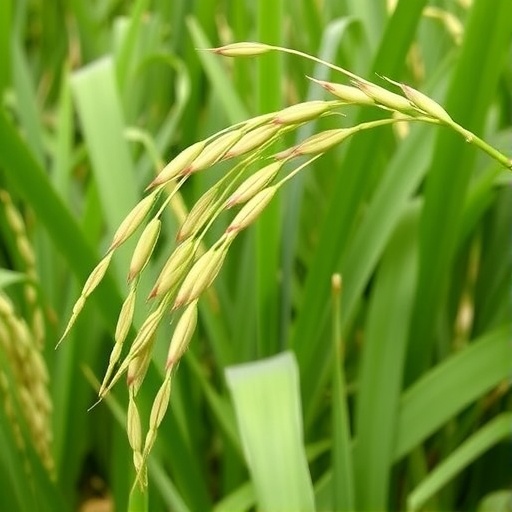
In the ever-evolving realm of agricultural research, one significant breakthrough has emerged in the study of rice genetics, specifically focusing on enhancing resistance to the notorious brown spot disease. Researchers led by Huang et al. have embarked on an ambitious project to dissect the genetic underpinnings that contribute to a plant’s resilience against this devastating pathogen. Their findings promise to substantially influence rice cultivation methods, striding towards a more sustainable and productive agricultural future.
Brown spot, caused by the fungus Bipolaris oryzae, poses a considerable threat to rice crops worldwide. It affects not only plant health but also yields, which has far-reaching implications for food security, especially in regions that rely heavily on rice as a staple grain. The team’s investigation into the genetic factors linked to resistance highlights the intricate relationship between plant genetics and pathogen interaction. In leveraging state-of-the-art genome-wide association studies (GWAS), the researchers have identified previously uncharacterized genetic loci associated with increased resilience to brown spot.
The importance of this study cannot be overstated. Rice is one of the most essential crops globally, feeding more than half of the world’s population. As climate change and pests continue to challenge agricultural systems, enhancing disease resistance through genetic means stands as a promising avenue for maintaining and improving yields. The research sheds light on how specific genetic markers can be utilized in breeding programs to foster stronger rice varieties capable of withstanding brown spot disease.
Through meticulous analysis, Huang and his colleagues have pinpointed several genetic loci that exhibit a significant correlation with brown spot resistance. This form of research not only uncovers critical areas in the rice genome but also enhances our understanding of plant immunity mechanisms. By focusing on the plant’s innate ability to combat diseases, scientists can better innovate strategies for crop protection that rely less on chemical interventions, thereby promoting ecological balance and sustainability.
Moreover, the implications of these findings extend beyond immediate agricultural outcomes. By identifying genetic loci associated with disease resistance, the research paves the way for future work in plant breeding and biotechnology. With precise genomic information, breeders can select and propagate rice varieties that inherently possess resistance traits, ultimately reducing reliance on fungicides and decreasing the environmental footprint of rice production.
The study also delves into the genetic variability present in local and hybrid rice varieties, noting variations in resistance levels among different strains. This insight emphasizes the potential for selective breeding programs to prioritize the integration of these beneficial genetic traits into commercially viable rice varieties. As breeders adopt these genetic markers, the pace of developing resistant strains will accelerate, providing swift responses to the evolving challenges posed by pathogens in the field.
An integral aspect of the research is its emphasis on collaborative approaches involving geneticists, plant pathologists, and agronomists. Each discipline contributes unique insights that deepen the understanding of the host-pathogen relationship, enhancing the overall effectiveness of breeding efforts. By fostering interdisciplinary cooperation, the study signifies a shift in how agricultural science can utilize collective knowledge to confront shared challenges.
Furthermore, by understanding the genetic bases of brown spot resistance, researchers can begin to explore the molecular pathways involved in plant defense mechanisms. This knowledge can lead to the identification of novel targets for genetic manipulation, opening up new possibilities for enhancing resistance against a broader spectrum of pests and diseases. As these pathways become better understood, they offer researchers new avenues for intervention, broadening the scope of genetic engineering in crop improvement.
The repercussions of Huang et al.’s findings resonate well beyond the laboratory, extending to farmer communities who heavily depend on rice cultivation. By integrating novel genetic insights into breeding techniques, rice growers will be equipped with resilient crop varieties that can thrive even under adverse conditions such as disease outbreaks or climate fluctuations. This not only supports local economies but also strengthens food systems against the backdrop of global challenges in agriculture.
As the word spreads about the innovative methods and discoveries made in this study, it is expected to spark further research and discussion in agricultural science forums worldwide. The path-breaking insight gained could encourage a shift away from conventional farming practices towards more sustainable methodologies that prioritize ecological health while ensuring high yields.
Finally, Huang et al.’s work represents a pivotal milestone in the intersection of genetics and agriculture. With ongoing research into the resilience of rice varieties, the global community may one day witness a shift towards a more sustainable and secure agricultural future. This is a crucial step not only in combating current agricultural challenges but also as a proactive measure against the ever-increasing pressures of climate change and food scarcity.
In conclusion, the innovative approach taken by Huang and his team serves as a reminder of the vital role that genetic research plays in solving pressing agricultural problems. Through these findings, a stronger framework for developing resilient rice varieties is being laid, offering hope to farmers, researchers, and consumers alike.
Subject of Research: Rice brown spot disease resistance.
Article Title: Genome-wide association analysis reveals novel genetic loci involved in rice brown spot resistance.
Article References:
Huang, Y., Yang, X., Guo, T. et al. Genome-wide association analysis reveals novel genetic loci involved in rice brown spot resistance. BMC Genomics (2025). https://doi.org/10.1186/s12864-025-12403-1
Image Credits: AI Generated
DOI: 10.1186/s12864-025-12403-1
Keywords: Rice, brown spot disease, genetic loci, genome-wide association study, agricultural research, plant resistance, sustainability, food security.
Tags: agricultural research breakthroughs in geneticsBipolaris oryzae pathogen interactionclimate change impact on rice cropsenhancing crop resilience to diseasesFood security and rice productiongenetic loci identification in ricegenome-wide association studies in agricultureimproving agricultural productivity through geneticsplant genetics and disease resistancerice as a staple grain worldwiderice brown spot disease resistancesustainable rice cultivation methods