Credit: J. Carpenter
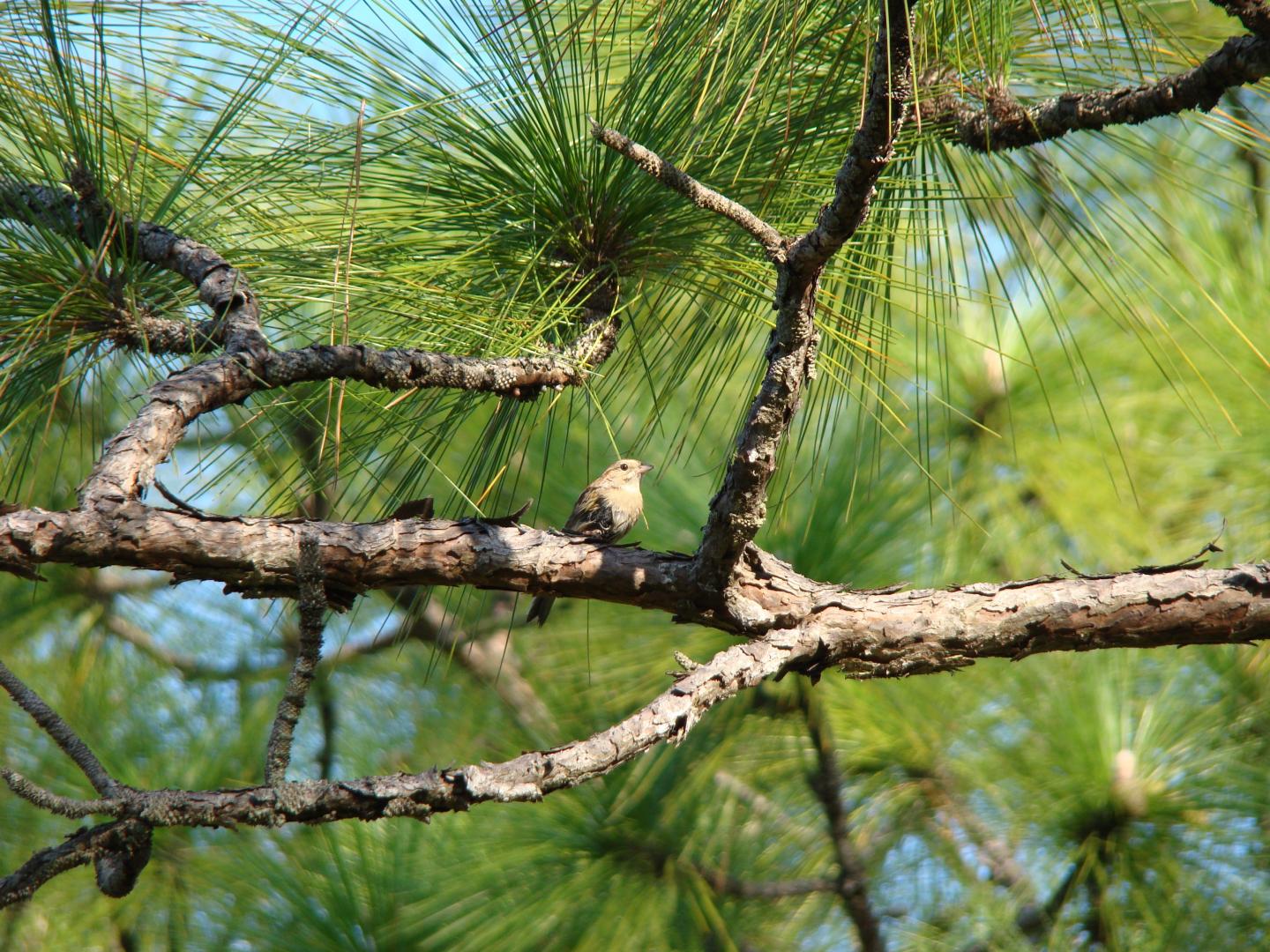
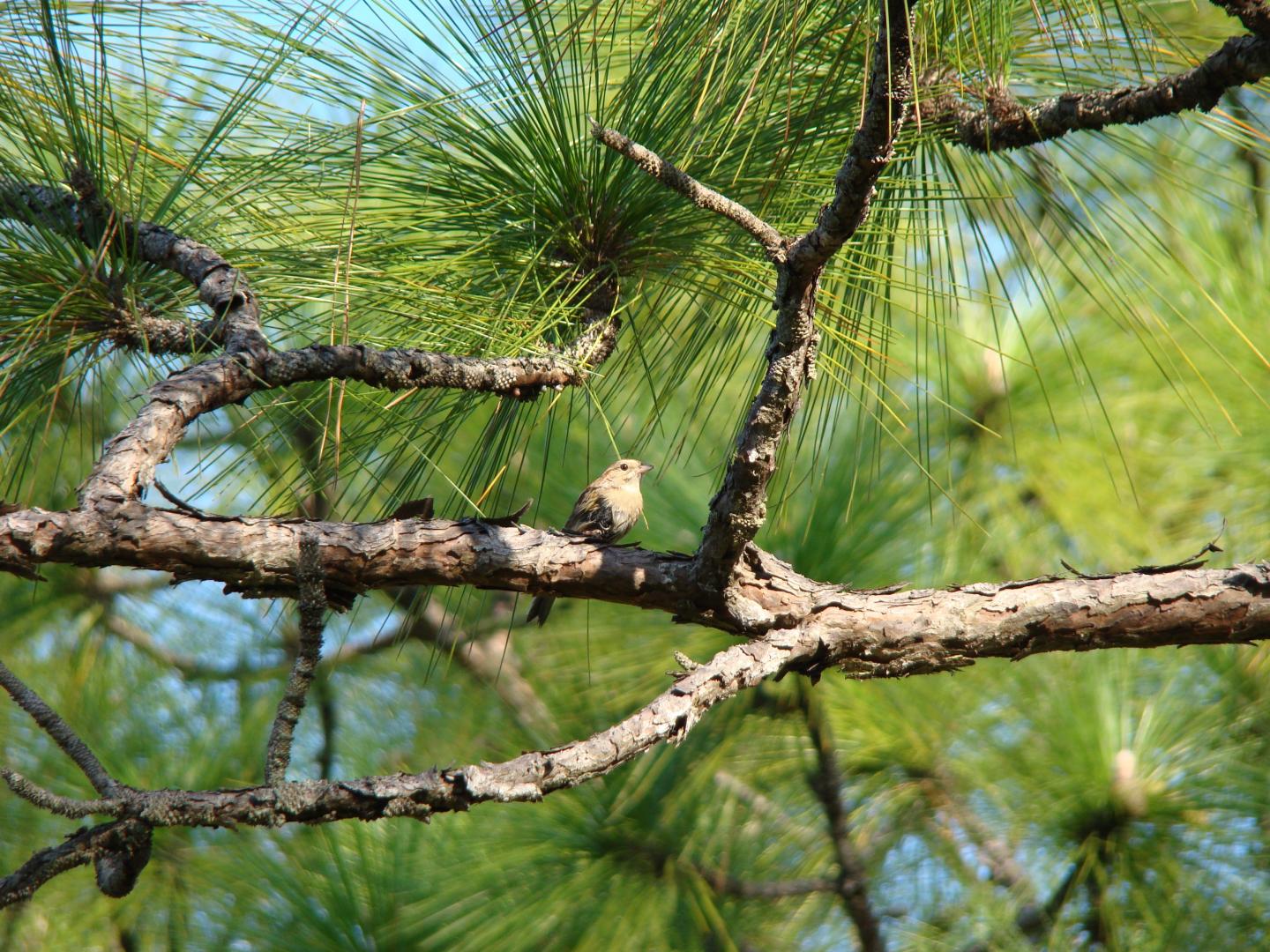
Theory says that birds should choose nest sites that minimize their risk of predation, but studies often fail to show a connection between nest site selection and nest survival. Understanding these relationships can be key for managing declining species, and a new study from The Condor: Ornithological Applications explores the nest site preferences of Bachman's Sparrow, a vulnerable songbird dependent on regularly burned longleaf pine forests in the southeastern U.S.
Jason Winiarski of North Carolina State University and his colleagues monitored a total of 132 Bachman's Sparrow nests in two regions of North Carolina, the Coastal Plain and the Sandhills, measuring a variety of vegetation characteristics. They found several differences between the two regions in what sparrows looked for in a nest site–in the Coastal Plain, they favored low grass density and greater woody vegetation density, while birds in the Sandhills selected intermediate grass density and greater tree basal area. However, none of these features turned out to be related to nest survival.
According to the researchers, the differences between the two regions are likely due to differences in the available plant communities. Bachman's Sparrows also could be selecting nest sites that allow easy access to nests or maximize the survival of fledglings once they leave, and these aspects may warrant further investigation. Regardless, Winiarski and his colleagues believe their results show the importance of management that mimics historical fire regimes in longleaf pine ecosystems, in order to maintain the diverse groundcover types used by the birds.
The most challenging part of the study was locating sparrow nests to monitor. "Bachman's Sparrows are notoriously secretive and don't easily give up the location of their well-hidden nests," says Winiarski. "Eventually, we stumbled upon a technique of patiently watching adult sparrows at a distance that allowed the birds to behave normally, while being close enough for us to just barely see where they landed with food or nest material. That let us narrow down where the nest site was to within a few meters, and luck and thorough searching led us the rest of the way."
"It is really remarkable that the authors were able to track the large number of Bachman's Sparrow nests that they were able to find. As someone who has searched and searched for nests of this species, it is really hard," according to Purdue University's John Dunning, an expert on Bachman's Sparrow ecology who was not involved with the research. "The study shows how consistent management of vegetation structure through the use of prescribed fire remains the most important management and conservation strategy to support breeding populations of Bachman's Sparrow."
###
"Nest-site selection and nest survival of Bachman's Sparrows in two longleaf pine communities" will be available May 31, 2017, at http://americanornithologypubs.org/doi/abs/10.1650/CONDOR-16-220.1 (issue URL http://americanornithologypubs.org/toc/cond/119/3).
About the journal: The Condor: Ornithological Applications is a peer-reviewed, international journal of ornithology. It began in 1899 as the journal of the Cooper Ornithological Club, a group of ornithologists in California that became the Cooper Ornithological Society, which merged with the American Ornithologists' Union in 2016 to become the American Ornithological Society.
Media Contact
Rebecca Heisman
[email protected]
http://americanornithologypubs.org/
############
Story Source: Materials provided by Scienmag