• HOME
  • NEWS
  • EXPLORE
    • CAREER
      • Companies
      • Jobs
    • EVENTS
    • iGEM
      • News
      • Team
    • PHOTOS
    • VIDEO
    • WIKI
  • BLOG
  • COMMUNITY
    • FACEBOOK
    • INSTAGRAM
    • TWITTER
Thursday, March 26, 2026
BIOENGINEER.ORG
No Result
View All Result
  • Login
  • HOME
  • NEWS
  • EXPLORE
    • CAREER
      • Companies
      • Jobs
        • Lecturer
        • PhD Studentship
        • Postdoc
        • Research Assistant
    • EVENTS
    • iGEM
      • News
      • Team
    • PHOTOS
    • VIDEO
    • WIKI
  • BLOG
  • COMMUNITY
    • FACEBOOK
    • INSTAGRAM
    • TWITTER
  • HOME
  • NEWS
  • EXPLORE
    • CAREER
      • Companies
      • Jobs
        • Lecturer
        • PhD Studentship
        • Postdoc
        • Research Assistant
    • EVENTS
    • iGEM
      • News
      • Team
    • PHOTOS
    • VIDEO
    • WIKI
  • BLOG
  • COMMUNITY
    • FACEBOOK
    • INSTAGRAM
    • TWITTER
No Result
View All Result
Bioengineer.org
No Result
View All Result
Home NEWS Science News Stem Cells

New Biological Scaffold for Stem Cells

Bioengineer by Bioengineer
February 26, 2014
in Stem Cells, Tissue Engineering
Reading Time: 2 mins read
1
Share on FacebookShare on TwitterShare on LinkedinShare on RedditShare on Telegram

Our cells don’t live in a vacuum. They are surrounded by a complex, nurturing matrix that is essential for many biological functions, including growth and healing.
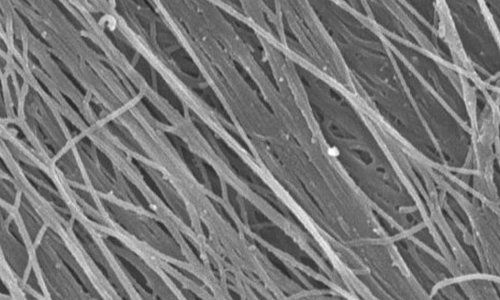
New Biological Scaffold for Stem Cells

In all multicellular organisms, including people, cells make their own extracellular matrix. But in the lab, scientists attempting to grow tissue must provide a scaffold for cells to latch onto as they grow and proliferate. This engineered tissue has potential to repair or replace virtually any part of our bodies.

Typically, researchers construct scaffolds from synthetic materials or natural animal or human substances. All have their strengths and weaknesses, but no scaffolds grown in a Petri dish have been able to mimic the highly organized structure of the matrix made by living things, at least until now.

Feng Zhao of Michigan Technological University has persuaded fibroblasts, cells that makes the extracellular matrix, to make just such a well-organized scaffold. Its fibres are a mere 80 nanometers across, similar to fibres in a natural matrix. And, since her scaffold is made by cells, it is composed of the same intricate mix of all-natural proteins and sugars found in the body. Plus, its nanofibres are as highly aligned as freshly combed hair.

The trick was to orient the cells on a nano-grate that guided their growth—and the creation of the scaffold.

“The cells did the work,” Zhao said. “The material they made is quite uniform, and of course it is completely biological.”

Stem cells placed on her scaffold thrived, and it had the added advantage of provoking a very low immune response.

“We think this has great potential,” she said. “I think we could use this to engineer softer tissues, like skin, blood vessels and muscle.”

Story Source:

The above story is based on materials provided by Michigan Technological University.
Share14Tweet9Share2ShareShareShare2

Related Posts

Human stem cells treat spinal cord injury side effects in mice

October 4, 2016

Research into fly development provides insights into blood vessel formation

September 30, 2016

Fertility genes required for sperm stem cells

September 28, 2016

Regulatory RNA essential to DNA damage response

September 27, 2016
Please login to join discussion

POPULAR NEWS

  • blank

    Revolutionary AI Model Enhances Precision in Detecting Food Contamination

    96 shares
    Share 38 Tweet 24
  • Imagine a Social Media Feed That Challenges Your Views Instead of Reinforcing Them

    1003 shares
    Share 397 Tweet 248
  • Uncovering Functions of Cavernous Malformation Proteins in Organoids

    54 shares
    Share 22 Tweet 14
  • Promising Outcomes from First Clinical Trials of Gene Regulation in Epilepsy

    51 shares
    Share 20 Tweet 13

About

We bring you the latest biotechnology news from best research centers and universities around the world. Check our website.

Follow us

Recent News

In-Sensor Cryptography Links Physical Process to Digital Identity

Can Psychosocial Factors Influence Cancer Risk?

Depression Factors in Elderly: Pre vs. Post-COVID Analysis

Subscribe to Blog via Email

Success! An email was just sent to confirm your subscription. Please find the email now and click 'Confirm' to start subscribing.

Join 78 other subscribers
  • Contact Us

Bioengineer.org © Copyright 2023 All Rights Reserved.

Welcome Back!

Login to your account below

Forgotten Password?

Retrieve your password

Please enter your username or email address to reset your password.

Log In
No Result
View All Result
  • Homepages
    • Home Page 1
    • Home Page 2
  • News
  • National
  • Business
  • Health
  • Lifestyle
  • Science

Bioengineer.org © Copyright 2023 All Rights Reserved.