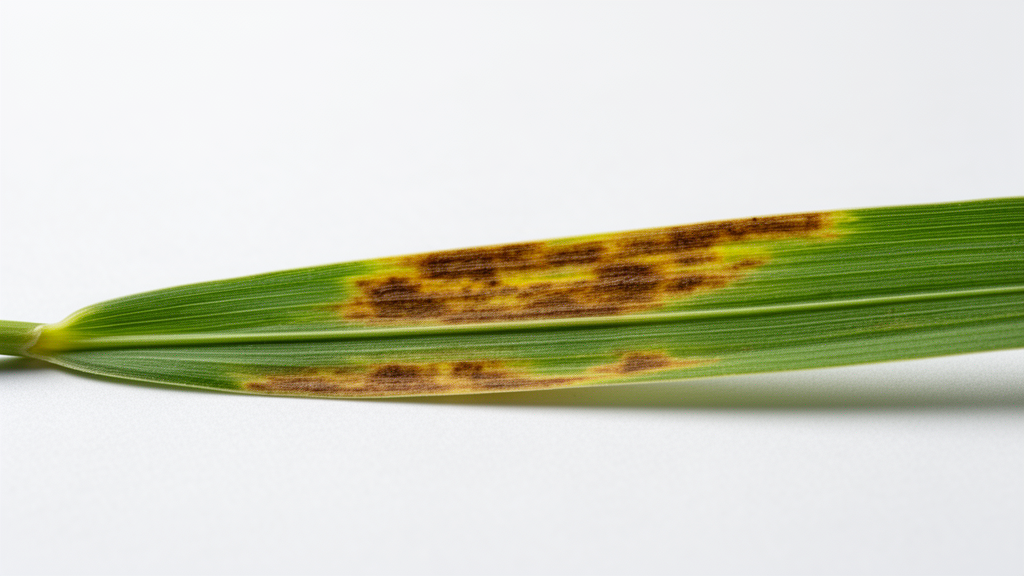
Researchers from Koneru Lakshmaiah Education Foundation in India have developed a lightweight deep learning architecture named ACCM-Net, designed to classify wheat leaf diseases with high precision. The study, published in Frontiers in Artificial Intelligence, presents a fusion model that combines adaptive image preprocessing with attention-based feature refinement to address the challenges of visually similar early-stage infection symptoms. The primary goal of the research was to create a practical tool for agricultural diagnostics that can distinguish between healthy wheat leaves, Septoria tritici blotch, and Stripe rust, which are two of the most economically damaging fungal pathogens in wheat crops.
The development of ACCM-Net was driven by the limitations of existing deep learning approaches in handling class imbalance, complex lesion patterns, and non-uniform field conditions. Manual identification of these diseases is often difficult because early infection stages present visually similar symptoms, such as yellowing, spotting, or necrotic lesions, which can lead to ambiguous field-based diagnoses. The authors noted that previous models often struggled with the subtle differences between Septoria and Stripe rust, particularly when imaging conditions varied due to uneven illumination, leaf folding, or background artifacts. To overcome these obstacles, the new architecture focuses on improving the discriminative features of leaf images rather than simply building deeper or more complex networks.
The core of the ACCM-Net architecture is a frozen MobileNetV2 backbone, a type of convolutional neural network known for its balance between accuracy and computational efficiency. By freezing the weights of the MobileNetV2 layers, the model retains critical visual features such as edge orientation and textures while reducing the number of trainable parameters. This approach helps minimize overfitting, which is a common issue when training deep learning models on small agricultural datasets. The frozen backbone is followed by a Convolutional Block Attention Module, or CBAM, which refines the feature maps by modeling both channel and spatial attention. This dual-stage refinement allows the network to adaptively emphasize meaningful channels and spatial regions, focusing on discriminative disease symptoms like fungal lesion patterns and localized discoloration.
Before the images are fed into the neural network, they undergo a three-stage preprocessing pipeline designed to enhance disease-discriminative features. The first stage involves transforming the images from the RGB color space to the CIELAB space, which separates luminance from color information. The luminance channel is then enhanced using Contrast Limited Adaptive Histogram Equalization, or CLAHE, to improve local contrast in leaf tissues affected by disease. In the second and third stages, the enhanced image is converted to grayscale, and Sobel operators are applied to extract horizontal and vertical gradients. The resulting edge magnitude map serves as the final input to the classifier, emphasizing lesion boundaries and diseased regions while suppressing background noise.
The model was evaluated on a dataset of 407 original wheat leaf images sourced from Kaggle. The dataset comprised three classes: Healthy, Septoria tritici blotch, and Stripe rust. The original distribution was imbalanced, with 102 healthy images, 97 Septoria images, and 208 Stripe rust images. To mitigate this imbalance, the researchers applied controlled augmentation to the training set, generating synthetic instances for the minority classes. The training set was balanced to 200 images per class, while a separate test set of 40 images was constructed using stratified sampling before any augmentation was applied. This strict separation ensured that the test data remained isolated from the augmented training data, preventing data leakage and ensuring a fair evaluation of the model’s generalization capabilities.
ACCM-Net demonstrated superior performance compared to several baseline and pre-trained models, including MobileNetV2, InceptionV3, NASNetMobile, VGG19, SqueezeNet, and a baseline CNN trained from scratch. The model attained an overall accuracy of 97.56%, an F1-score of 97.60%, a sensitivity of 98.41%, and a specificity of 98.92%. These results indicate that the combination of contrast enhancement, attention mechanisms, and adaptive learning techniques significantly enhances classification accuracy. The next best-performing models, MobileNetV2 and InceptionV3, achieved an accuracy of 0.95, while the baseline CNN trained from scratch performed the worst with only 0.67 accuracy, highlighting the importance of pre-trained backbones and attention mechanisms in small-sample agricultural image datasets.
An ablation study was conducted to quantify the contribution of each component of the ACCM-Net architecture. Starting with the MobileNetV2 baseline, which achieved an accuracy of 87.56%, the addition of CLAHE preprocessing increased the accuracy to 90.23%. Further enhancement with Sobel edge detection raised the accuracy to 92.50%, and the inclusion of the CBAM attention module boosted it to 95.00%. The final addition of the adaptive learning rate strategy yielded the full ACCM-Net model, which reached the peak accuracy of 97.56%. This progressive improvement demonstrates that each component of the pipeline plays a distinct role in enhancing the model’s ability to distinguish between the three wheat leaf classes.
To assess the stability of the model’s performance, the researchers conducted five independent training runs using different random seeds. Across these runs, the network demonstrated an average accuracy of 97.50% with a standard deviation of 1.77%, and an average F1-score of 97.15% with a standard deviation of 2.12%. The consistency of these results suggests that the model is robust to variations in initialization. Additionally, the computational efficiency of ACCM-Net was evaluated, revealing that the model has approximately 3.98 million parameters and offers an inference time of 40.58 milliseconds per image on the experimental workstation. This compact architecture makes it a potential candidate for future edge-oriented deployment on handheld or sensor-enabled devices, although hardware-specific validation remains a direction for future work.
Interpretability is a crucial aspect of diagnostic tools, and the authors applied Gradient-weighted Class Activation Mapping, or Grad-CAM, to visualize the regions of the input images that influenced the model’s predictions. The heatmaps indicated that the model generally focused on biologically meaningful regions of the wheat leaf surface, such as the areas with visible lesions. In most correctly classified samples, the activation maps were concentrated on the disease-related parts of the leaves, whereas in misclassified or low-confidence samples, the concentration of activations was less clear. This qualitative analysis supports the claim that ACCM-Net provides interpretable predictions, which is essential for gaining trust in agricultural diagnostic applications.
Despite the strong performance metrics, the authors acknowledge several limitations of the study. The dataset used for evaluation was relatively small, consisting of only 407 original images, and the independent test set contained just 40 images. The near-perfect ROC-AUC and Precision-Recall metrics should therefore be interpreted with caution, as they may not fully reflect the model’s performance on larger and more varied external datasets. The authors emphasize that generalizability and robustness cannot be verified solely based on the current evaluation results. Future research should include large-scale datasets from multiple locations and seasons, as well as various environmental conditions and image acquisition technologies, to further validate the model’s effectiveness in real-world field settings.
The study also highlights the broader context of wheat disease management, noting that Septoria tritici blotch and Stripe rust are among the most widespread and damaging fungal pathogens globally. These diseases can cause significant yield losses depending on the onset time and intensity of the outbreak, imposing heavy economic burdens on farmers and governments. The visual similarity of their early-stage symptoms makes them particularly challenging for both human agronomists and AI models. By providing a lightweight and interpretable classification pipeline, ACCM-Net offers a promising solution for early detection and precision treatment planning, potentially aiding in the mitigation of these economic losses.
The integration of adaptive preprocessing with dynamic attention-based feature enhancement represents a pragmatic approach to improving the discriminative power of deep learning models in agricultural contexts. Rather than relying on brute-force deep models, ACCM-Net focuses on learning stability, amplification of feature selection, and adaptive preprocessing. This design philosophy makes the model efficient even when training samples and computational resources are scarce.
In conclusion, ACCM-Net presents a significant step forward in the automated diagnosis of wheat leaf diseases. By combining adaptive CLAHE and Sobel-based preprocessing with a frozen MobileNetV2 backbone and CBAM attention modules, the model achieves high classification accuracy while maintaining interpretability and computational efficiency. The results demonstrate that careful attention to image enhancement and feature refinement can lead to substantial improvements in performance, even on small and imbalanced datasets. As the demand for precision agriculture tools continues to grow, architectures like ACCM-Net may play a vital role in enabling real-time, non-invasive, and scalable disease detection in the field.
Subject of Research: ACCM-Net: an adaptive CLAHE-CBAM-MobileNet architecture for wheat leaf disease classification
Article Title: ACCM-Net: an adaptive CLAHE-CBAM-MobileNet architecture for wheat leaf disease classification
Article References: M, V. S. S. B., Kotamraju, S. K., & K. Ch., S. K. (2026). ACCM-Net: an adaptive CLAHE-CBAM-MobileNet architecture for wheat leaf disease classification. Frontiers in Artificial Intelligence, 9, Article 1951827. https://doi.org/10.3389/frai.2026.1951827
Image Credits: AI Generated
DOI: 10.3389/frai.2026.1951827
Keywords: ACCM-Net, adaptive, CLAHE-CBAM-MobileNet, architecture, wheat, leaf, disease, classification, scientific research
News Source: Alan Morgan. (November 8, 2026). New AI Model Classifies Wheat Leaf Diseases with High Accuracy. Scienmag.