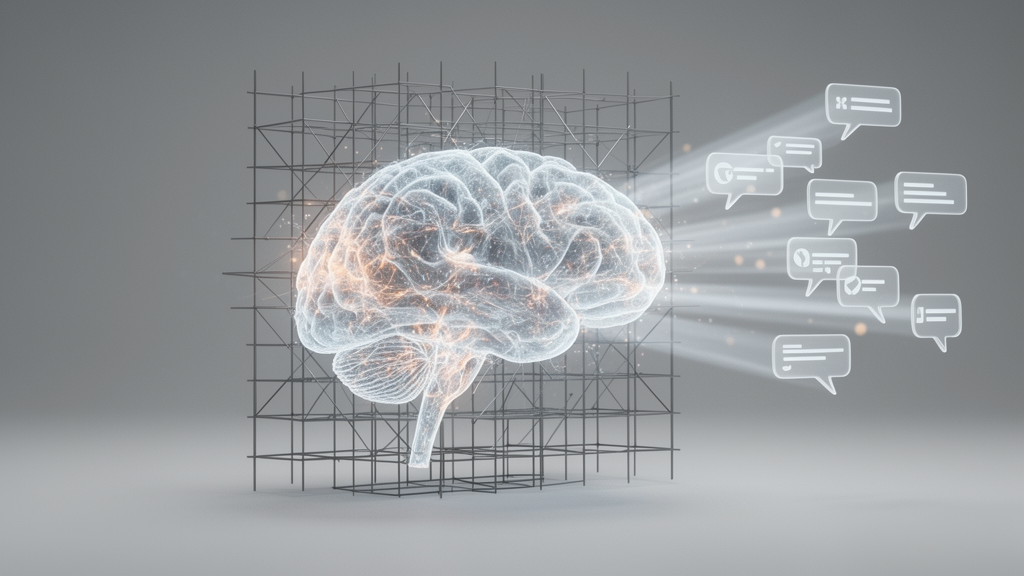
Researchers have introduced Note2Narr, a neuro-symbolic multi-agent framework designed to formalize clinical guidelines and synthesize high-fidelity counseling training narratives from sparse counselor notes. The system was developed to provide high-quality, privacy-compliant dialogue data for training and evaluating computational screening models, addressing limitations in earlier synthetic datasets that lacked the contextual nuance and diagnostic consistency required to preserve clinically relevant psychological signals.
To structure the synthetic interactions, Note2Narr formalizes clinical procedures within a simulated professional collaboration between an automated counselor and a supervisor. A Dynamic Counseling Tree establishes a hierarchical guide that directs the simulated counselor’s questioning from broad topical exploration to in-depth probing of personal experiences. Concurrently, a Supervisor Agent equipped with a Chain of Psychological Clues tracks diagnostic signals while auditing the generated dialogues for safety and clinical consistency.
The framework also incorporates components designed to enhance narrative variation and contextual realism without introducing clinical bias. A Fictional Detail Generator integrates diverse, disorder-neutral personal experiences into the dialogues. In addition, rather than relying on conventional fixed-ratio data augmentation, Note2Narr uses an adaptive one-to-X strategy guided by Vendi Scores to dynamically optimize the diversity and allocation of narrative variants generated from the sparse source records.
Evaluation of the framework incorporated automated large language model assessments, blinded human reviews, downstream prediction experiments, and label-leakage audits. In comparisons with unconstrained large language models, Note2Narr demonstrated significant improvements in clinical consistency and narrative quality, particularly across measures of faithfulness and comprehensiveness.
The research was conducted by Hanrui Chen, Cheng Yang, Jiong Lin, Beining Wu, Hanyin Zhang, and corresponding author Fu Li at Hangzhou Dianzi University, collaborating with Yilin Hu from Zhejiang University of Technology in Hangzhou, China. Published as an original research article in Frontiers in Psychiatry within the Computational Psychiatry section, the paper completed formal peer review following submission on 25 July 2026 and acceptance on 09 September 2026. The authors framed the investigation around controllable dialogue synthesis and neuro-symbolic reasoning, targeting early identification of mental health risks among university students. Under open-access distribution through a Creative Commons Attribution License, the work contributes a clinically annotated corpus designed specifically for privacy-conscious dialogue modeling and computational screening research.
Subject of Research: Synthetic dialogue generation for university student mental health screening
Article Title: Note2Narr: a neuro-symbolic multi-agent system for synthesizing high-fidelity training narratives from sparse counselor notes
Article References: Chen, H., Yang, C., Hu, Y., Lin, J., Wu, B., Zhang, H., & Li, F. (2026). Note2Narr: a neuro-symbolic multi-agent system for synthesizing high-fidelity training narratives from sparse counselor notes. Frontiers in Psychiatry, 17, Article 1948130. https://doi.org/10.3389/fpsyt.2026.1948130
Image Credits: AI Generated
DOI: 10.3389/fpsyt.2026.1948130
Keywords: computational psychiatry, neuro-symbolic systems, dialogue synthesis, mental health screening, multi-agent systems, university students, natural language processing, clinical text, Note2Narr, neuro-symbolic, multi-agent, system
News Source: Glenn Wilkins. (November 12, 2026). Neuro-Symbolic System Generates Realistic Counseling Dialogues from Sparse Student Notes. Scienmag.