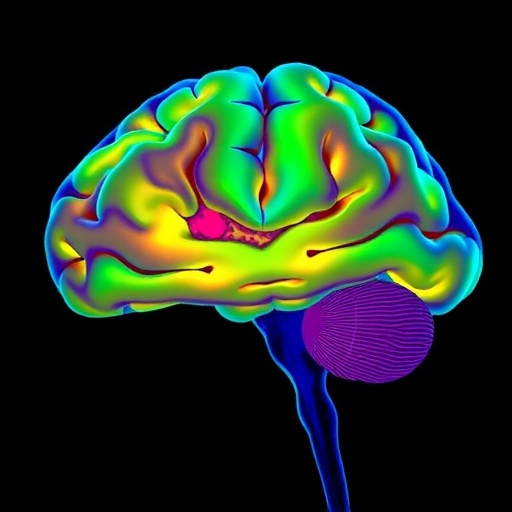
- Brain regions associated with short-term memory, self and negative emotions are strongly connected in depression sufferers and may lead to bad sleep quality
- Researchers analysed data from 10,000 people to examine mechanisms underlying relation between depression and poor sleep
- 75% of depression sufferers report poor sleep quality – new research could lead to improved sleep and even to new targeted treatments for condition
The neural link between depression and sleep problems has been identified for the first time in a new study by researchers at the University of Warwick (UK) and Fudan University (China).
Professor Jianfeng Feng and Professor Edmund Rolls from Warwick's Department of Computer Science, with Dr. Wei Cheng from Fudan University, found functional connectivity between the areas of the brain associated with short-term memory, self, and negative emotions – causing sufferers to dwell on bad thoughts and leading to a poor quality of sleep.
This research could lead to better sleep quality for people with depression, and opens up the possibility of new targeted treatments.
Analysing data from around 10,000 people, the researchers examined the neural mechanisms underlying the relation between depression and quality of sleep.
In the brains of those living with depressive problems, they discovered a strong connection between the dorsolateral prefrontal cortex (associated with short-term memory), the precuneus (associated with the self) and the lateral orbitofrontal cortex (associated with negative emotion).
The analysis showed that these functional connectivities underlie the relation between depressive problems and sleep quality.
The researchers conclude that increased functional connectivity between these brain regions provides a neural basis for how depression is related to poor sleep quality.
Professor Jianfeng Feng, from the University of Warwick's Department of Computer Science, said:
"The understanding that we develop here is consistent with areas of the brain involved in short-term memory (the dorsolateral prefrontal cortex), the self (precuneus), and negative emotion (the lateral orbitofrontal cortex) being highly connected in depression, and that this results in increased ruminating thoughts which are at least part of the mechanism that impairs sleep quality."
Professor Edmund Rolls also commented: "This study may also have implications for a deeper understanding of depression. This important cross-validation with participants from the USA provides support for the theory that the lateral orbitofrontal cortex is a key brain area that might be targeted in the search for treatments for depression."
Professor Jianfeng Feng comments that these findings could have important public health implications, as both sleep problems and depression affect a large number of people. He commented:
"In today's world, poor sleep and sleep deprivation have become common problem affecting more than a third of the world's population due to the longer work hours and commuting times, later night activity, and increased dependency on electronics. The disorder of insomnia has become the second most prevalent mental disorder."
"And major depressive disorder is also ranked by the World Health Organization as the leading cause of years-of-life lived with disability. According to a recent statistic, it affects approximately 216 million people (3% of the world's population). So almost everyone in the world is related to these two problems, as a sufferer or a relative of a sufferer."
Professor Jianfeng Feng further commented: "The relation between depression and sleep has been observed more than one hundred years, and now we have identified the neural mechanisms of how they are connected for the first time. These findings provide a neural basis for understanding how depression relates to poor sleep quality, and this in turn has implications for treatment of depression and improvement of sleep quality because of the brain areas identified."
Depression and sleep problems often go hand-in-hand. About 75% of depressed patients report significant levels of sleep disturbance, such as difficulty of falling asleep and short duration of sleep (insomnia). People with insomnia also have a higher risk of developing depression and anxiety than those who sleep normally.
###
Notes to editors:
The research, 'Functional Connectivities in the Brain That Mediate the Association Between Depressive Problems and Sleep Quality', is published in JAMA Psychiatry and is authored by Professor Jianfeng Feng, Professor Edmund Rolls and Dr Wei Cheng.
Media Contact
Luke Walton
[email protected]
44-782-454-0863
@warwicknewsroom
http://www.warwick.ac.uk