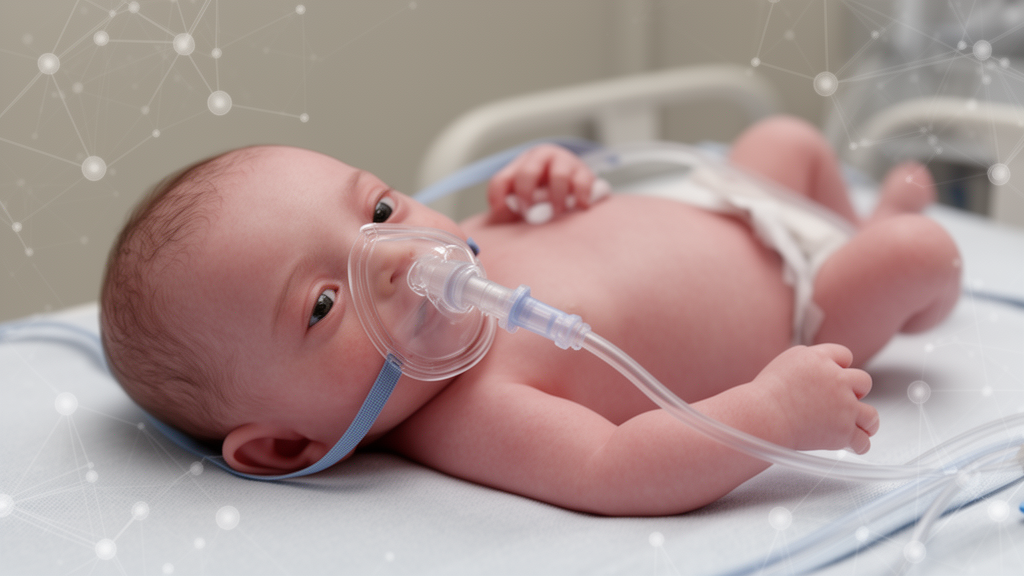
A network meta-analysis published in Frontiers in Pediatrics has compared five noninvasive respiratory support strategies for very preterm infants, finding that nasal intermittent positive pressure ventilation (NIPPV) and nasal high-frequency oscillatory ventilation (NHFOV) are associated with lower risks of treatment failure or endotracheal intubation compared to nasal continuous positive airway pressure (NCPAP). The study, led by researchers from Lanzhou University Second Hospital in China, synthesized data from nine randomized controlled trials involving 1,449 preterm infants. While the findings suggest potential respiratory benefits for avoiding treatment escalation, the authors emphasize that these results do not establish equivalent efficacy or safety across all modes, particularly regarding long-term outcomes like bronchopulmonary dysplasia or mortality.
The optimal strategy for supporting the breathing of very preterm infants, defined as those born before 32 weeks of gestation, remains a significant clinical challenge. These infants are highly susceptible to respiratory distress syndrome due to pulmonary immaturity and surfactant deficiency. While invasive mechanical ventilation can effectively improve gas exchange, it is associated with complications such as bronchopulmonary dysplasia and neurodevelopmental impairment. Consequently, clinical guidelines recommend the early use of noninvasive respiratory support to avoid the harms of invasive ventilation whenever possible. The five modes evaluated in this analysis are NCPAP, NIPPV, NHFOV, high-flow nasal cannula (HFNC), and noninvasive neurally adjusted ventilatory assist (NIV-NAVA).
The research team conducted a systematic review and network meta-analysis registered with PROSPERO, adhering to PRISMA 2020 guidelines. They searched multiple databases, including PubMed, Cochrane Library, Embase, Web of Science, and CINAHL, for randomized controlled trials published up to March 19, 2026. After screening 17,896 records and removing duplicates, the authors identified 179 records for full-text assessment. Ultimately, nine trials were included in the final analysis, comprising 1,449 infants in the reported analysis populations. Eight of these trials evaluated early respiratory support, while one trial, ENTARES, enrolled infants after at least 48 hours of stability on noninvasive support.
The primary efficacy outcomes assessed were treatment failure or endotracheal intubation, bronchopulmonary dysplasia (BPD), and mortality. Safety outcomes included retinopathy of prematurity, patent ductus arteriosus, necrotizing enterocolitis (NEC), intraventricular hemorrhage (IVH), and air leak syndrome. The analysis used a frequentist multivariate random-effects model to estimate relative risks (RR) with 95% confidence intervals (CI). The network was centered on NCPAP, with all five interventions connected, allowing for both direct and indirect comparisons. The authors noted that definitions and assessment periods for outcomes varied across the included trials, which limits the precision of the pooled estimates.
Regarding treatment failure or intubation, NIPPV was associated with a significantly lower risk compared to NCPAP, with a relative risk of 0.47 (95% CI 0.34 to 0.65). NHFOV also showed a lower risk than NCPAP, with an RR of 0.62 (95% CI 0.43 to 0.91). NIPPV was further associated with a lower risk of treatment failure or intubation compared to HFNC, with an RR of 0.53 (95% CI 0.29 to 0.98). However, this difference between NIPPV and HFNC was not maintained when the trial evaluating support after stabilization was excluded from the analysis. No significant differences were observed for NIV-NAVA or HFNC when compared directly to NCPAP for this primary outcome.
Surface under the cumulative ranking curve (SUCRA) values were used to rank the interventions for reducing treatment failure or intubation. NIPPV ranked highest with a SUCRA value of 90.2%, followed by NHFOV at 64.9%, NIV-NAVA at 47.0%, HFNC at 31.8%, and NCPAP at 16.2%. The authors caution that while higher SUCRA values indicate more favorable rankings, they do not establish superiority or compensate for sparse evidence. The rankings must be interpreted within the constraints of the network, including the limited number of trials and the uneven distribution of comparisons.
For bronchopulmonary dysplasia and mortality, no statistically significant differences were observed among the four modes evaluated: NCPAP, NIPPV, NHFOV, and HFNC. Compared with NCPAP, the relative risks for BPD were 0.84 for NIPPV, 0.72 for NHFOV, and 0.82 for HFNC, all with confidence intervals that included 1. Similarly, for mortality, the relative risks were 0.69 for NIPPV, 0.74 for NHFOV, and 0.80 for HFNC, none of which reached statistical significance. The authors note that the absence of a demonstrated BPD or survival benefit requires a different interpretation from the short-term respiratory findings, as BPD reflects cumulative effects of oxygen exposure and mechanical injury that may not be fully captured by early intubation avoidance.
In terms of safety outcomes, NIPPV was associated with a lower risk of necrotizing enterocolitis compared to NCPAP, with an RR of 0.60 (95% CI 0.37 to 0.97). However, the authors describe this finding as exploratory due to differences in reported NEC severity thresholds across the trials. No significant differences were found for other safety outcomes, including intraventricular hemorrhage, retinopathy of prematurity, patent ductus arteriosus, and air leak syndrome. For IVH, the pooled estimate combined different severity categories, and the confidence intervals did not exclude clinically important differences, preventing a definitive conclusion about the safety of any specific mode regarding intracranial bleeding.
The certainty of evidence for the comparisons was assessed using the CINeMA framework. For treatment failure or intubation, the comparisons of NIPPV versus NCPAP and NHFOV versus NCPAP were provisionally rated as low certainty, while other comparisons were rated as very low certainty. Overall ratings were left unassigned for many comparisons involving BPD, retinopathy of prematurity, patent ductus arteriosus, and NEC because the extracted outcomes did not represent sufficiently consistent clinical definitions. The authors emphasize that these incomplete assessments limit the strength of conclusions, even when individual confidence intervals exclude the null value.
Limitations of the study include the small number of trials and the uneven distribution of comparisons across the network. The trials enrolled broader preterm populations rather than exclusively infants born before 32 weeks, and data were extracted from the overall trial populations without restriction to a separate subgroup. This means the analysis addresses a broader population than originally specified and cannot fully resolve the evidence gap for extremely preterm infants. Additionally, the grouping of synchronized and nonsynchronized NIPPV within one node estimates an average effect across different implementations, which may mask specific benefits or risks associated with synchronization. The authors note that exclusion of individual trials cannot isolate the effect of synchronization because other study characteristics also differ.
The findings are consistent with previous Cochrane reviews that suggested benefits of NIPPV and noninvasive high-frequency ventilation for treatment failure and endotracheal ventilation. However, the present estimates should be interpreted within the clinical circumstances in which the interventions were tested. The physiological differences between modes, such as the addition of intermittent inflations in NIPPV or oscillations in NHFOV, offer plausible explanations for the observed respiratory benefits. Nevertheless, the analysis cannot separate the effects of the mode from those of its delivery, including factors like achieved pressures, inspiratory time, and interface leakage.
The authors conclude that while NIPPV and NHFOV show potential advantages for avoiding treatment escalation, the network does not establish a universally preferred strategy. Clinical decisions should take into account individual patient conditions, available equipment, and team expertise. Future research should prioritize multicenter trials that distinguish the respiratory mode from the way it is delivered, with adequate representation of infants born before 32 weeks. Such trials should report achieved pressures, synchronization, and rescue pathways, and evaluate early support, post-extubation support, and transition after stabilization separately to provide more definitive evidence for clinical practice.
This study highlights the complexity of choosing noninvasive respiratory support for very preterm infants. While the network meta-analysis provides valuable insights into the relative risks of treatment failure and intubation, the lack of significant differences in major morbidity and mortality outcomes underscores the need for further investigation. The findings suggest that NIPPV and NHFOV may be considered in appropriate clinical settings, but the low certainty of evidence and variability in outcome definitions require cautious interpretation. As neonatal care continues to evolve, standardized outcomes and larger, well-designed trials will be essential to determine the most effective and safe respiratory support strategies for the most vulnerable preterm infants.
Subject of Research: Comparative efficacy and safety of noninvasive respiratory support in very preterm infants (<32 weeks' gestation): a network meta-analysis
Article Title: Comparative efficacy and safety of noninvasive respiratory support in very preterm infants (<32 weeks' gestation): a network meta-analysis
Article References: Huo, S., Wang, F., Zhao, Y., Chai, L., He, X., Guo, J., Yang, X., Li, Z., & Dou, X. (2026). Comparative efficacy and safety of noninvasive respiratory support in very preterm infants (<32 weeks' gestation): a network meta-analysis. Frontiers in Pediatrics, 14, Article 1928134. https://doi.org/10.3389/fped.2026.1928134
Image Credits: AI Generated
DOI: 10.3389/fped.2026.1928134
Keywords: Comparative, efficacy, safety, noninvasive, respiratory, support, very, preterm, infants, weeks', gestation, network
News Source: Harold Sullivan. (November 8, 2026). Network Meta-Analysis Compares Noninvasive Ventilation in Preterm Infants. Scienmag.