A randomized controlled trial published in the Egyptian Rheumatology and Rehabilitation journal suggests that adding non-invasive vagus nerve stimulation to standard care may improve pain, sleep, and mood in patients with spondyloarthritis. The study, led by Wafaa Soliman and colleagues, evaluated fifty patients with axial spondyloarthritis over a three-week period. The researchers found that the group receiving both the electrical stimulation and conventional treatment showed statistically significant improvements in several clinical measures, whereas the group receiving only conventional treatment did not.
Axial spondyloarthritis is a chronic inflammatory condition that primarily affects the sacroiliac and spinal joints. It typically begins in young individuals and is a significant cause of chronic pain and functional impairment. While the development of biologic therapies, such as anti-tumor necrosis factor and anti-interleukin-17 agents, has improved treatment options, only about half of patients respond fully to these medications. Many experience only partial relief, and the drugs can carry substantial adverse effects and high costs. This context motivated the investigation of non-invasive alternatives that might complement existing therapies.
The vagus nerve is a major component of the autonomic nervous system, using afferent and efferent fibers to regulate various central and peripheral functions. Researchers have long studied its role in inflammation, noting that electrical stimulation can enhance anti-inflammatory receptor signaling. In animal models of conditions like sepsis and colitis, this stimulation has been shown to reduce cytokine production. The study aimed to determine if these physiological mechanisms could translate to clinical benefits for patients suffering from inflammatory low back pain associated with spondyloarthritis.
The study design was a randomized, parallel-group trial involving fifty patients visiting a physical medicine and rehabilitation clinic. Participants were diagnosed with axial spondyloarthritis based on the modified New York criteria. The researchers excluded pregnant or lactating women, as well as patients with cardiac arrhythmias, cochlear implants, heart implants, or asthma. All participants provided written informed consent and were required to maintain a stable medication regimen for at least four weeks before entering the study to minimize confounding variables.
Patients were randomly allocated using a computer-generated sequence into two groups of twenty-five. The intervention group received non-invasive vagus nerve stimulation in addition to conventional treatment, while the control group received conventional treatment alone. To ensure blinding, the control group underwent sham stimulation using the same device and electrode placement but without an active current. Both the assessors and the patients were blinded to the group allocation and the type of stimulation received. Allocation concealment was maintained using sealed opaque envelopes to prevent selection bias.
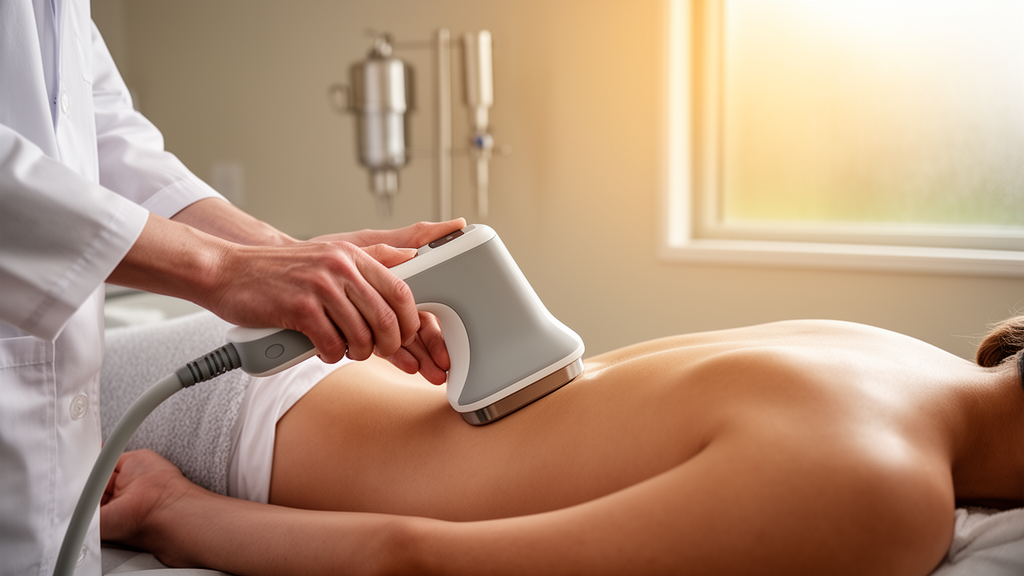
The conventional treatment protocol included pharmacological management, hot packs, transcutaneous electrical nerve stimulation, ultrasound, and a home exercise program. Patients performed exercises three times a day, with ten repetitions each time. The non-invasive vagus nerve stimulation was applied to the tragus or concha regions of the ears using a Healthtronic device. The stimulation was delivered at a frequency of 10 Hz with a pulse duration of 300 microseconds. Each session lasted twenty-five minutes and was administered five days a week for three weeks. The 10 Hz frequency was selected to activate vagal afferent fibers while minimizing discomfort.
The primary outcomes measured were pain intensity, assessed using the Visual Analogue Scale, and trunk mobility, assessed using the Modified Schober Test. Secondary outcomes included depression symptoms, measured by the Beck Depression Scale, and sleep quality, evaluated using the Pittsburgh Sleep Quality Index. These assessments were conducted at baseline and again after three weeks of treatment. Disease activity was also monitored using the Ankylosing Spondylitis Disease Activity Score, which incorporates C-reactive protein levels.
In the intervention group, the addition of vagus nerve stimulation resulted in statistically significant improvements compared to baseline. The Visual Analogue Scale scores decreased significantly, indicating reduced pain intensity, with a p-value of 0.031. The Modified Schober Test scores increased significantly, reflecting improved trunk mobility, with a p-value of 0.030. Additionally, the Beck Depression Scale scores decreased significantly (p = 0.049), and the Pittsburgh Sleep Quality Index scores decreased significantly (p = 0.031), suggesting improvements in both mood and sleep quality.
In contrast, the control group receiving only conventional treatment did not show statistically significant changes in any of the measured parameters over the three-week period. The p-values for the Visual Analogue Scale, Modified Schober Test, Beck Depression Scale, and Pittsburgh Sleep Quality Index were 0.559, 0.968, 0.638, and 0.775, respectively. This lack of significant change in the control group highlights the potential specific benefit of the vagus nerve stimulation intervention in this short-term context.
The study also examined the effects of the intervention on workers versus non-workers within the intervention group. Among workers, the vagus nerve stimulation led to statistically significant decreases in pain intensity and depression scores. The Visual Analogue Scale decreased with a p-value of 0.046, and the Beck Depression Scale decreased with a p-value of 0.030. However, improvements in trunk mobility and sleep quality did not reach statistical significance in this subgroup. Non-worker patients did not show statistically significant clinical improvements in any of the parameters, suggesting that occupational status or associated lifestyle factors may influence the response to neuromodulation.
The authors suggest that the observed benefits in workers might be attributed to their structured daily routines and physical activity, which could enhance neuroplasticity and amplify the effects of neuromodulation. Engagement in occupational roles may also provide social connectedness and purpose, which are protective factors against depression. These factors might augment the mood-regulatory benefits of non-invasive vagus nerve stimulation. The findings align with previous studies that have reported anti-inflammatory effects of transcutaneous vagus nerve stimulation in individuals with ankylosing spondylitis and psoriatic arthritis.
Despite the promising results, the study has several limitations. The sample size was relatively small, which may limit the generalizability of the findings. Inflammatory biomarkers were not assessed, which could have provided objective evidence of the treatment’s effects on inflammation. The subgroup of workers analyzed was also small, limiting the statistical power of the subgroup analyses. Although sham stimulation and participant blinding were implemented, a residual placebo effect cannot be completely excluded. The short duration of the study, limited to three weeks, also means that long-term effects remain unknown.
The researchers conclude that adding non-invasive vagus nerve stimulation to conventional therapy was superior to conventional treatment alone regarding pain, sleep, depression, and low back movement in spondyloarthritis. These findings suggest that vagus nerve stimulation may be a promising adjunctive treatment for patients with ankylosing spondylitis. Further studies with larger sample sizes and long-term follow-up are recommended to confirm these results and to explore the potential additional benefits of this non-invasive approach compared to conventional therapy alone.
The physiological rationale for this intervention centers on the cholinergic anti-inflammatory pathway, a mechanism by which the vagus nerve modulates immune responses. Through efferent fibers and a relay via the splenic nerve, the pathway innervates the spleen, where T cells convert adrenergic stimulation into cholinergic signals that exert an anti-inflammatory effect on macrophages. This biological mechanism suggests that electrical stimulation of the vagus nerve could theoretically reduce the production of pro-inflammatory cytokines, a process that has been observed in preclinical animal models of endotoxemia, sepsis, and colitis. The study sought to determine whether these observed anti-inflammatory effects in animal models could translate into measurable clinical improvements for patients suffering from the chronic pain and functional impairment associated with axial spondyloarthritis.
Previous clinical research has provided some support for the use of non-invasive vagus nerve stimulation in rheumatic conditions. For instance, studies by Brock et al. have endorsed the anti-inflammatory effects of transcutaneous vagus nerve stimulation in individuals with ankylosing spondylitis and psoriatic arthritis. Similarly, Rasmussen et al. reported significant clinical improvements, indicated by reductions in disease activity scores, in psoriatic arthritis patients treated with vagus nerve stimulation. The current study builds on this emerging body of evidence by specifically targeting inflammatory low back pain in a cohort of spondyloarthritis patients, while also introducing a novel focus on the occupational status of the participants.
The decision to stratify results by worker and non-worker status was driven by the high rates of presentism and absenteeism observed in spondyloarthritis patients due to pain and fatigue. The portable and non-invasive nature of the device makes it potentially suitable for integration into workplace wellness or rehabilitation programs. The researchers hypothesized that the structured routines and physical activity levels typical of employed individuals might enhance the neuroplasticity and mood-regulatory benefits of the stimulation. This occupational angle distinguishes the study from previous investigations that have not directly assessed non-invasive vagus nerve stimulation in workers with spondyloarthritis.
The statistical power of the study was calculated using the PASS 15 program, referencing data from a previous study by Demircioglu et al. That earlier research indicated that the intervention group had lower post-treatment pain scores compared to the control group. Based on these findings, the researchers determined that a sample size of at least fifty patients, split evenly between the two groups, would provide 80% power to detect a difference in mean pain scores. This calculation assumed a significance level of 0.05 and utilized a two-sided two-sample unequal-variance t-test to ensure the study could reliably detect clinically meaningful differences between the treatment arms.
The choice of stimulation parameters was guided by the need to effectively activate vagal afferent fibers while minimizing patient discomfort. The 10 Hz frequency was selected specifically for this purpose, and the 25-minute duration was chosen to allow sufficient time for the modulation of central nervous system activity and the engagement of the vagal anti-inflammatory reflex. The amplitude of the current was adjusted individually for each patient, starting at a low level and gradually increasing until the patient reported comfort. If pain was reported, the current was reduced until the discomfort subsided, ensuring that the treatment remained tolerable throughout the three-week intervention period.
The study’s findings align with broader clinical observations that non-invasive vagus nerve stimulation can decrease pain intensity and improve depressive symptoms. These outcomes are particularly relevant in the context of occupational health, where pain and mental health conditions contribute to diminished quality of life and reduced productivity. By demonstrating that the intervention can address both physical and psychological aspects of the disease, the study supports the potential inclusion of non-invasive vagus nerve stimulation in multimodal pain management strategies. This approach could be adapted for worker rehabilitation programs, offering a non-pharmacological adjunct to existing therapies for employees with long-term inflammatory or musculoskeletal disorders.
Subject of Research: Non-invasive vagus nerve stimulation for inflammatory low back pain in spondyloarthritis
Article Title: Effectiveness of non-invasive vagal nerve stimulation on inflammatory low back pain in spondyloarthritis
Article References: Soliman, W., Aboud, F. M., AbdelRahman, D. A. M., Metwaly, M. M. M., & EL Bably, M. M. S. (2026). Effectiveness of non-invasive vagal nerve stimulation on inflammatory low back pain in spondyloarthritis. Egyptian Rheumatology and Rehabilitation, 53(1), Article 55. https://doi.org/10.1186/s43166-026-00422-z
Image Credits: AI Generated
DOI: 10.1186/s43166-026-00422-z
Keywords: vagus nerve stimulation, spondyloarthritis, low back pain, inflammation, clinical trial, pain management, neuromodulation, rheumatology, Effectiveness, non-invasive, vagal, nerve
News Source: Ophelia Keating. (November 11, 2026). Nerve Stimulation Eases Back Pain in Spondyloarthritis Trial. Scienmag.